World · Ukraine, Russian Federation
Ukrainian scientist escapes burning Kyiv academy building after Russian drone strike
Ihor Malchevsky climbed from an upper-floor window before rescuers helped him down. The escape came amid intensified Russian attacks on central Kyiv and growing concern over faster drones.
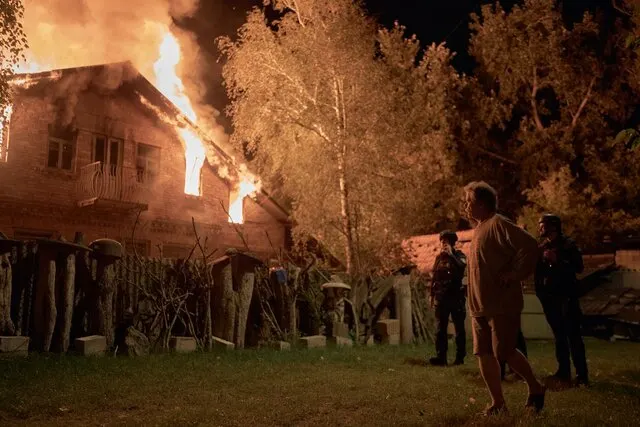
A Ukrainian scientist escaped through an upper-floor window after a reported Russian drone strike set his Kyiv workplace ablaze. The incident came amid intensified attacks using faster drones that Ukraine is struggling to intercept.
- Malchevsky descended a rescue ladder and was largely unharmed.
- One person reportedly died and several others were wounded.
- Jet-powered drones can reach 600 kilometres per hour.
- Ukraine reports intercepting 57% of the faster drones.
- Kyiv’s energy and digital infrastructure have also been targeted.
What's new
- Russia launched waves of jet-powered drones at Kyiv on Oct. 1. [s1]
- Ukraine said it currently intercepts 57% of jet-powered drones. [s1]
- A Ukrainian interceptor downed a Geran-5 in footage shared by President Volodymyr Zelensky. [s1]
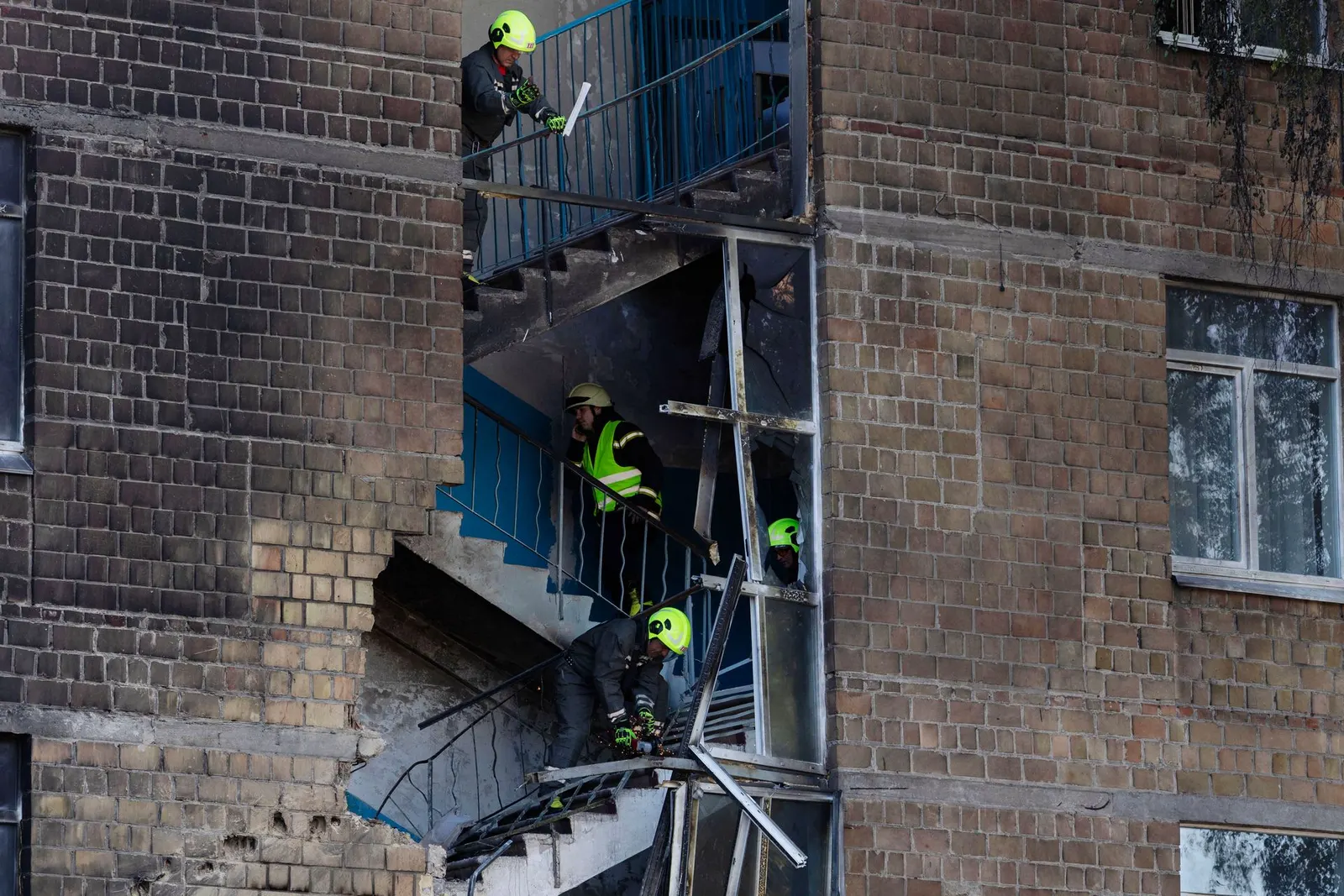
Ihor Malchevsky, a 69-year-old scientist at Ukraine’s National Academy of Sciences, escaped a burning historic building in central Kyiv after a Russian drone struck it on Monday, according to a report published on Sept. 29 by The Straits Times.2
Escape from the fire
The strike trapped Malchevsky inside the ornate building, where he serves as a deputy department head, The Straits Times reported. He climbed through an upper-floor window onto a ledge and later descended a ladder raised by rescuers, reaching the pavement largely unharmed. The newspaper said one person was killed and several others were wounded in the attack.2
Malchevsky called his family soon after reaching safety. His wife, two adult children and other relatives came to the scene. Kateryna Moskaliuk, Malchevsky’s 37-year-old daughter, said the war’s more than four-year duration had touched many families across Ukraine.2
“My thoughts were about just one thing: how to rescue myself from this situation,” Malchevsky said. He described quickly shifting from initial confusion to assessing what had happened and how he could get out.2
The struck building is near Kyiv’s National Opera and the German embassy, according to The Straits Times. Malchevsky said Ukraine should continue fighting to weaken Russia and dismissed current efforts toward peace talks as futile.2
Strikes across central Kyiv
According to The Kyiv Independent, Russia fired ballistic missiles at Kyiv during the night, then deployed drones against the city in daytime. It said a drone hit the National Academy of Sciences, starting a fire and compelling people inside to leave through upper-floor windows. Another strike hit a medical centre roughly two hours later.1
A separate reported drone strike set fire to the former Zaliznychnyi Market, a modernist Kyiv landmark near the central railway station. Russia also resumed attacks on the capital’s energy infrastructure on Sept. 30, while an air-raid warning that day continued for 12 hours and 44 minutes, among Kyiv’s longest single alerts, according to The Kyiv Independent.1
The Straits Times reported that Russia had recently expanded its attacks to consumer logistics, companies and data centres. The Kyiv Independent said damage to data centres and internet hubs in Kyiv could impair connectivity in the capital and interrupt online services elsewhere in Ukraine.12
Faster drones challenge defences
The Kyiv Independent said Russia started using recently introduced, jet-driven Shahed-derived drones last month, with attacks becoming more intense each day in the week leading up to Oct. 1. The aircraft can reach speeds of as much as 600 kilometres per hour, making them harder to stop than earlier Russian drones, according to the outlet.1
A senior engineer working for a defence contractor said the Geran-5 travels 150 kilometres per hour faster than the Geran-4. Ukraine’s current interception rate for jet-powered drones is 57%, according to a figure acknowledged by President Volodymyr Zelensky and reported by The Kyiv Independent.1
The outlet reported that Russia can make 3,000 Geran-4 and Geran-5 drones each month and that both models contain numerous Western components. It put the estimated cost of a Geran-5 at about $115,000, including a Chinese-imported turbojet engine costing $40,000, and said the drone carries a warhead of approximately 90 kilograms.1
No effective interceptor is yet being mass-produced, according to Serhiy Sternenko, as cited by The Kyiv Independent. The outlet nevertheless reported that STING S and P1-SUN Jetkiller systems had brought down a limited number of Geran-5 drones, while a SPYS drone had also successfully intercepted one.1
Pressure on daily life
Kyiv residents described uncertainty and declining morale as attacks continued throughout the day and night. Khrystyna, a resident of the capital, said: “At any moment, you don't know where a strike might land”. Yana, who works in real estate and lived through a Sept. 25 strike in central Kyiv, said the latest attacks had undermined morale.1
Economy Minister Oleksandr Kravchenko said every hour in which air-raid warnings halt business activity costs Ukraine’s economy $45 million. The Kyiv Independent reported that air raids totalled more than 20 hours within one day during the preceding week.1
The Straits Times said Ukrainians were preparing for another winter of heavy Russian attacks on the energy network while essential air-defence supplies were declining. Separately, a US official described talks between American representatives and Kirill Dmitriev, an envoy for Russian President Vladimir Putin, as “constructive”.2
Why it matters
The strike demonstrates the risks facing people in central Kyiv, including near the German embassy and the National Opera. For European readers, the reported pressure on Ukraine’s energy system and dwindling air-defence supplies underscores the country’s vulnerability as another winter approaches.2
Videos
Related stories
consequence
Version history
- version 1 ·