World · Israel, State of Palestine
UN commission says genocide continued in Gaza after ceasefire; Israel rejects report
The inquiry said Israeli attacks and acts it described as genocidal continued during the truce. It also reported worsening conditions and displacement in the occupied West Bank.
Listen to the story
Short version
A UN inquiry said Israel continued committing genocide in Gaza during the ceasefire. Israel rejected the report, according to news accounts.
- The commission reported continued heavy-weapons use in densely populated Gaza.
- It said the Yellow Line increasingly functioned as a border.
- The inquiry also reported worsening conditions in the occupied West Bank.
- Israel’s Geneva mission sought the commission’s dissolution, Associated Press reported.
Infographic
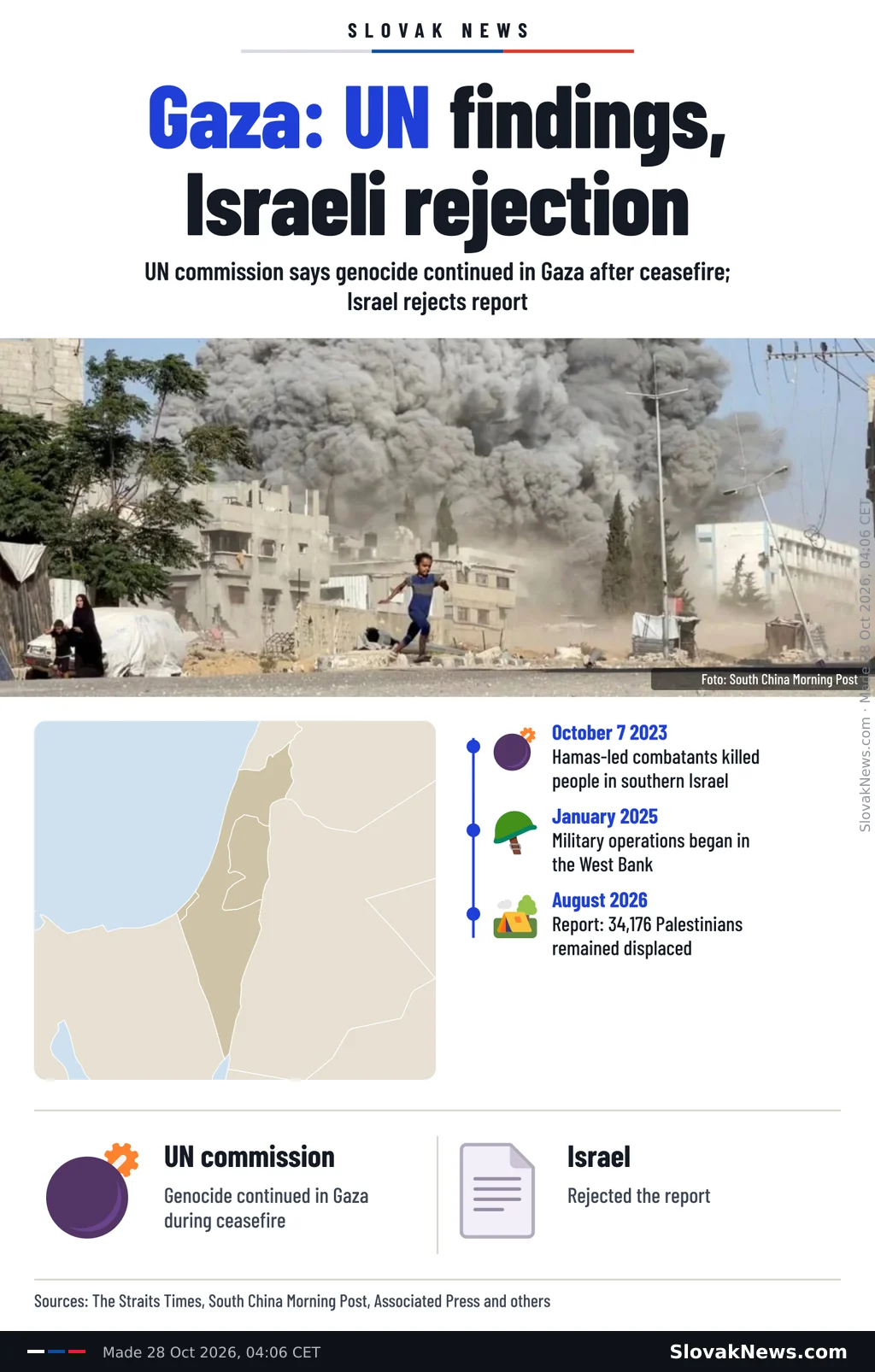
What's new
- The commission said the Gaza ceasefire had not ended acts it characterised as genocide.
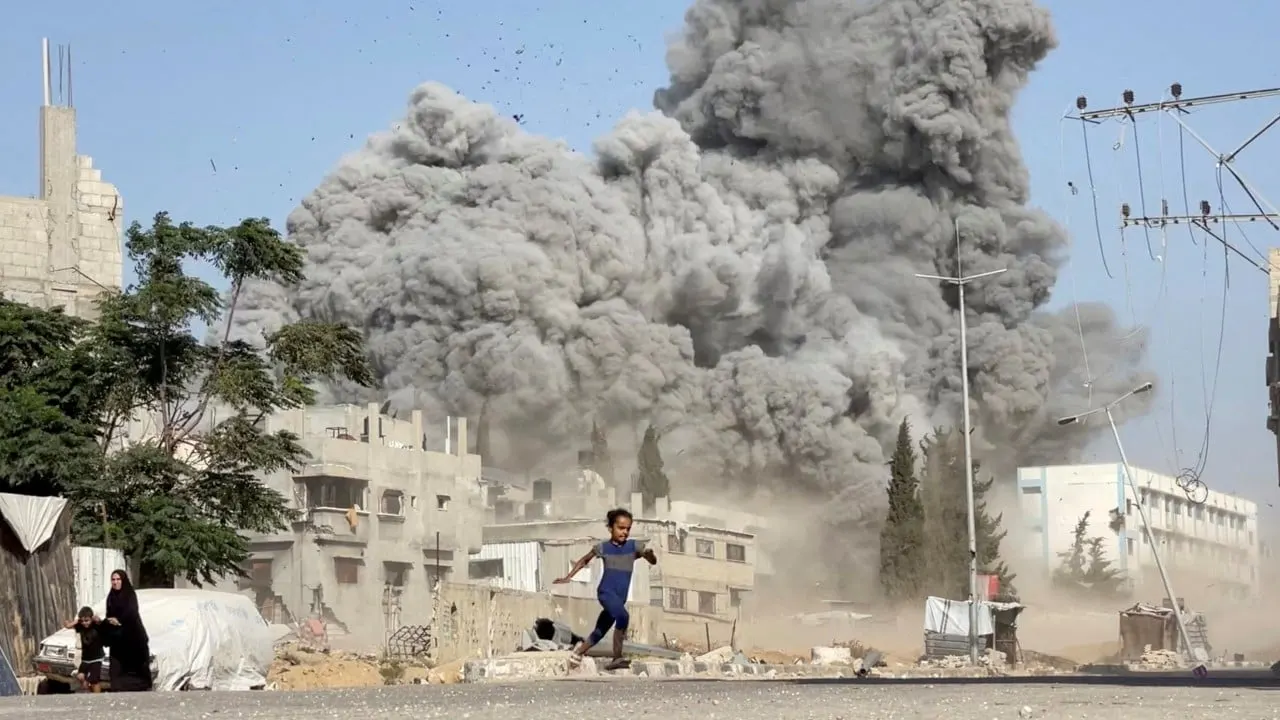
- It reported continued use of heavy weapons in densely populated areas.
- According to Associated Press, Israel’s Geneva delegation demanded that the inquiry be disbanded.
A UN commission of inquiry said on October 26, 2026, that Israel had continued committing genocide in Gaza after a US-brokered ceasefire, citing attacks in densely populated areas and conduct it said was intended to destroy Palestinians there. Israel rejected the report, according to news accounts.134
Infographic
Findings during the ceasefire
The commission said that, during the truce, Israeli forces kept attacking crowded areas of Gaza with large-calibre weapons, unmanned aircraft including quadcopters, shelling and gunfire from snipers. Its findings attributed to Israeli authorities both continuing genocidal acts and an intention to destroy the territory’s Palestinian population, either entirely or partly.124
The report examined violations against Palestinian children during the war, covering events through September. In a previous report, the commission found that Israel had perpetrated genocide in Gaza and accused high-ranking figures in its government–among them Prime Minister Benjamin Netanyahu–of encouraging the acts.12
The inquiry also described changes to territorial control during the ceasefire. It said the Yellow Line, presented as a temporary demarcation, was extending farther into Gaza and increasingly functioning as a border. Associated Press reported that the commission put Israeli control at at least 60% of Gaza, compared with 53% previously.123
Israel’s response
News reports described Israel’s response as a rejection of the findings and an accusation that the inquiry was spreading misinformation to demonise the country. Reuters quoted Israeli ambassador Daniel Meron describing a “misinformation campaign” and accusing the commission of trying to undermine Israel’s legitimacy and its right to defend itself.1234
Israel’s mission in Geneva also demanded the commission’s dissolution, according to Associated Press. The Israeli response disputed the inquiry’s conclusions; the allegations of genocide and intent set out in the report remain the commission’s findings.134
West Bank findings
Beyond Gaza, the commission said conditions in the occupied West Bank were worsening. It reported an increase in deaths from airstrikes from six to 254, and said military operations beginning in January 2025 had produced the largest displacement of Palestinians there since 1967. The report recorded 34,176 Palestinians still displaced in August 2026.12
Commission chair Srinivasan Muralidhar said deliberate killings of Palestinian civilians and the destruction of homes were elements of a wider strategy to exterminate and displace Palestinians. The commission also criticised the Palestinian Authority for targeting dissenting Palestinians, and reported deaths and injuries among journalists and human rights defenders.12
Palestinian authorities put the number killed in Israel’s assault on Gaza at more than 74,000. The assault came after the October 7, 2023, attack, when combatants under Hamas’s leadership took the lives of approximately 1,200 people in Israel’s south.12
Why it matters
For readers in Europe following the ceasefire, the report distinguishes the existence of a truce from the commission’s assessment of conditions for civilians. Its findings concern both continuing violence in Gaza and displacement in the occupied West Bank, while Israel rejects its conclusions.123
Videos
Related stories


Version history
- version 1 ·