Science & Tech · United States of America
US voters back data-center limits and candidates promising AI regulation, reports say
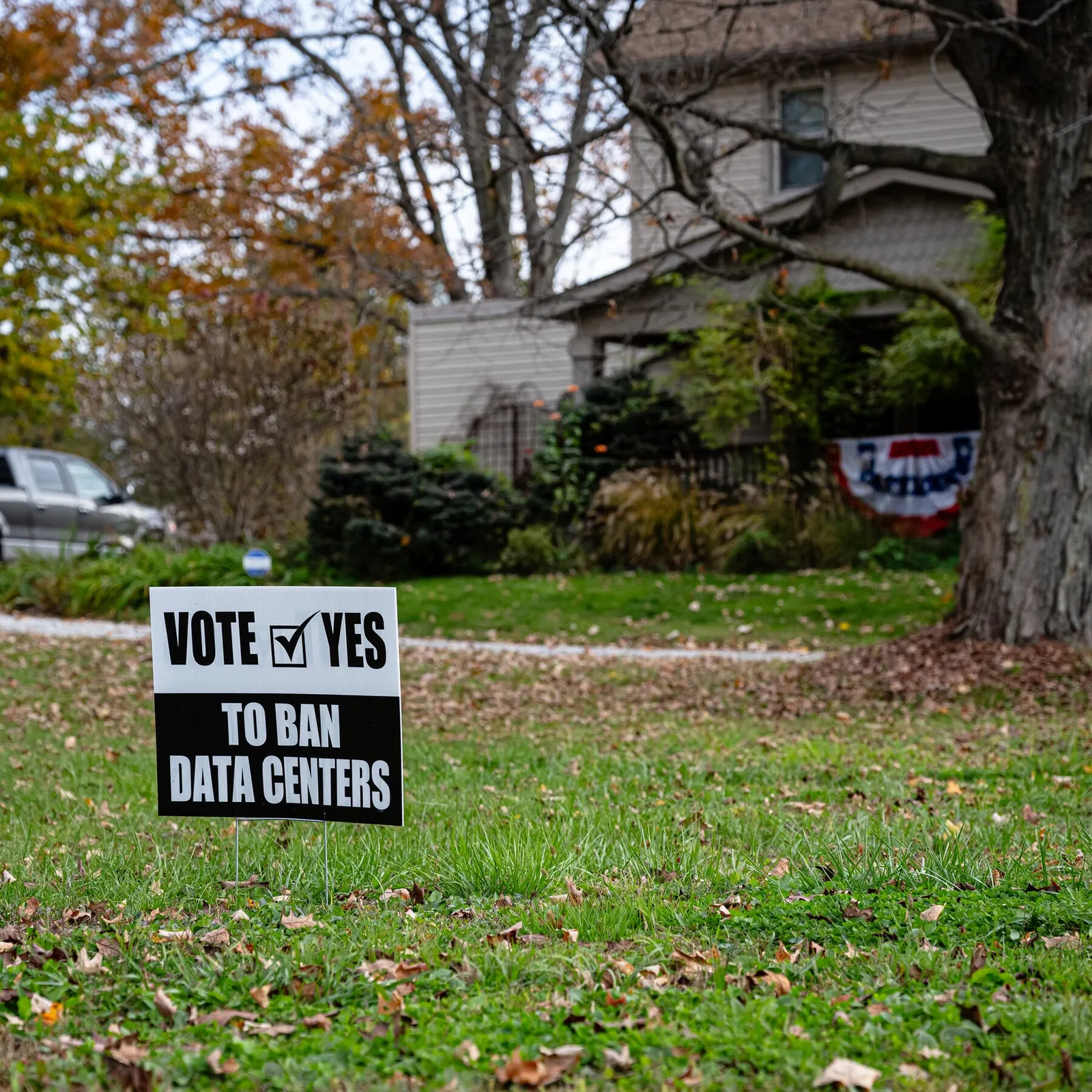
Reports from The New York Times and The Japan Times describe voter opposition to data-center projects during the 2026 US midterms. In Piqua, Ohio, a grassroots group advocated a capacity-based ban.
Listen to the story
Short version
Two newspaper reports describe US midterm support for data-center limits and candidates promising AI regulation.
- The New York Times reports victories for Democrats promising AI regulation.
- The Japan Times reports data-center restrictions or bans in dozens of cities.
- Save Piqua advocated a ban above 25 megawatts, The Japan Times reports.
What's new
- The New York Times reports voters rejected data-center projects and elected Democrats promising AI regulation.
- The Japan Times reports restrictions or bans won approval in dozens of American cities.
- Save Piqua advocated banning data centers with capacity above 25 megawatts, according to The Japan Times.
American voters rejected data-center projects and elected Democratic candidates promising to regulate artificial intelligence in Tuesday’s 2026 midterm elections, The New York Times reported on November 4. A November 5 report by The Japan Times said voters in dozens of US cities had approved restrictions or bans on data centers.12
Votes on projects and oversight
The New York Times placed the results against what it described as two years with little oversight of AI. Its account linked opposition to data-center projects with electoral victories for Democrats who had pledged to regulate the technology. Those descriptions of the oversight record and the candidates’ victories come from that newspaper.1
The Japan Times focused on local votes over data centers, reporting that restrictions or outright prohibitions had passed in dozens of cities. It interpreted the results as evidence that anger associated with the AI boom extended across political divisions, rather than belonging only to one political camp.2
The two accounts therefore describe different forms of electoral action: choosing candidates who promised technology regulation and voting to restrict data centers themselves. The New York Times emphasized the prospect of greater scrutiny of AI, while The Japan Times emphasized efforts by American communities to limit data-center development.12
A capacity threshold in Ohio
In Piqua, Ohio, the grassroots group Save Piqua advocated a ban on data centers with capacity exceeding 25 megawatts, according to The Japan Times. The newspaper reported that this threshold would, in effect, exclude any large-scale data-center project. Its account describes the group’s proposal, rather than establishing a Piqua voting result.2
Alisha Lange, a Piqua farmer described by The Japan Times as a driving force behind Save Piqua, said party affiliation was not what mattered to those involved. “Democrat, Republican, that didn’t matter,” she told the newspaper. Her account supplied a local perspective on the paper’s broader description of opposition crossing political lines.2
“People want their town back,” Lange said. The Piqua campaign’s stated demand concerned the capacity of data centers, while the Democratic candidates described by The New York Times had promised regulation of AI. The reported local proposals and candidate pledges thus addressed distinct subjects within the election coverage.12
Why it matters
For readers in Europe, these reports offer an account of how US voters responded to AI oversight and data-center development at the ballot box. They describe both local restrictions and electoral support for candidates promising regulation, without establishing consequences for Europe.12
Videos
Related stories


Version history
- version 1 ·