Science & Tech · Sweden
Francis Halzen receives 2026 Nobel Physics Prize for IceCube work
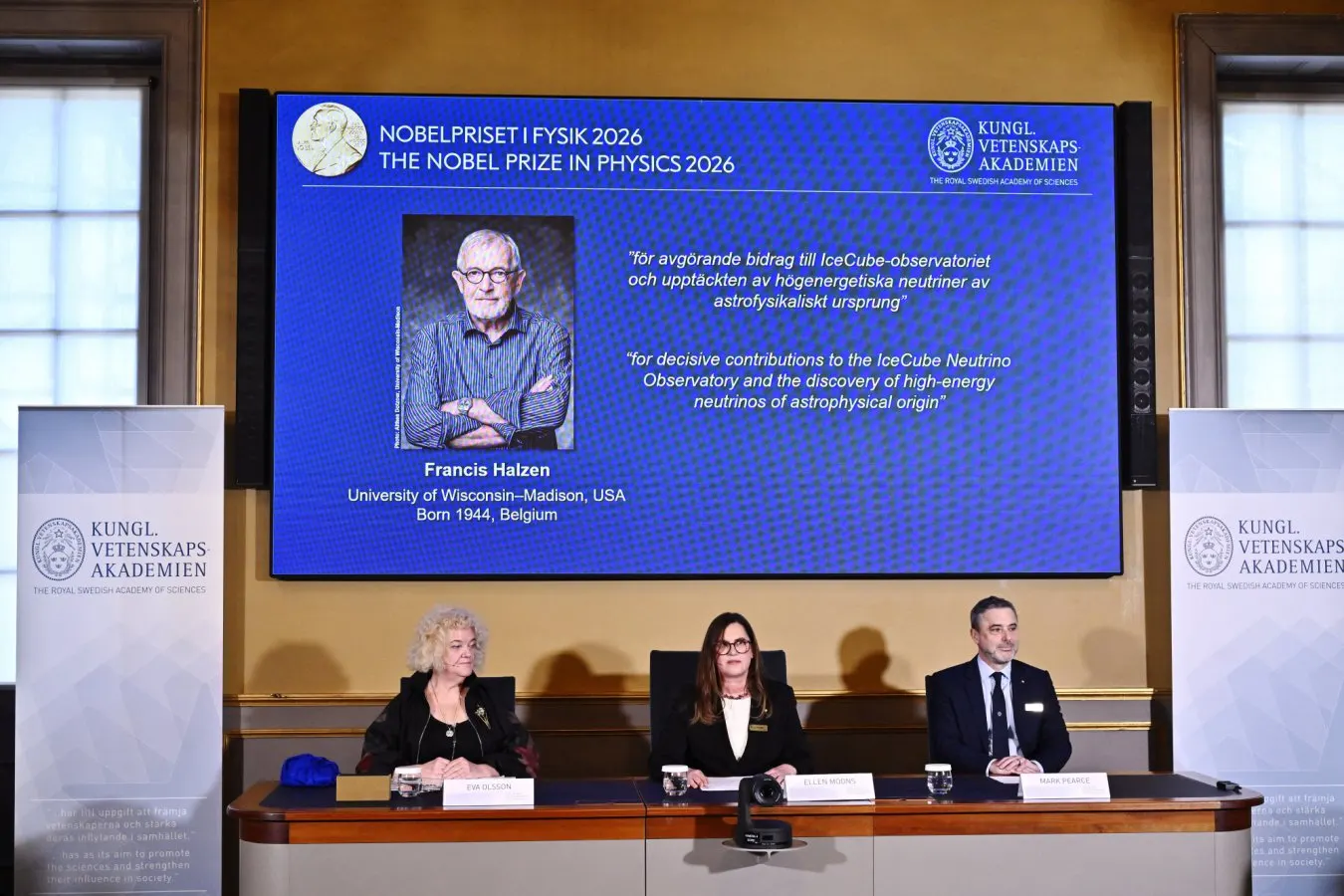
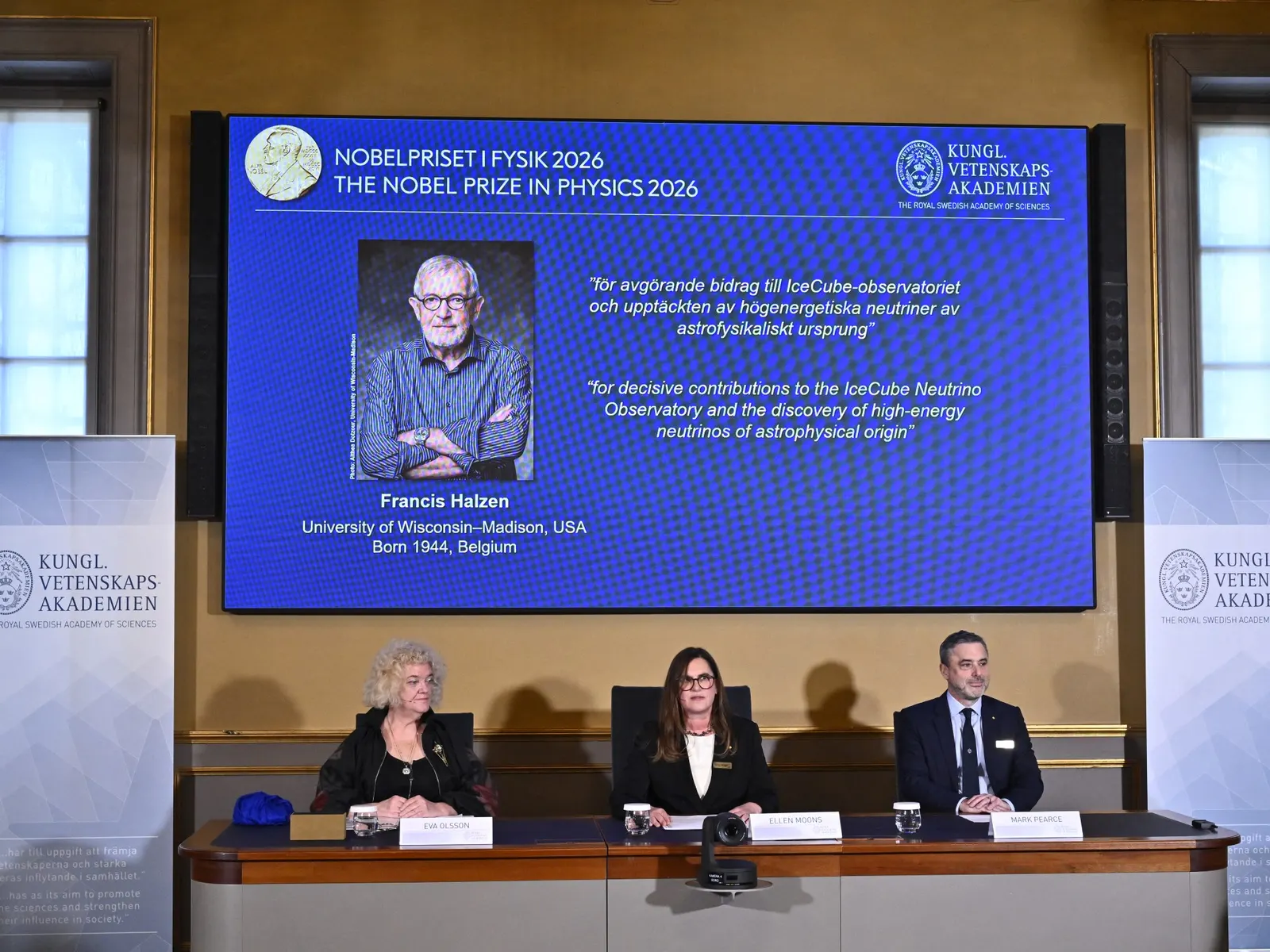
Reports on 6 October said the University of Wisconsin–Madison physicist was recognised for leading work on high-energy neutrinos. The IceCube observatory uses deep Antarctic ice to trace particles from cosmic sources.
Francis Halzen was reported to have won the 2026 Physics Nobel for leading IceCube’s high-energy neutrino work.
- IceCube operates beneath the South Pole.
- It reported high-energy neutrino evidence in 2013.
- A 2017 observation helped identify a cosmic source.
- IceCube identified Milky Way neutrinos in 2023.
- New sensors were installed in January 2026.
What's new
- Halzen was reported as the sole physics laureate.
- IceCube received new deep-ice sensors in January 2026.
- The observatory has identified neutrinos from the Milky Way.
Francis Halzen, a University of Wisconsin–Madison physicist and IceCube pioneer, was reported on 6 October to have received the 2026 Nobel Prize in Physics for work detecting high-energy neutrinos with a detector beneath the South Pole. Subsequent accounts described the prize as recognising his leadership of the IceCube collaboration.134
A detector in Antarctic ice
IceCube is built from more than 5,000 light sensors embedded through roughly a cubic kilometre of ice, between 1.5 and 2.5 kilometres below the South Pole, according to the Niels Bohr Institute. Berkeley News described the observatory as the successor to AMANDA, an earlier array that was developed over decades and later incorporated into IceCube’s 91-string design.34
Halzen and a colleague proposed using deep Antarctic ice for neutrino detection in 1988, according to the Niels Bohr Institute. New Scientist reported that Halzen later calculated that a detector collecting over one cubic kilometre could see about one neutrino a day; IceCube was completed in 2011.14
From rare particles to cosmic sources
Neutrinos are electrically neutral particles that seldom interact with matter and pass through the universe, New Scientist reported. That property makes them difficult to detect, but also enables them to carry information from distant sources. Mark Pearce, who chairs the Nobel Committee for Physics, described them as "ghost-like messengers from the cosmos."1
IceCube reported evidence of high-energy neutrinos from beyond the solar system in 2013. According to Berkeley News, these neutrinos have energies one million times greater than those emitted by the sun. The observatory’s 2017 measurement helped link a high-energy neutrino to TXS 0506+056, while IceCube identified neutrinos from within the Milky Way in 2023, according to New Scientist.134
A collaborative project
New Scientist reported that Halzen spearheaded a collaboration involving more than 450 people at 58 institutions in 14 countries. He said the project began through work between the University of Wisconsin–Madison and Berkeley, while Berkeley News said Berkeley Lab scientists built the electronics for all of IceCube’s optical modules.13
The Niels Bohr Institute became the first Danish institution to join the IceCube Collaboration in October 2013, according to the institute. Its account said IceCube received an upgrade with new sensors in January 2026. Halzen said, "neutrino astronomy is only beginning, and there is more to come."4
Why it matters
IceCube’s work offers a means of studying distant cosmic sources using particles rather than light, according to the Nobel committee chair cited by New Scientist. For European readers, the project includes the Copenhagen-based Niels Bohr Institute, which joined the collaboration in 2013 and reported a 2026 detector upgrade.14
Videos
Related stories
Version history
- version 1 ·