Science & Tech · Australia
Australia proposes letting social media users turn off recommended feeds
Legislation introduced in parliament would give users a choice over algorithmic recommendations and impose broader online safety duties. Ministers are also considering allowing individuals to sue platforms over online harms.
Listen to the story
Short version
Australia has introduced legislation offering users a choice over recommended feeds alongside broader online safety duties.
- Users would be able to decline algorithmic recommendations.
- Children and adults would receive different levels of protection.
- Potential penalties reach A$109.2 million.
- Individual lawsuits remain under consideration.
What's new
- On October 15, Anika Wells brought the bill establishing a Digital Duty of Care before parliament.
- The proposal includes controls over recommended feeds and penalties reaching A$109.2 million.
- The government is considering a Greens proposal for individuals to bring legal action.
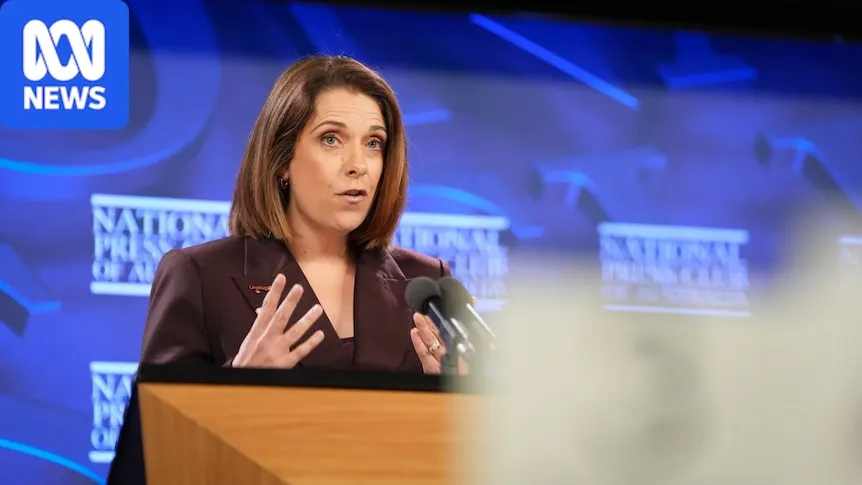
Australia’s communications minister, Anika Wells, introduced legislation in the Australian parliament on October 15, 2026, that would let social media users choose whether their feeds contain algorithmically recommended content. The Digital Duty of Care proposal would also require online services to take steps to protect users from harm.24
A choice over recommendations
The legislation would offer a way to decline recommendations rather than prohibit algorithms, according to ABC Australia. Its reporting says Australians over 16 would be able to turn off algorithmic recommendations in social media feeds. Associated Press reported the proposed opt-out in September, describing it as a measure to give users greater control over what they see.23
The government says feeds displaying only accounts a person follows must be as functional and as easy to use as algorithmic alternatives, the BBC reported. Settings governing recommendations would have to be clearly visible, and platforms could not alter them without the user expressly choosing a change.1
Prime Minister Anthony Albanese described the proposal as a matter of user choice. “This is not about giving government control, it is about giving people control,” he said. The BBC reported that the government’s September announcement adopted a version of campaigner Chanel Contos’s proposal, but did not require recommendations to be switched off by default.1
Broader safety obligations
The proposed duty would require services to provide a safe online environment to the extent reasonably practicable. Children would receive protection from harmful content and design features, while the protection for adults would focus more narrowly on serious harms. According to the BBC, the bill’s scope includes social media, gaming sites, chatbots and other online services.1
Potential penalties reach A$109.2 million, according to the government department responsible for the proposal and Associated Press. ABC reported that platforms and websites would have to assess risks annually, while lower-risk services, including small-business websites and applications, would face minimal obligations.234
ABC also reported that the bill would permit the eSafety Commissioner and accredited researchers to operate fictitious accounts to check compliance. University researchers would need ethics approval. The regulator would have to develop policies for those accounts with the Australian Federal Police and publish annual reporting on their use.2
Enforcement and speech debate
Wells said the government would consider a Greens proposal allowing individuals to take legal action against technology companies, ABC reported. That could include class actions. Greens communications spokeswoman Sarah Hanson-Young also wants penalties linked to platforms’ worldwide revenue, rather than relying solely on the proposed maximum fines.2
The Coalition argues that the legislation could restrict free expression and allow government control over online content, according to ABC. Shadow communications minister Sarah Henderson criticised its definitions of harm as vague. Wells said the duty was “not a stepping stone for regulating misinformation and disinformation”.2
How platforms implement the controls is another point of contention. Researcher Chris Zomer told the BBC that awkwardly implemented alternatives can lead users back to default algorithmic feeds. Social media companies say existing safety and control tools have attracted limited use, while Instagram boss Adam Mosseri has argued that non-algorithmic feeds would show users fewer posts from friends.1
Why it matters
For European readers, the proposal offers a comparison with algorithm controls introduced in the EU in 2023, after which platforms provided following-only feeds. The BBC’s account of implementation concerns highlights the distinction between making a feed option available and making it usable.1
Related stories

Version history
- version 1 ·