Science & Tech · Japan, France, Germany
BepiColombo prepares for Mercury orbit after eight-year journey
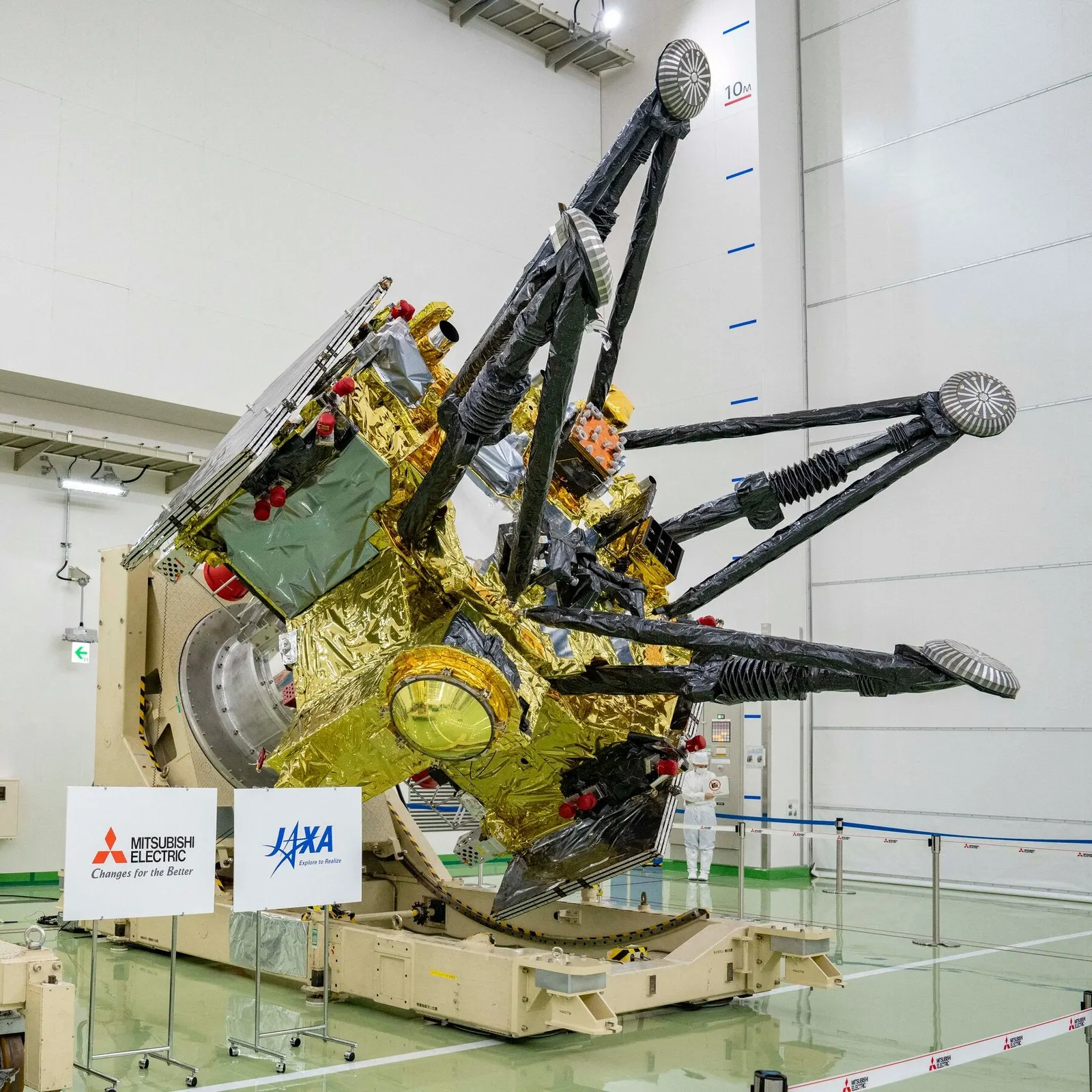
The mission is approaching an orbital insertion manoeuvre before its two spacecraft separate. Their investigations will cover Mercury’s surface, interior and surrounding environment.
BepiColombo is preparing to enter Mercury orbit after an approximately eight-year journey. The Guardian reports arrival, while the BBC describes it as imminent.
- Both outlets describe a journey of roughly six billion miles.
- The Guardian reports two orbiters will separate in December.
- Scientific observations begin in April, according to the Guardian.
- Research targets include crater ice, surface hollows and Mercury’s interior.
What's new
- The Guardian reports that BepiColombo has reached Mercury, with orbital insertion still planned.
- Two orbiters are scheduled to separate in December, according to the Guardian.
- Scientific observations are due to begin in April, the Guardian reports.
BepiColombo, the joint European-Japanese mission, has reached Mercury after more than eight years of travel, the Guardian reported on November 20, 2026, with controllers preparing to fire its thrusters to enter orbit. The BBC described the spacecraft that day as approaching its destination, rather than having completed the arrival.12
Arrival before orbital operations
Both accounts describe a journey of roughly six billion miles. The Guardian reports that BepiColombo will become only the second mission to orbit Mercury and puts its cost at €1.6bn (£1.4bn). Its arrival and its planned entry into orbit are separate stages: neither account establishes that the orbital insertion manoeuvre has been completed.12
The next stages will divide the mission between two spacecraft. According to the Guardian, they are scheduled to separate in December and move into different polar orbits, with scientific observations due to start in April. The European orbiter will map the surface and its composition at high resolution while also investigating the planet’s interior.2
The Japanese orbiter will measure Mercury’s magnetic field and sodium exosphere, the extremely thin surrounding layer of gas and atoms, according to the Guardian. The Mercury Imaging X-ray Spectrometer, known as MIXS, will analyse the chemical composition of the surface. The newspaper says the instrument’s principal investigator, University of Leicester professor Emma Bunce, has spent two decades contributing to the project.2
Ice, hollows and a metal core
The mission will investigate ice in Mercury’s polar craters, an objective described by both outlets. The BBC reports that Mercury is the planet closest to the Sun and is continually exposed to intense solar radiation. It gives temperatures ranging from 430C to -180C; the Guardian gives a daytime ground maximum of 450C and the same nighttime minimum.12
Another target is the planet’s surface hollows. According to the BBC, these are shallow depressions with steep sides, often found in groups and about 100,000 years old. Scientists know they are not impact craters, the broadcaster reports, but have not established what they are or how they developed.1
Mercury’s large metal core relative to its small size is another question described by the BBC. Possible explanations include a collision that removed the mantle, or formation in a region of the early Solar System rich in metal. Those remain explanations to investigate, not established accounts of the planet’s formation.1
Separation and the mission’s end
The BBC reports that Airbus built BepiColombo and that its separation mechanism has endured radiation and widely varying temperatures during the journey. Airbus systems engineer Jessica Marshall explained that the mechanism will release one spacecraft while also twisting it to initiate its spin.1
The Guardian says the two craft are due to spend roughly three years circling Mercury. They will eventually exhaust their fuel, descend and strike the surface. Bunce summed up that endpoint: “Sadly, they are not coming back”.2
Why it matters
For European readers, the mission represents a European-Japanese scientific undertaking costing €1.6bn, according to the Guardian. The European orbiter’s planned measurements will address Mercury’s surface composition and interior, while its Japanese counterpart investigates the magnetic field and surrounding environment.2
Videos
Related stories
Version history
- version 1 ·