World · Bosnia and Herzegovina
Bosnia votes as 75 parties compete in general election
Voters are choosing a three-member Presidency, national lawmakers and representatives across Bosnia and Herzegovina’s layered system of government. New election technology is being deployed, while the outcome may affect the country’s European Union bid.
Bosnia and Herzegovina is electing its Presidency and representatives across several levels of government. The result may shape political blockades and the country’s progress towards EU membership.
- Seventy-five parties and 29 coalitions are competing.
- The electorate includes upwards of 3.4 million people.
- Voters are choosing three Presidency members and national lawmakers.
- Biometric checks and ballot scanners are being used.
- Official results are due by November 20.
What's new
- Polls opened on October 4 for elections across several levels of government.
- Seventy-five parties, 29 coalitions and four independents are competing.
- Biometric voter checks and ballot scanners are being deployed.
- Official results are due no later than November 20.
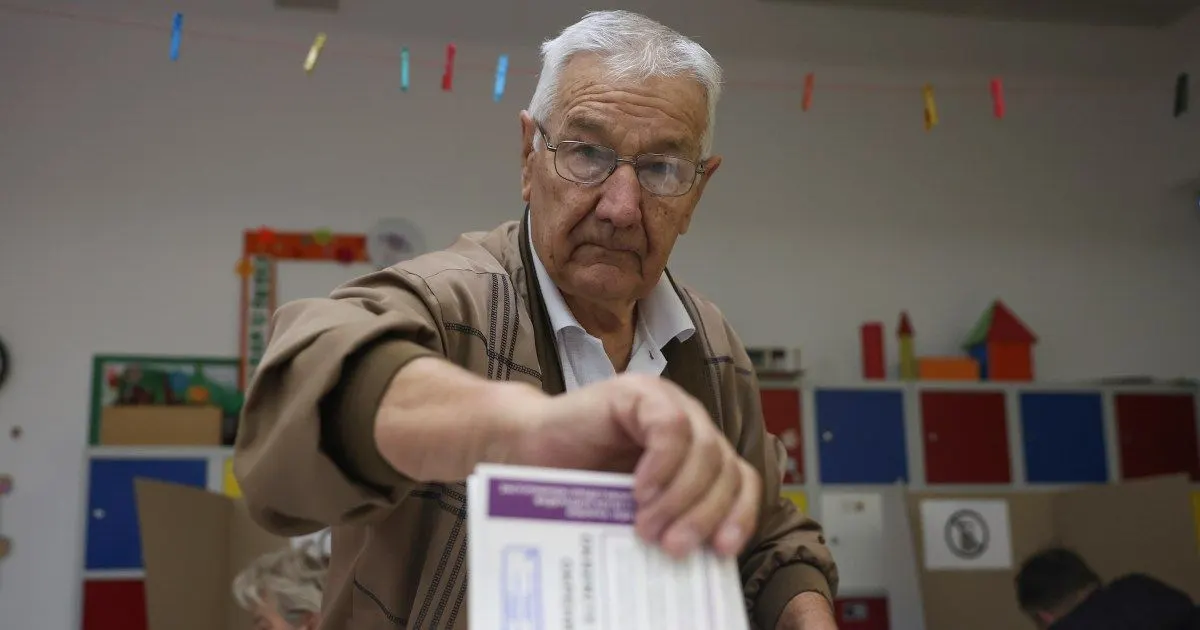
Voters in Bosnia and Herzegovina went to the polls on Sunday, October 4, 2026, to elect the country’s three-member Presidency, national lawmakers and representatives at entity and canton levels. Seventy-five parties, 29 coalitions and four independent candidates are competing for government seats.123
A multi-tier election
Al Jazeera put the number of registered voters at over 3.4 million. TASS reported that voters will elect the Presidency, the national House of Representatives and entity legislatures, while Republika Srpska will also choose its president. France 24 described the ballot as an election for a large number of offices across several tiers of government.123
The Presidency has three members representing Bosniaks, Croats and Serbs, with its chair rotating among them every eight months. The House of Representatives has 42 elected members, while the House of Peoples comprises 15 indirectly selected delegates, five from each constituent group, according to Al Jazeera.12
TASS said polling stations were scheduled to operate from 7am until 7pm local time. It reported that biometric identification, ballot scanners and rapid electronic transmission of results would be used for the first time, and that about 30,000 observers would monitor voting, most of them at municipal level. Al Jazeera also reported the use of biometric checks and ballot scanning.12
Initial results were expected after polls closed on Sunday, according to Al Jazeera. The outlet said the official results must be published no later than November 20.1
Ethnic politics and institutional blockades
France 24 reported that the campaign was led largely by parties closely associated with the ethnic divisions of the 1990s war. Bosnia and Herzegovina’s complex governing arrangements have maintained the partitioned country since the 1995 peace agreement, the outlet said.3
Al Jazeera said forming governments is difficult because of the electoral system and disagreements among the three constituent communities. It reported that repeated obstruction has hindered decision-making across levels of government, while the selection of the Croat member of the Presidency has strained relations between Bosniak and Croat parties for years. Changes to the Election Law would also require constitutional amendments, according to the outlet.1
Among the Presidency contenders, incumbent Bosniak member Denis Becirovic, a Social Democratic Party candidate, promised to renew progress towards the European Union and NATO. Bakir Izetbegovic is seeking a third term in the Bosniak seat, while current Serb Presidency member Zeljka Cvijanovic is running for a second term. The field also includes candidates for the Bosniak, Croat and Serb seats from several other parties and coalitions.1
Milorad Dodik, leader of the Alliance of Independent Social Democrats and a former president of Republika Srpska, addressed his party’s final rally in Banja Luka. Al Jazeera reported that his party favours the secession of Republika Srpska and maintains close relations with Russia. Dodik told the rally: “Bosnia and Herzegovina is dead; it is an impossible country”.1
European path in focus
Bosnia and Herzegovina received EU candidate status in December 2022, and accession negotiations opened in 2024, according to Al Jazeera. The outlet assessed subsequent progress as limited and constrained by political blockades. It said the election result could either help advance or further delay legislation required for movement towards membership.1
Some voters expressed little confidence that the ballot would alter the political landscape. Adi Selman, a 34-year-old activist with the Karton Revolucija protest group in Tuzla, said: “I don’t think these new elections in Bosnia will change anything”.1
Why it matters
The result may influence Bosnia and Herzegovina’s effort to move closer to the European Union. Al Jazeera reported that political obstruction has slowed reforms and that the next governing arrangements could either facilitate or impede adoption of laws linked to accession progress.1
Version history
- version 1 ·