World · Brazil
Brazil’s final presidential debate canceled before first-round vote
Luiz Inácio Lula da Silva and Flávio Bolsonaro both declined to attend. Court decisions governing the event were central to the broadcaster’s explanation for canceling it.
Brazil’s last presidential debate was canceled after Lula and Flávio Bolsonaro declined to participate. Polling reported by both sources suggests a possible October 25 runoff could be close.
- The debate was canceled shortly before its scheduled start.
- Lula appeared on the Flow podcast instead.
- Bolsonaro blamed electoral-court restrictions for his withdrawal.
- Court rulings governed treatment of absent candidates.
- A potential runoff is scheduled for October 25.
What's new
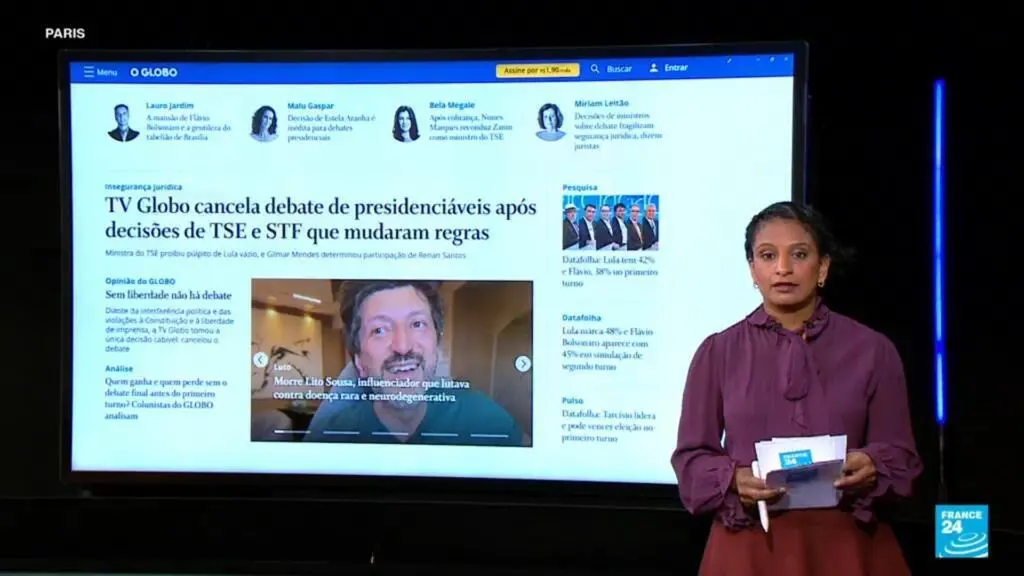
- Globo canceled the final debate one hour before its scheduled start.
- Lula and Flávio Bolsonaro both declined to participate.
- Polls indicate a potentially close runoff on October 25.
- International observers have arrived to monitor the electoral process.
Shortly before its scheduled start on October 2, 2026, Brazil’s last presidential debate ahead of Sunday’s first-round vote was canceled because the incumbent, Luiz Inácio Lula da Silva, and Flávio Bolsonaro, a senator, chose not to participate. The two candidates had not met in a televised debate during the campaign, according to MercoPress.12
A debate abandoned at the last moment
MercoPress reported that broadcaster Globo withdrew the program one hour before its scheduled start, citing court rulings and the absence of the two leading candidates. France 24 also reported that the final debate was canceled after Lula and Bolsonaro refused to participate.12
Lula announced that he would instead appear in an interview on the Flow podcast. MercoPress reported that he called the debate format “fruitless” and argued for debates structured according to candidates’ electoral weight, saying the existing format gave candidates with less support opportunities for minor provocations.1
Flávio Bolsonaro said he would stay away because of restrictions imposed on the event by the Superior Electoral Court. He said: “I have just decided not to go to the Globo debate because of the censorship imposed on the event by the TSE.”1
Court decisions shaped the event
According to MercoPress, Superior Electoral Court judge Estela Aranha ruled that participation in debates was optional. She also barred Globo from displaying Lula’s empty lectern or allowing other candidates to direct questions towards it. Lula’s campaign had sought restrictions because it said the arrangements risked creating an imbalance.1
In a separate intervention reported by MercoPress, Supreme Federal Court justice Gilmar Mendes ordered the inclusion of Missão party candidate Renan Santos even though Santos did not meet a requirement that participating candidates have the support of at least five members of Congress.1
Globo said the sequence of rulings created uncertainty over the legal conditions for staging the program. The broadcaster said that “successive court decisions taken moments before the debate create legal uncertainty and represent undue interference in the media's freedom to organise debates”.1
France 24 reported that O Globo said political intervention and breaches of constitutional and press freedoms had left it with no alternative but to cancel. The outlet also reported that electoral authorities would not permit an empty chair for candidates who did not attend.2
The electoral contest
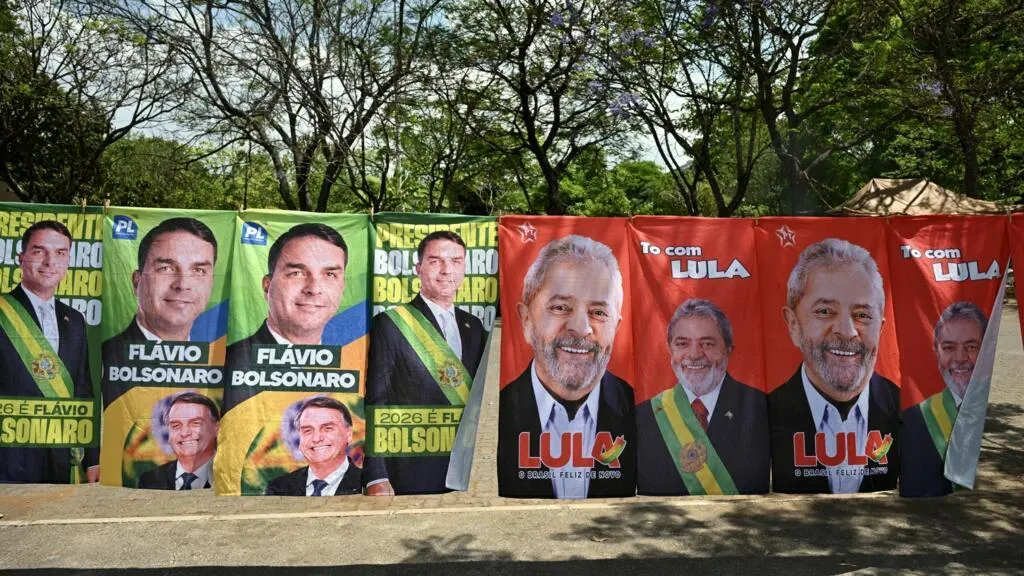
Brazil’s two-round presidential election begins with the first-round vote this weekend, according to France 24. The contest places Lula against Flávio Bolsonaro, a presidential candidate from the Liberal Party and the son of former president Jair Bolsonaro.2
France 24 reported that polls forecast a Lula victory in the first round but indicated that a possible second-round contest could be very close. Both sources described Lula and Bolsonaro as statistically tied or neck-and-neck in projections for a runoff, which France 24 said was scheduled for October 25.12
The canceled event had been the final scheduled presidential debate before the first round. MercoPress reported that Lula and Flávio Bolsonaro had not appeared together in any televised debate during the campaign, leaving voters without a direct debate between the two before polling day.1
Campaign closes under observation
The final day of electoral advertising was reported on October 2. Lula described the contest as his final election and promised to reduce the workweek so that people would no longer have to work on Saturdays; meanwhile, Flávio Bolsonaro urged Brazil to move beyond what he called the old system and refrained from attacking Lula directly.1
International observers have arrived in Brazil to watch the conduct of the electoral process, according to France 24. The first round will determine whether the election proceeds to the potential October 25 runoff described by the outlet.2
Why it matters
For readers in Europe following Brazil’s election, the cancellation removes the final planned televised encounter between the leading candidates before the first round. The electoral process is also being watched by international observers, while polling reported by both sources points to a potentially close runoff.12
Videos
Related stories
Version history
- version 1 ·