World · Brazil
Flávio Bolsonaro wins Brazil’s first round as race heads to runoff
The far-right senator outpolled President Luiz Inácio Lula da Silva, though both fell short of 50%. They will meet again on October 25.
Listen to the story
Short version
Flávio Bolsonaro won Brazil’s first round but fell short of a majority. He faces President Lula in an October 25 runoff.
- Bolsonaro won around 47%; Lula received about 45%.
- Neither candidate reached the required 50% threshold.
- The Liberal Party won 121 lower-house seats, Al Jazeera reported.
- Bolsonaro pledged to seek amnesty for his father if elected.
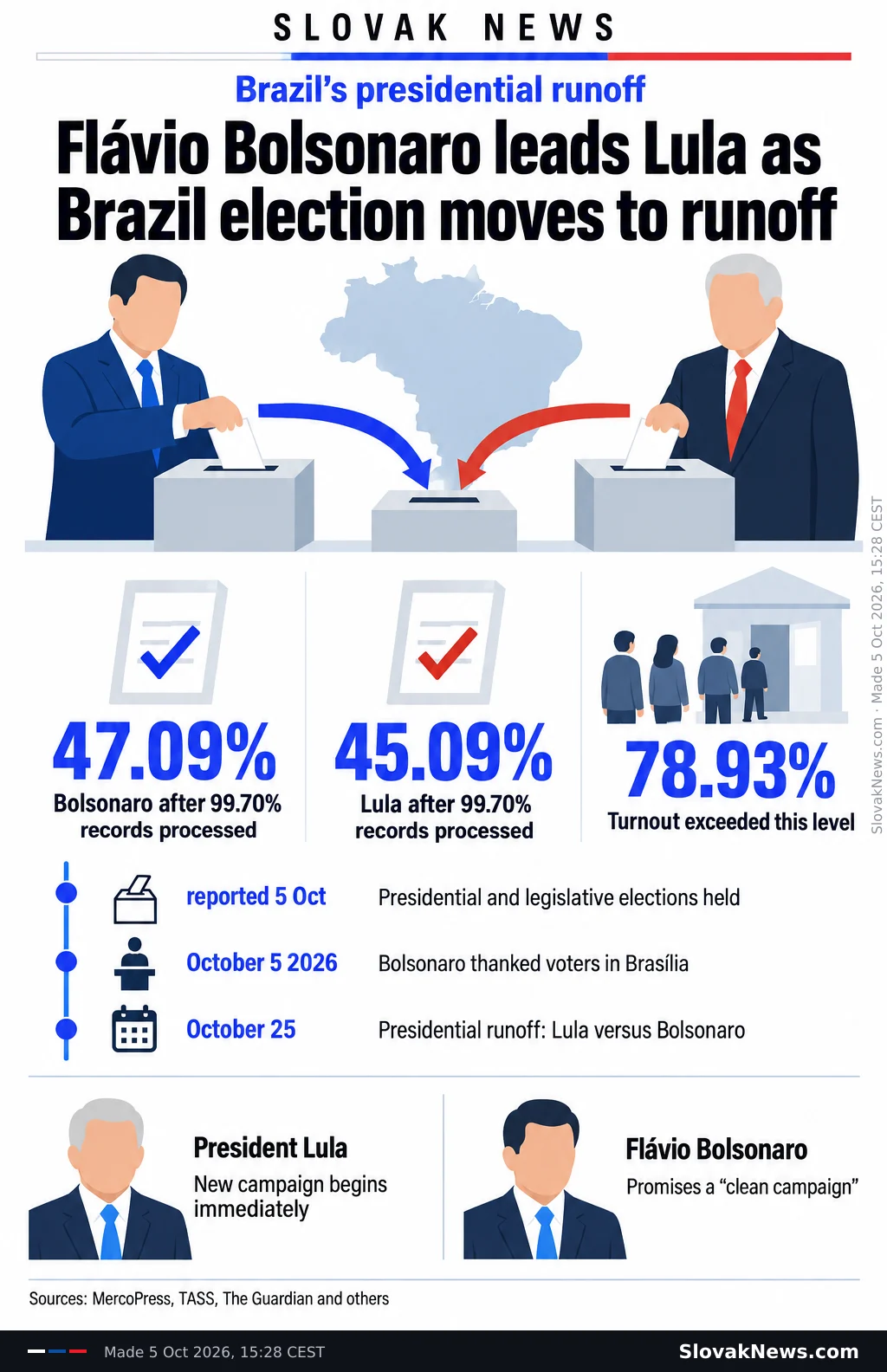
Infographic
What's new
- Bolsonaro won around 47% of valid votes, while Lula received about 45%.
- The Liberal Party won 121 of 513 lower-house seats, Al Jazeera reported.
- Bolsonaro pledged to seek congressional amnesty for his imprisoned father if elected.
Flávio Bolsonaro finished first in Brazil’s presidential-election opening round, winning around 47% of valid votes against roughly 45% for President Luiz Inácio Lula da Silva. Neither candidate reached the majority required for victory, setting up an October 25 runoff.2347
Infographic
A narrow first-round lead
Multiple reports put Bolsonaro’s first-round share at around 47% of valid votes and Lula’s at about 45%. Bolsonaro therefore finished first, but neither candidate reached the 50% threshold required to avoid a runoff. The dossier contains conflicting interim figures and does not include a fully certified final tally.2345
The result ran against polls that had placed Lula ahead. According to MercoPress, Datafolha's Saturday poll put Lula at 45% of valid ballots and Bolsonaro at 42%, while Quaest gave the president a five-point lead. Al Jazeera separately reported that polling had projected a Lula advantage of about three points.23
The eliminated candidates received nearly 8% of the vote between them and were largely from the centre-right, according to Getulio Vargas Foundation professor Oliver Stuenkel. He said this gave Bolsonaro an advantage in competing for their voters during the runoff.2
Campaigns reset for October 25
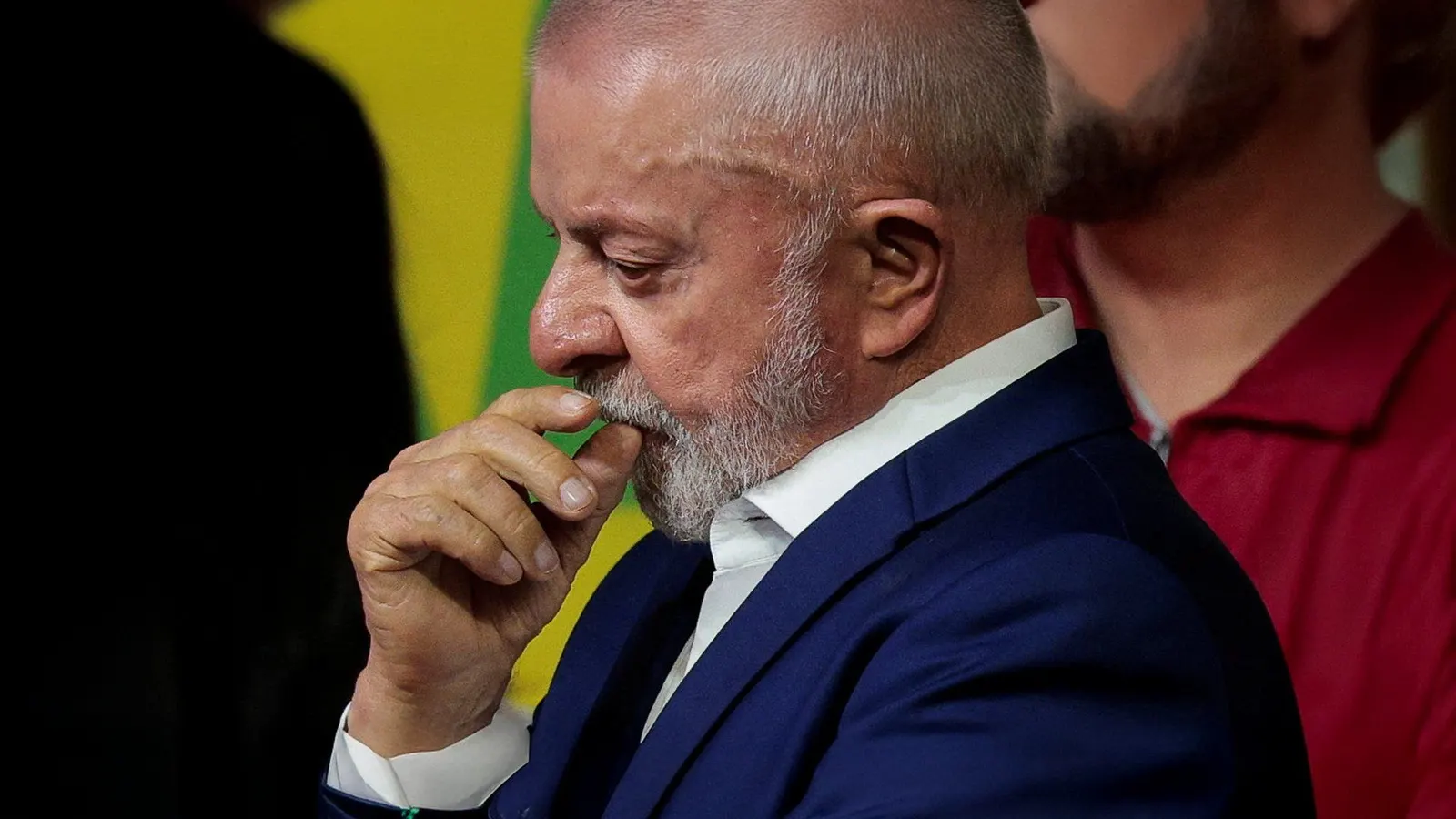
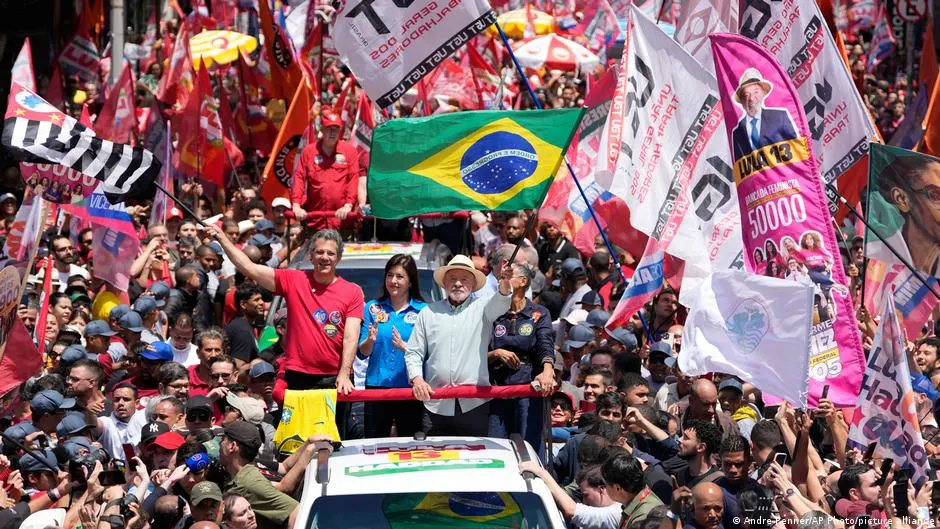
Lula now has three weeks to find additional support before the runoff. TASS reported that both candidates would participate in debates and seek undecided voters in southeastern metropolitan areas, while Lula called for voter mobilisation to resume immediately.45
Speaking to reporters in Brasília, Bolsonaro said Brazil wanted change and hailed what he called the end of the Workers’ Party era. He expressed confidence about winning, promised a clean campaign and said he had committed to ending presidential re-election. France 24 correspondent Time Vickery described him as being in a “very strong position”.257
Bolsonaro said that, if he wins, he will pursue an amnesty from Congress for his father, ex-president Jair Bolsonaro, who has been sentenced to 27 years in prison. Al Jazeera reported that such an amnesty would have to pass both chambers of Congress.2
TASS cited international affairs commentator Oleg Yasinsky as saying Brazil’s policy towards Russia was unlikely to change substantially regardless of the election outcome. He expected any major changes to focus more on domestic policy than foreign relations.5
Turnout and the wider ballot
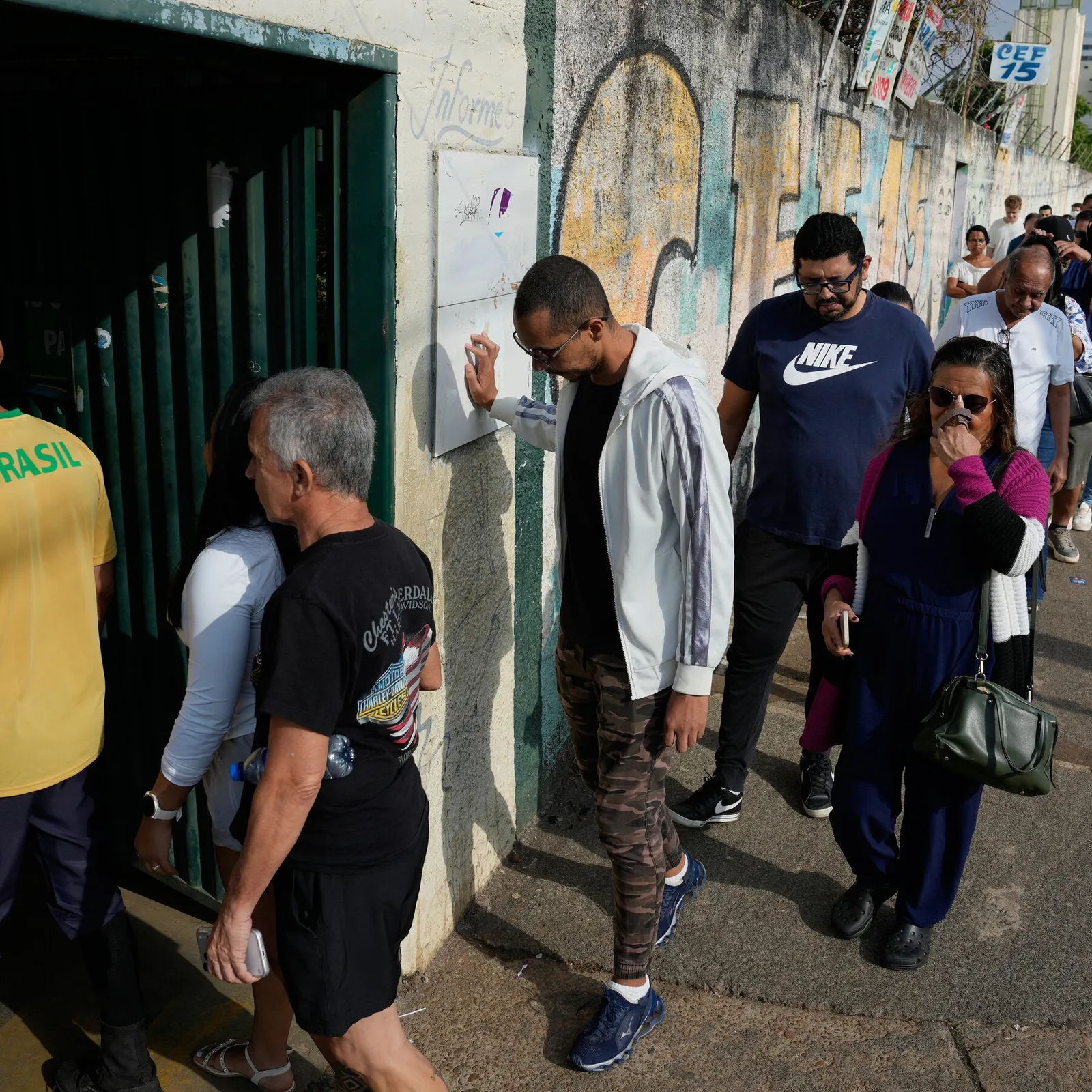
TASS reported turnout above 78.93%. Al Jazeera said about 30 million Brazilians, or 21% of the electorate, did not vote, while The Hindu reported 125.27 million valid votes.125
The congressional elections strengthened Bolsonaro’s political camp. Al Jazeera reported that the Liberal Party won 121 of the Chamber of Deputies’ 513 seats, compared with 70 for Lula’s Workers’ Party. The outlet also reported that Michelle Bolsonaro secured the Federal District's Senate seat, Carlos Bolsonaro took a Senate seat in Santa Catarina, and Jair Renan Bolsonaro won election to the Chamber of Deputies. TASS reported that Lula’s governing coalition lost ground.25
Trump misidentifies Brazil’s election
U.S. President Donald Trump cited the Brazilian vote in a Truth Social post but initially described it as an Indian presidential election. He claimed that 125 million people had voted and that results appeared shortly after polls closed; the reference to India was later corrected. India held no presidential election, and its president is chosen by an electoral college rather than by a direct popular vote.1
Why it matters
The result gives Brazil’s right a strong position before the runoff and leaves Lula three weeks to assemble a broader coalition. The simultaneous congressional elections could also affect the next president’s agenda: Al Jazeera reported that Bolsonaro’s Liberal Party won 121 of the Chamber of Deputies’ 513 seats, compared with 70 for Lula’s Workers’ Party.24
Videos
Related stories
Version history
- version 2 · The update confirms Bolsonaro as the first-round winner, adds congressional results and his amnesty pledge, corrects conflicting vote-count details, and includes Trump’s mistaken identification of the Brazilian election.
- version 1 ·