Brazil Senate approves shorter working week ahead of presidential runoff
The amendment would reduce the weekly limit from 44 hours to 40 without cutting pay. Its passage comes before Lula faces Flávio Bolsonaro in the October 25 runoff.
Listen to the story
Short version
Brazil’s Senate approved a shorter working week without pay cuts before the presidential runoff. Implementation will be phased.
- The weekly limit would fall from 44 hours to 40.
- Workers would receive two days off without salary cuts.
- Bolsonaro backed the amendment after previously opposing it.
- Reuters reports a 14-month implementation period.
What's new
- The Senate approved the amendment in both required votes.
- Flávio Bolsonaro backed the change after previously opposing it.
- Reuters reports a 14-month implementation period.
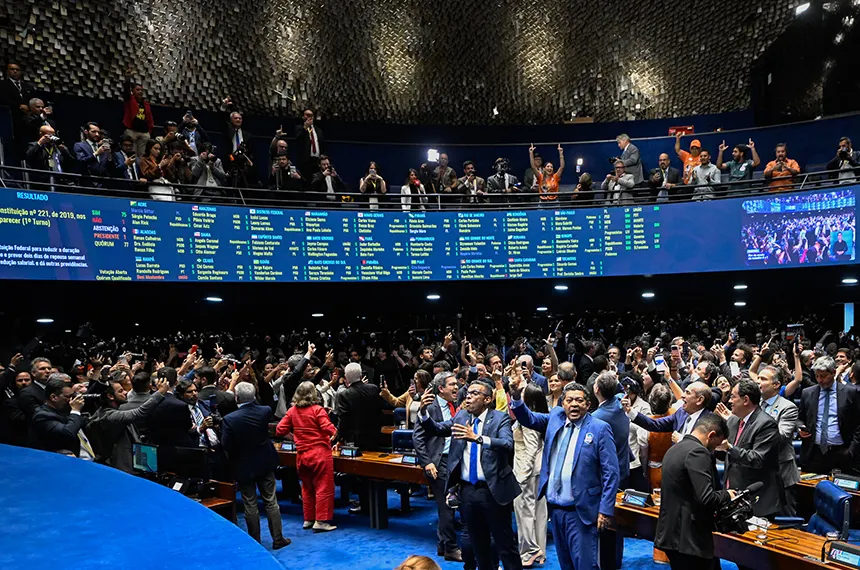
On October 14, Brazil’s Senate approved a constitutional amendment cutting the weekly maximum by four hours, to 40, while guaranteeing two rest days and no loss of pay. The vote in Brazil comes ahead of the October 25 presidential runoff between President Luiz Inácio Lula da Silva and senator Flávio Bolsonaro, who supported the measure after reversing his opposition.452
Two votes, a phased transition
The Senate’s news service reported that the amendment passed both rounds by 75 votes to one. Hamilton Mourão was the only senator to oppose it. The Chamber of Deputies had approved the proposal in May, followed by the Senate Constitution and Justice Committee in September, according to the same account.4
The change would end the six-days-on, one-day-off schedule used by about 16 million workers, according to The Guardian and The Straits Times. The Guardian reported that the workers principally affected are in shops, restaurants and hotels, and that most are on low wages. By Reuters’ estimate, the measure could help upwards of 37 million people in formal employment.135
Implementation will be gradual rather than immediate. According to the BBC, a two-month grace period would be followed by an initial reduction in the weekly cap to 42 hours, with a later cut to 40. Reuters put the implementation period at 14 months. According to The Guardian, the amendment will not take effect before the presidential runoff.125
A campaign issue crosses party lines
Lula made the shorter working week central to his effort to recover ground in the election, according to The Straits Times, which reported that he challenged Bolsonaro to support it and held rallies demanding passage. The BBC reported that Bolsonaro took 47% in the first round, compared with Lula’s 45.2%.23
Bolsonaro had warned in May that the proposal could lead to mass unemployment, The Guardian reported. Explaining his subsequent support, he cited workers’ backing for the change. His vote helped give the amendment support from across the political spectrum, according to Reuters.125
The electoral effect remains an assessment rather than an established outcome. Researcher Victor Escobar told The Guardian that approval could help Lula’s re-election campaign, while describing the contest as still open with some advantage for Bolsonaro. A Quaest survey dated October 14 put Bolsonaro at 51% and Lula at 49% of valid runoff votes, The Straits Times reported.13
Rest, costs and remaining rules
Business groups argue that the shorter week would increase costs and lower productivity, according to The Straits Times. The BBC reported that supporters expect an additional day off to leave workers better rested and more productive, while critics foresee higher production costs eventually feeding into consumer prices.23
For workers interviewed about the proposal, the issue also concerns time outside employment. Luciana de Almeida, a supermarket cashier in Rio de Janeiro, told the BBC that domestic chores usually consumed her only day off, limiting time with her three children. Researcher Marilane Oliveira Teixeira told The Guardian that having only one rest day can contribute to illness, exhaustion and workplace risks, particularly for women.12
Further legislative work is still needed, according to the amendment’s Senate rapporteur, Omar Aziz. The Senate news service reported his call for Congress to regulate some provisions quickly, including working hours in particular sectors.4
Why it matters
For European readers, the story brings together a debate over working time, pay and productivity with Brazil’s presidential contest. Supporters anticipate benefits from additional rest, while business groups warn of greater costs; those are competing expectations, not demonstrated results of the amendment.23
Videos
Related stories


Version history
- version 1 ·