World · People's Republic of China, Japan
China's Wang Yi Urges Japan to Normalize Strained Ties
China's top diplomat told a visiting former Japanese foreign minister that bilateral relations face a severe situation and must be normalized, as Beijing pressed Tokyo to correct statements on Taiwan.
China's Wang Yi told a visiting former Japanese foreign minister that ties must be normalized, while pressing Tokyo to correct statements on Taiwan amid accusations of remilitarization.
- Wang Yi met Takeshi Iwaya in Beijing on Sept 29
- Wang called for normalized ties and corrected Taiwan statements
- Dispute follows PM Takaichi's Taiwan remarks last November
- Chinese spokesman accused Japan of accelerating remilitarization
- 50-member Japanese business delegation accompanied the visit
What's new
- Wang Yi held talks in Beijing with Takeshi Iwaya, who previously served as Japan's foreign minister, on Sept 29
- Wang said ties must be normalized and Japan must correct its Taiwan stance
- A 50-member Japanese business delegation accompanied the visit
- Chinese Foreign Ministry spokesman Guo Jiakun accused Japan of inflating threats to remilitarize
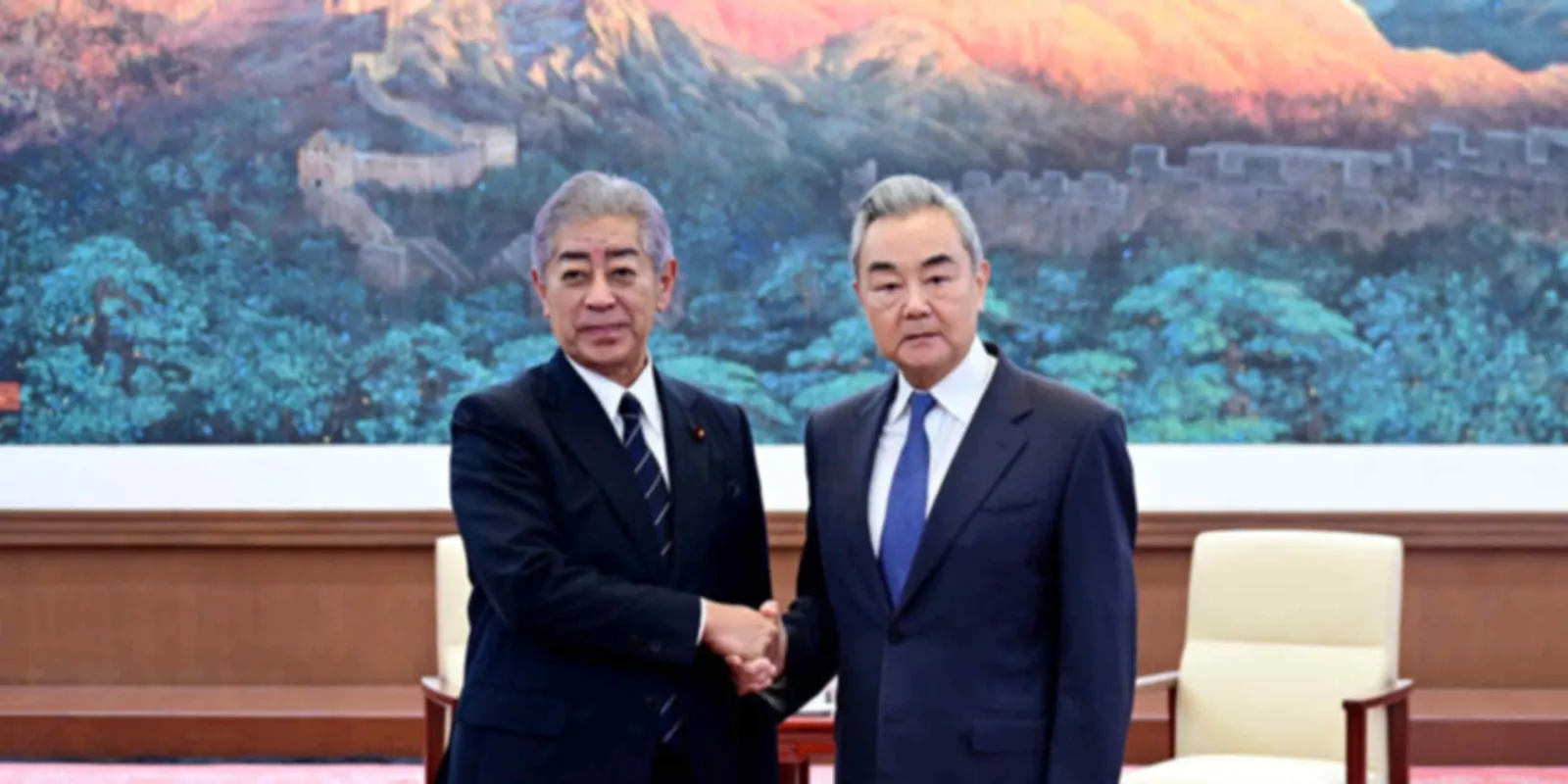
During their Sept 29 Beijing meeting, China's top diplomat Wang Yi informed Takeshi Iwaya, who once served as Japan's foreign minister, that the two nations' relationship is in a serious state and needs to return to normal, Nikkei Asia and The Japan Times reported.12
Meeting in Beijing
Wang Yi welcomed Takeshi Iwaya—who once held Japan's top diplomatic post and currently leads an organization promoting trade between the two countries—alongside a group of about 50 people, among them Japanese business leaders. Initially planned for June, the trip was delayed after Yohei Kono, who had previously led the delegation, passed away; Kono was the chief Cabinet secretary who delivered Japan's 1993 apology regarding comfort women. In June 2025 the delegation had held talks with Chinese Premier Li Qiang.1
Wang informed Iwaya that the countries' relationship has entered a serious state requiring a return to normalcy. "bilateral relations are facing a severe situation and must again be normalized," he said, according to The Japan Times.2
According to the South China Morning Post, the reception was the highest-ranking Chinese official meeting granted to a Japanese visit in nearly a year, coming ahead of the 55th anniversary of diplomatic ties next year.3
Dispute over Taiwan remarks
Wang pressed Tokyo to correct what he called erroneous statements by its leadership on Taiwan. "The pressing task is to correct the erroneous words and deeds of its leaders on the Taiwan question as soon as possible," he said, warning that otherwise "it will be impossible to open up a future," according to Nikkei Asia.12
The Japan Times reported that this marked the first formal encounter between a Japanese political figure and a senior Chinese official since relations deteriorated after Prime Minister Sanae Takaichi's November remarks concerning a potential Taiwan emergency. Citing The Japan Times, UA.News reported that Takaichi had informed Japan's legislature that a Taiwan emergency could prompt Japanese military involvement, and that China sought retraction of those comments before talks could continue—a condition Takaichi declined to meet.25
Iwaya committed to continuing Kono's work and helping restore the relationship between the two countries. "The current state of Sino-Japanese relations is concerning," he said, according to Nikkei Asia.1
History and remilitarization accusations
Wang also connected the dispute to Japan's wartime past, stating, according to the South China Morning Post, "A country that challenges its post-war 'peace constitution' or attempts to rewrite the history of wartime aggression … cannot face the world, let alone open up a future." Nikkei Asia pointed out that this year is the 80th anniversary of the founding of the International Military Tribunal for the Far East—the Allied court that prosecuted Japanese war criminals from 1946 to 1948—and cited China's assertion that Japanese neo-militarism is growing.31
Separately, Chinese Foreign Ministry spokesman Guo Jiakun said Japan was deliberately inflating external threats to accelerate remilitarization, stating, "Japan is inflating the so-called external threat and using it as a pretext to accelerate remilitarization," and adding that such statements "violate China's sovereignty and run counter to regional countries' expectations regarding the normalization of China-Japan relations." He argued Japan's actions put regional peace and stability at risk and said Takaichi's remarks were incompatible with China's sovereignty over Taiwan, which Beijing considers one of its provinces after Kuomintang forces under Chiang Kai-shek fled there following defeat in the Chinese Civil War, with the island governed by its own administration since 1949.4
According to UA.News, China charged Japan with reverting to militarism during what Beijing called Tokyo's biggest military expansion since the Second World War, while Japan denied the claim and instead pointed to China's extensive military growth. Japanese Chief Cabinet Secretary Minoru Kihara said of Iwaya's meeting that "it concerns the activities of a private economic organization," while stressing "the importance of maintaining multilevel communication between Japan and China despite existing differences."5
Why it matters
The exchange illustrates how tension over Taiwan and wartime history continues to strain relations between two of Asia's largest economies, with implications for regional security arrangements that involve the United States.25
Related stories
Version history
- version 1 ·