Health · Democratic Republic of the Congo
Ebola death toll in Democratic Republic of Congo passes 4,000
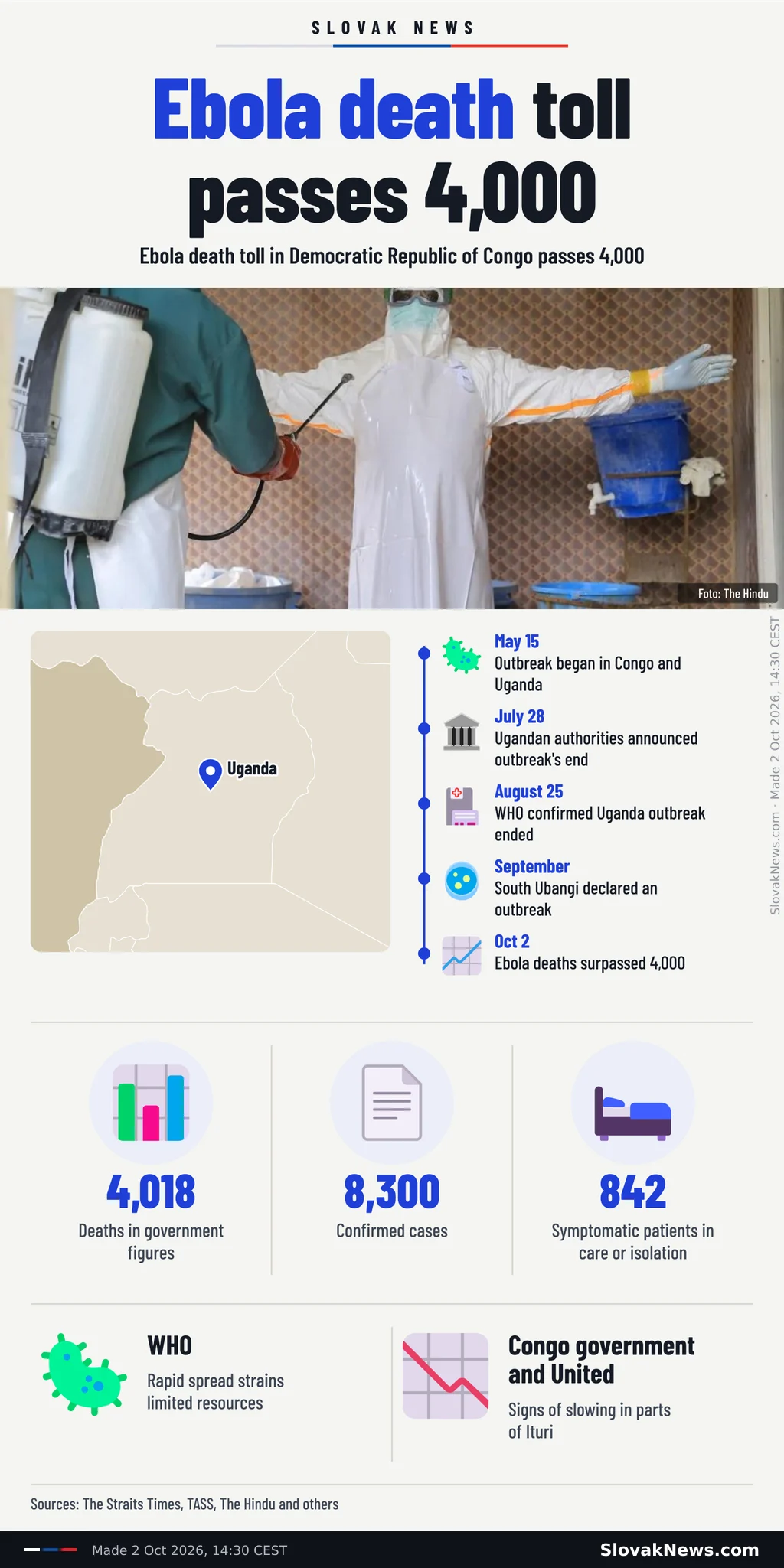
The World Health Organization has warned that the virus is spreading rapidly into new health zones, placing further pressure on limited resources.
Listen to the story
Short version
Ebola deaths in the Democratic Republic of Congo have exceeded 4,000 as the virus reaches additional health zones. WHO says the geographical spread is putting limited resources under greater strain.
- More than 4,000 deaths have been recorded.
- WHO warned of rapid spread into new health zones.
- One report put confirmed cases at 8,300.
- Seven Congolese provinces have reportedly been affected.
- Transmission may be slowing in parts of Ituri.
Infographic
What's new
- More than 4,000 Ebola deaths had been recorded by Oct 2.
- WHO warned of rapid geographical spread into additional health zones.
- Government data cited by one outlet put confirmed cases at 8,300.
- South Ubangi became the seventh affected province in September.
More than 4,000 people had died in the continuing Ebola outbreak in the Democratic Republic of Congo by Oct 2, according to reports citing the country’s authorities. The World Health Organization has also raised concern about the virus moving rapidly into new health zones and stretching limited resources.1345
Infographic
Government figures show the outbreak’s scale
Government data cited by The Straits Times put the toll at 4,018 deaths among 8,300 confirmed cases across seven provinces. The newspaper also reported that more than 2,000 patients had recovered. Those precise national figures have not been independently corroborated by the other sources in the dossier, although several outlets reported that the death toll had exceeded 4,000.1345
TASS separately reported 8,300 cases and a case fatality rate of 48.4%. It said 842 people with symptoms were receiving treatment in hospitals or medical isolation centres, while the contact-tracing rate stood at 80.6%. The outlet also said seven of the country’s 26 provinces had been affected.2
Spread into additional health zones
The World Health Organization’s warning focused on the speed at which the virus was reaching new health zones and the resulting pressure on limited resources. Reports said the outbreak continued to spread across eastern Congo, including North Kivu, despite indications that transmission may have been easing in parts of neighbouring Ituri province.134
Congo’s government and the United Nations reported in September that transmission appeared to be slowing in some areas of Ituri, according to The Straits Times. The newspaper reported that South Ubangi, in northwestern Congo, became the seventh province to declare an outbreak that month following the Ebola death of a man who had journeyed there from the country’s east.1
Sky News said Congolese authorities were having difficulty containing the virus. The Straits Times described the epidemic as the country’s worst and identified the Bundibugyo species as its cause, but those assessments and the identification of the species were not independently confirmed by the other reports in the dossier.15
Outbreak in Congo and Uganda
TASS reported that the current outbreak began in the Democratic Republic of Congo and Uganda on May 15. According to the outlet, Uganda’s government declared the country’s outbreak over on July 28, with the World Health Organization verifying its end on Aug 25.2
The same report described this as Congo’s 17th Ebola outbreak and said the first recorded human Ebola infection occurred in what is now the Democratic Republic of Congo in 1976. The Straits Times reported that the current epidemic had surpassed the country’s 2018-2020 outbreak in size and deaths, though that comparison was not independently supported elsewhere in the dossier.12
Why it matters
For readers in Europe, the reports document a large outbreak affecting seven Congolese provinces and a WHO warning that expansion into new health zones is straining limited resources.1234
Videos
Related stories
Version history
- version 1 ·