Health · Kenya, Democratic Republic of the Congo
Kenya quarantines ten contacts, traces 57 more as first Ebola case reveals screening gaps
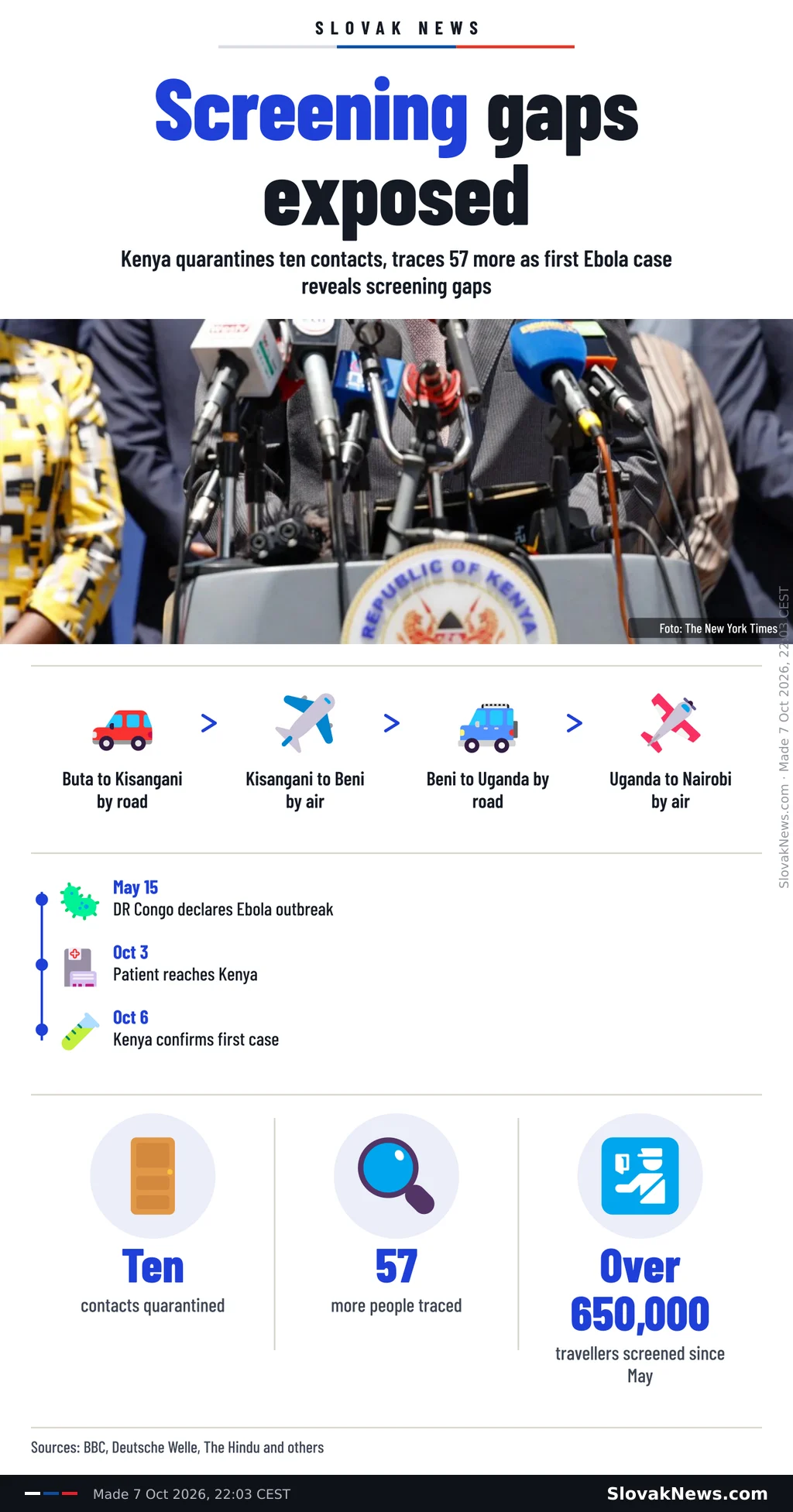
Kenyan officials have placed ten individuals who interacted with the nation's initial Ebola case under quarantine, while pursuing 57 further contacts and noting that the patient moved through several cities in the Democratic Republic of Congo without being detected, possibly because medication concealed symptoms.
Listen to the story
Short version
Kenya has quarantined ten contacts and is tracing 57 more after its first Ebola case revealed screening gaps as the patient travelled undetected from DR Congo.
- Ten contacts quarantined, 57 more being traced
- Patient travelled Buta→Kisangani→Beni→Uganda→Nairobi undetected
- Possibly passed screening after taking symptom-masking medication
- Patient hospitalized, died, and buried Tuesday in Nairobi
- Over 650,000 travellers screened, 267 tested since May; 4,000+ died in DR Congo
Infographic
What's new
- Ten contacts of Kenya's first Ebola patient have been quarantined
- Authorities are tracing 57 additional contacts of the patient after his travel from DR Congo
- The patient travelled from Buta to Kisangani to Beni to Uganda to Nairobi without detection
- Health officials say the patient may have passed screening after taking medication that masked symptoms
- Kenyan authorities urge public not to panic amid heightened surveillance at airports and borders
- Over four thousand fatalities from Ebola have been recorded in the Democratic Republic of Congo during the current year.
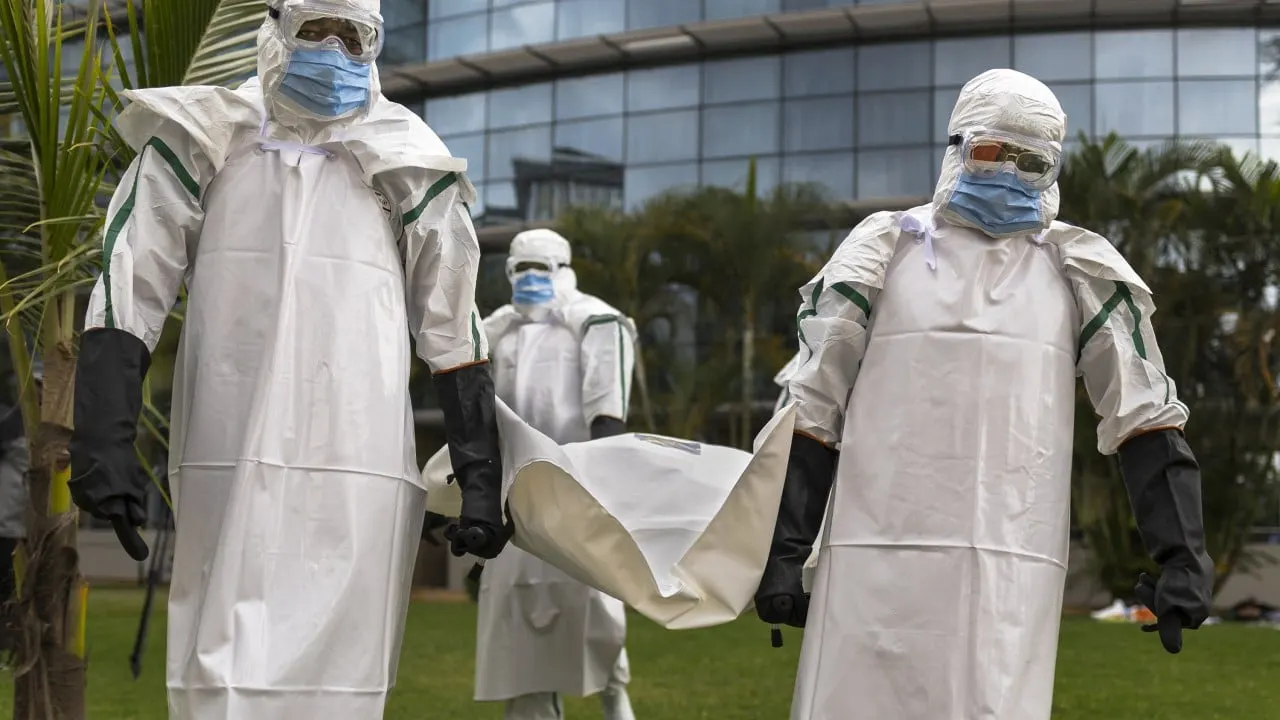
Ten individuals who had contact with a man who succumbed to Ebola in Kenya are now in quarantine, and health authorities are attempting to locate 57 additional people who may have been exposed to the Kenyan patient following his journey from the Democratic Republic of Congo. The individual traveled through various locations in the Democratic Republic of Congo, departing from Buta in the north, proceeding to Kisangani by road, flying to Beni, then moving overland to Uganda before boarding a flight to Nairobi, all while avoiding detection despite being ill. Upon landing at Nairobi’s airport, a family member transported him to a medical facility in the city where he later passed away, and his burial on Tuesday followed established health and safety protocols.1
Infographic
Patient isolated in Nairobi
The patient had lived in the Democratic Republic of Congo for seven years and arrived in Kenya on October 3 after travelling through Uganda. He had been ill for about a month and received treatment at several hospitals in Congo before travelling by road to Kampala and then flying to Nairobi, according to accounts released by Kenyan authorities.1389
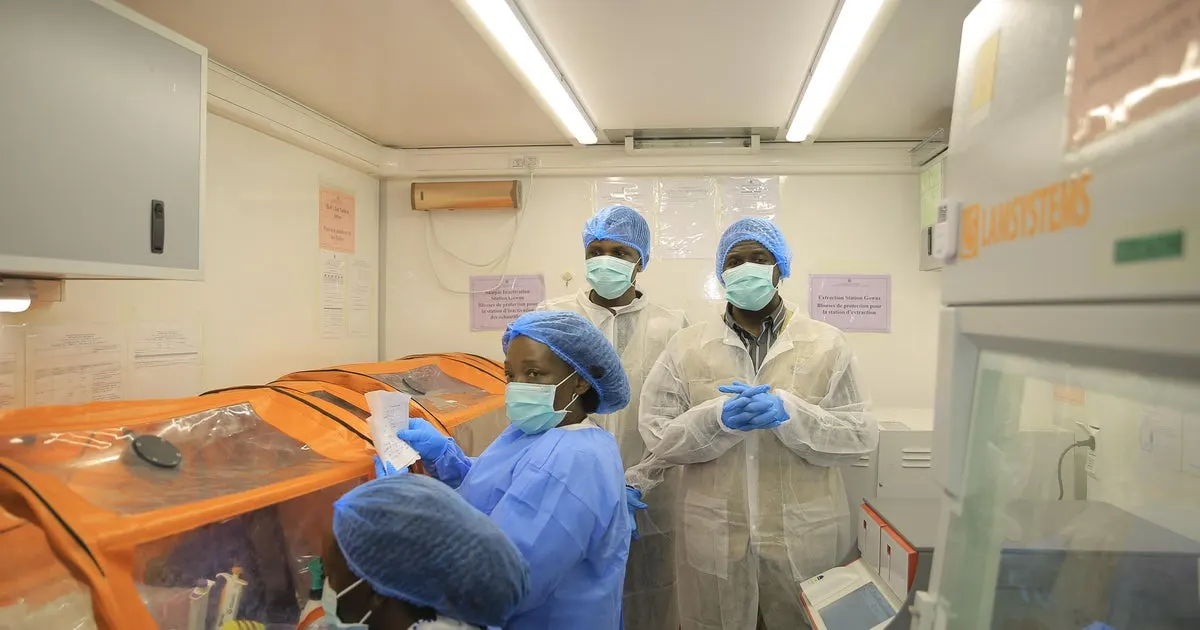
After arriving in Nairobi, he was taken to Nairobi Hospital and kept in an isolation section of the emergency room before moving to the isolation ward located in the hospital's East Wing. Doctors suspected a viral haemorrhagic fever because of his symptoms and travel history. Samples later tested positive for Ebola Bundibugyo virus disease, and the patient died despite supportive treatment, the Health Ministry said.389
Contacts and flight tracing
Officials identified 28 people who had contact with the patient, including relatives and healthcare workers. Authorities were preparing quarantine arrangements, while Patrick Amoth, a Kenyan health official, said the contacts would remain isolated for 21 days. The government also launched efforts to find the 23 passengers and four crew members aboard Jambojet flight JM8523, which travelled via Entebbe to Nairobi.1234
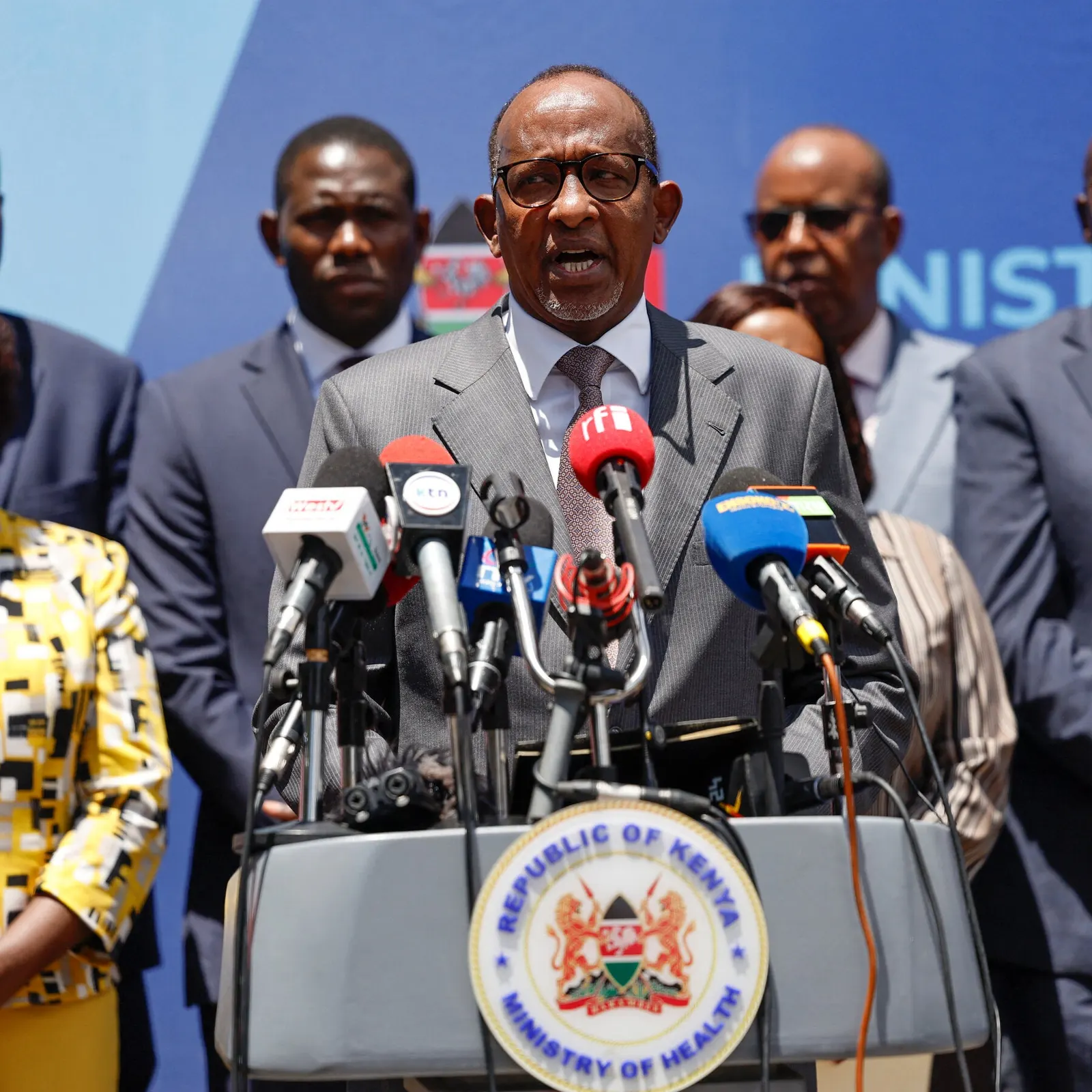
Health Minister Aden Duale said systems had been activated to limit transmission and asked the public not to panic. Kenya had already been screening travellers and testing samples as part of heightened Ebola surveillance before confirming the positive result.48
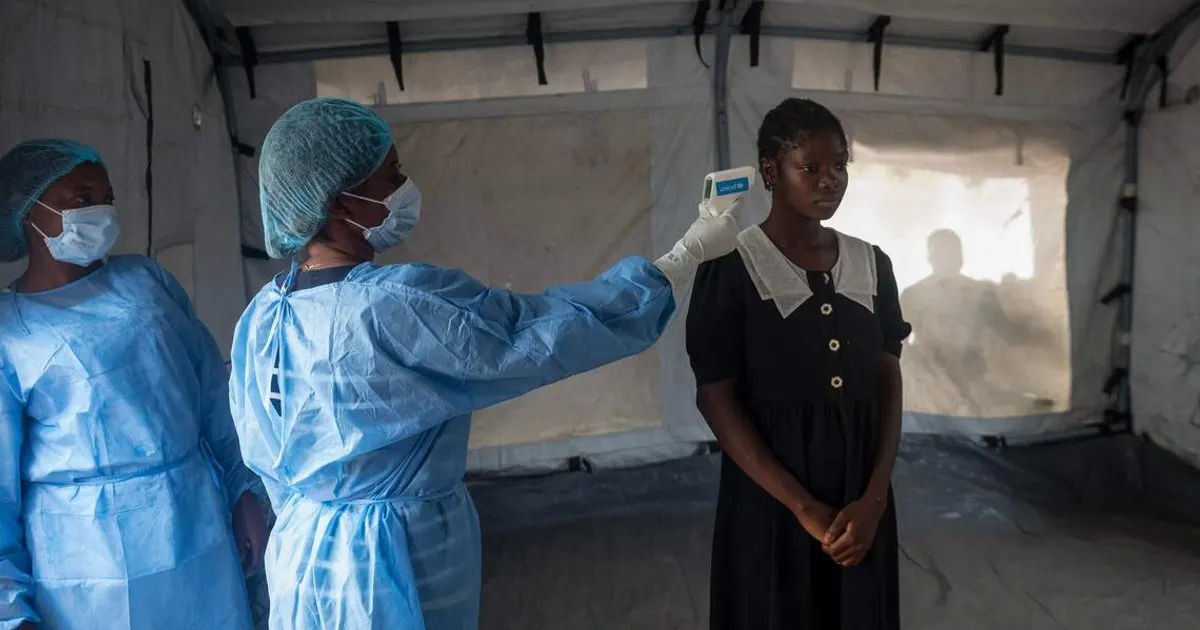
According to the Ministry of Health, 652,584 travellers have undergone screening and 267 samples have been examined since enhanced Ebola monitoring started in May, and this Kenyan patient represents the sole confirmed case. Testing of the samples took place at two facilities: the National Virology Reference Laboratory and the Kenya Medical Research Institute.7
Outbreak centred in Congo
The Kenyan case is linked to the ongoing outbreak in the Democratic Republic of Congo, described by several reports as the country’s largest Ebola outbreak. The outbreak has produced in excess of 8,000 reported infections and 4,000 fatalities. The World Health Organization recorded 4,082 deaths among 8,463 cases since the Bundibugyo species emerged, according to the BBC.34510
The outbreak was declared in mid-May and has spread beyond Congo. Kenya became the fourth country to record a case during the current outbreak. Uganda reported 20 cases and two deaths before the World Health Organization declared it free of Ebola in August.1234
Before Uganda's Ebola-free status was announced, the country had logged 20 cases and two fatalities, and separately France documented a single case tied to the outbreak. Some officials have described the current epidemic as the fastest-growing Ebola outbreak in history.12
Vaccine and treatment trials were under way in Congo’s Ituri province. The Associated Press reported that more than 250 people had joined a trial of a drug intended to prevent illness among people exposed to the Bundibugyo virus, while weak contact tracing was complicating enrolment and containment. Reports said no vaccine or treatment had been approved for this Ebola species.1236
How Ebola spreads
People can contract Ebola by coming into direct contact with fluids from an infected individual who is alive or has died. It can cause fever, vomiting and diarrhoea; severe cases may involve internal or external bleeding. Duale said the Kenyan patient experienced fever, chills, fatigue, weakness, muscle pain, painful swallowing and bleeding beneath the skin.1345
According to the World Health Organization, Ebola can incubate for anywhere from two to 21 days, and the agency advises swiftly spotting and separating those showing symptoms to curb spread of the disease. Officials have said the virus is not spread by someone who is infected but not yet showing symptoms.7
Médecins Sans Frontières said on October 1 that an unnamed staff member working on the Ebola response in Congo had also tested positive for Bundibugyo virus disease. The organisation said the worker was being medically evacuated under strict protocols to a designated hospital in the Netherlands.10
Why it matters
The quarantine of ten contacts and tracing of 57 more highlights significant gaps in Kenya's Ebola screening measures, especially as the patient evaded detection despite being ill for a month. Kenyan officials have called for calm, with the Ministry of Health confirming increased monitoring at entry points, and President William Ruto stating that surveillance units and rapid response teams are actively deployed nationwide. The Ebola outbreak in the Democratic Republic of Congo has resulted in over 4,000 deaths this year, ranking it as the second deadliest recorded outbreak of the virus.1
Videos
Related stories
Version history
- version 4 · Updated with latest reporting on quarantined contacts, additional contact tracing, patient's undetected travel route, symptom-masking medication concern, burial details, and updated death toll in DR Congo.
- version 3 · Updated with latest reporting confirming Kenya's first Ebola case, patient death, flight details, contact tracing, and Ministry of Health screening figures.
- version 2 · Added details on the patient's Jambojet flight number and route, Kenya's status as the fourth country in the outbreak, new Ministry of Health screening and testing figures, and WHO guidance on Ebola transmission and incubation.
- version 1 ·