World · Belgium, Ukraine
EU budget talks deferred after walkouts as Bulgaria shifts on Ukraine loan
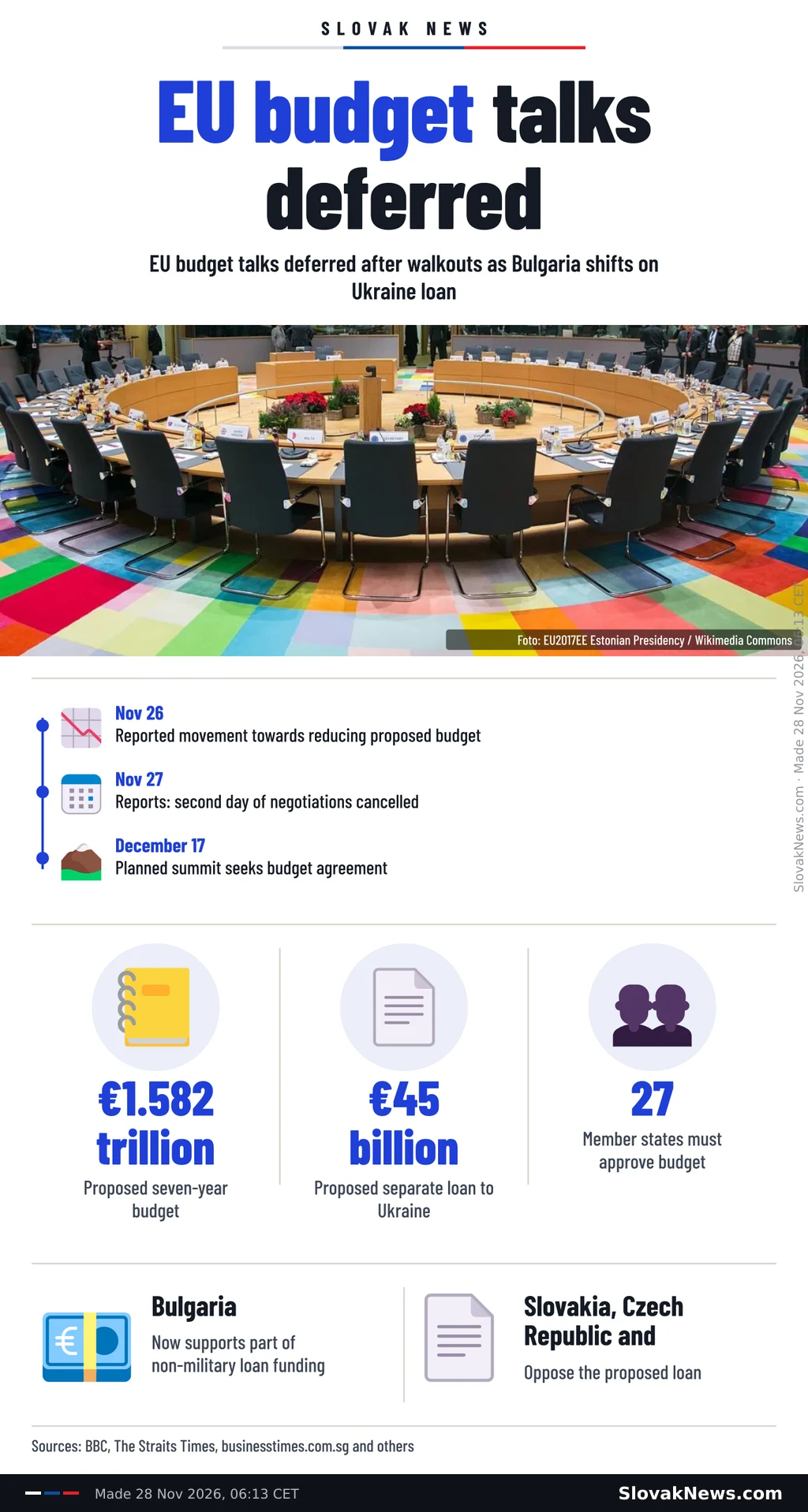
The BBC reports that four countries walked out during 12 hours of Brussels negotiations. Leaders will return on December 17–18, while Bulgaria now says it will fund part of the Ukraine loan’s non-military support.
Listen to the story
Short version
EU budget negotiations have been deferred until December after reported walkouts. Bulgaria has shifted to supporting part of the Ukraine loan’s non-military funding.
- Four countries walked out, including Denmark and Austria, according to the BBC.
- The current seven-year budget proposal totals €1.582 trillion.
- Bulgaria now supports part of the Ukraine loan’s non-military funding.
- Slovakia, the Czech Republic and Hungary oppose the proposed loan.
- The European Council announced a December 17–18 summit to revive negotiations.
Infographic
What's new
- The BBC reported that delegations from four nations left the talks early, among them Denmark and Austria.
- Bulgaria now says it will fund part of the proposed Ukraine loan’s non-military support; three countries remain opposed.
- The BBC reports proposed spending cuts of approximately €220 billion to €230 billion.
- The European Council announced a December 17–18 summit to revive budget negotiations.
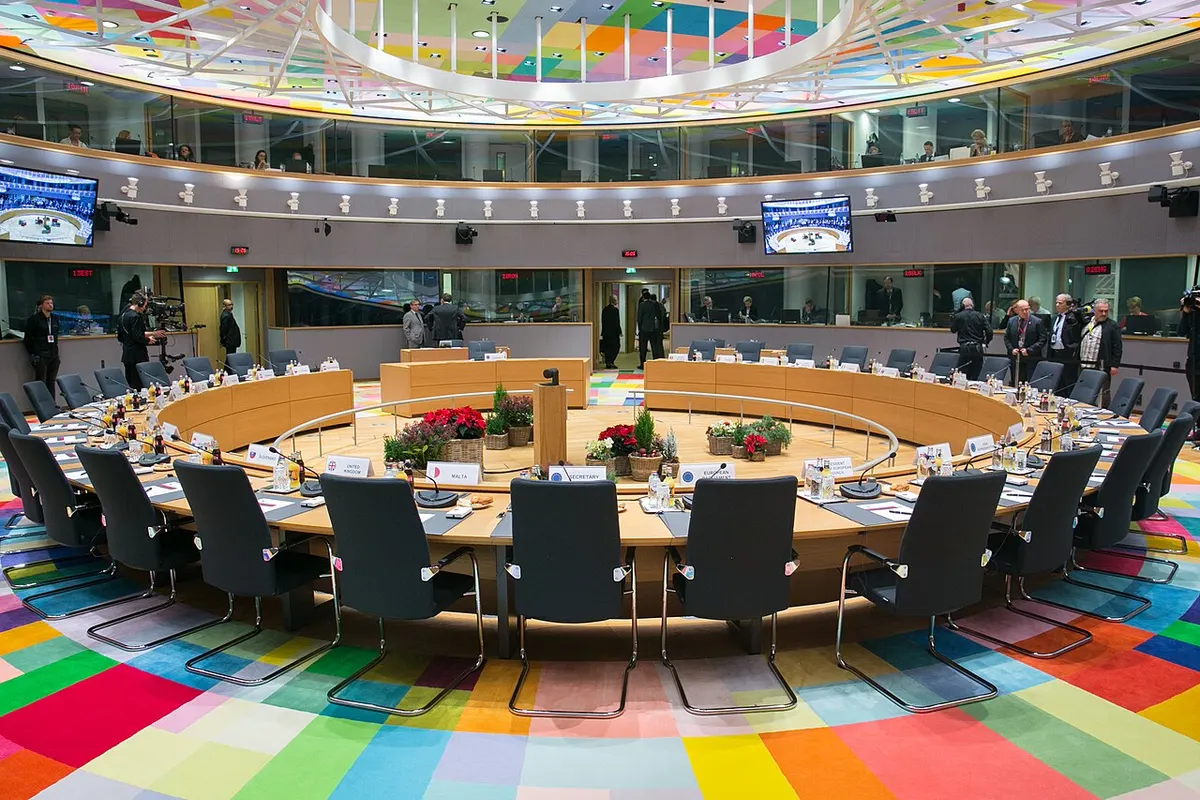
European Union leaders deferred negotiations on their 2028–2034 budget after 12 hours of talks in Brussels on November 26, with four countries, including Denmark and Austria, walking out, the BBC reported on November 27. The European Council announced a December 17–18 summit to revive negotiations, while Bulgaria shifted from opposing the proposed Ukraine loan to supporting part of its non-military funding.1
Infographic
Differences over spending
The latest proposal totals €1.582 trillion, including €140 billion for repayment of borrowing undertaken during the pandemic. About €740 billion would go to farmers and less-affluent EU regions. Approval of the seven-year budget requires the consent of all 27 member states.24
Countries that pay more into EU finances than they receive want a smaller budget and greater emphasis on competitiveness, according to Cyprus Mail/Reuters. Countries receiving more than they contribute argue that competitiveness should be supported alongside agriculture and regional funding, rather than replacing those priorities.4
Officials cited by The Business Times said governments remained divided over the overall spending level, possible new EU taxes and funding to reduce economic differences between regions. The outlet reported that leaders also met in smaller groups to explore compromises, but their positions remained too far apart to continue on Friday.3
The BBC reported that four countries, including Denmark and Austria, walked out during 12 hours of negotiations on Thursday. It said the European Council had arranged talks aimed at breaking the impasse, with proposed spending reductions of approximately €220 billion to €230 billion. No further round of Brussels negotiations was scheduled for Friday.1
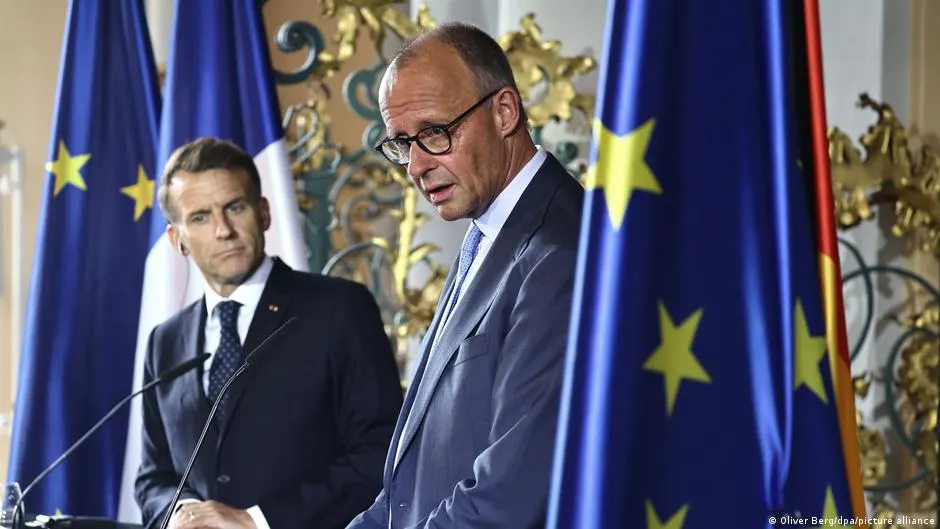
French President Emmanuel Macron said reducing long-term spending would be a strategic mistake, according to the BBC. The broadcaster reported that Germany was prominent among governments seeking financial restraint, while countries favouring higher spending wanted funding for agriculture and regional development.1
Ukraine loan and budget links
The long-term plan provides for up to €100 billion for Ukraine, principally for defence and budget support. Separately, the EU proposes borrowing €45 billion to lend to Ukraine, with repayment postponed until Russia pays war reparations. Together with another €25 billion expected from outside the EU, the financing would cover Ukraine’s €70 billion funding gap in 2027.24
Cyprus Mail/Reuters identified Britain, Norway, Japan, Switzerland and Canada as the expected providers of the additional €25 billion. Diplomats cited by The Straits Times said the Ukraine allocation in the seven-year budget remained substantially below the country’s requirements.24
Germany and several other members have made participation in the loan a condition for agreeing the broader budget. The BBC reported that Slovakia, the Czech Republic and Hungary opposed the loan, but Bulgaria, which had previously objected, now said it would fund part of its non-military support. German Chancellor Friedrich Merz reiterated that Ukraine aid should be supported by the EU as a whole.124
The Business Times reported that Germany and the Netherlands wanted certain budget benefits withheld from countries that did not join the loan. It also said the loan itself was not endangered by the disagreement over linking participation to those benefits.3
December negotiations
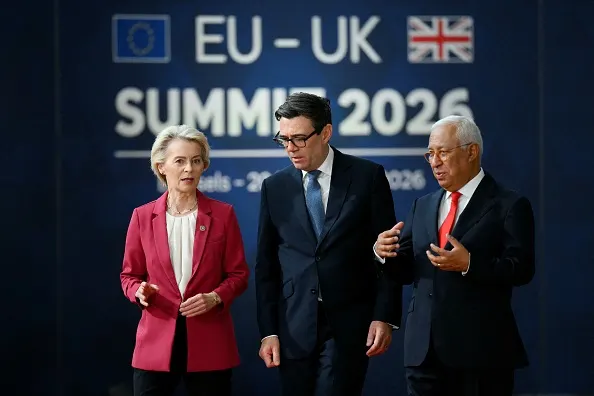
The European Council announced a December 17–18 summit in Brussels to revive budget negotiations, according to the BBC. European Council President Antonio Costa is expected to put forward another proposal for possible consideration at the summit, Cyprus Mail/Reuters reported.134
Why it matters
The negotiations concern funding for farmers, infrastructure and defence, as well as spending intended to reduce regional economic disparities. Disagreement over which countries should finance Ukraine is also being tied to access to some EU budget benefits, according to The Business Times.3
Videos
Related stories
Version history
- version 2 · New reporting describes walkouts and proposed spending reductions, confirms a December summit and updates Bulgaria’s position to partial support for non-military Ukraine financing.
- version 1 ·