World · United Kingdom
UK and EU agree reset as university tuition fees remain unsettled
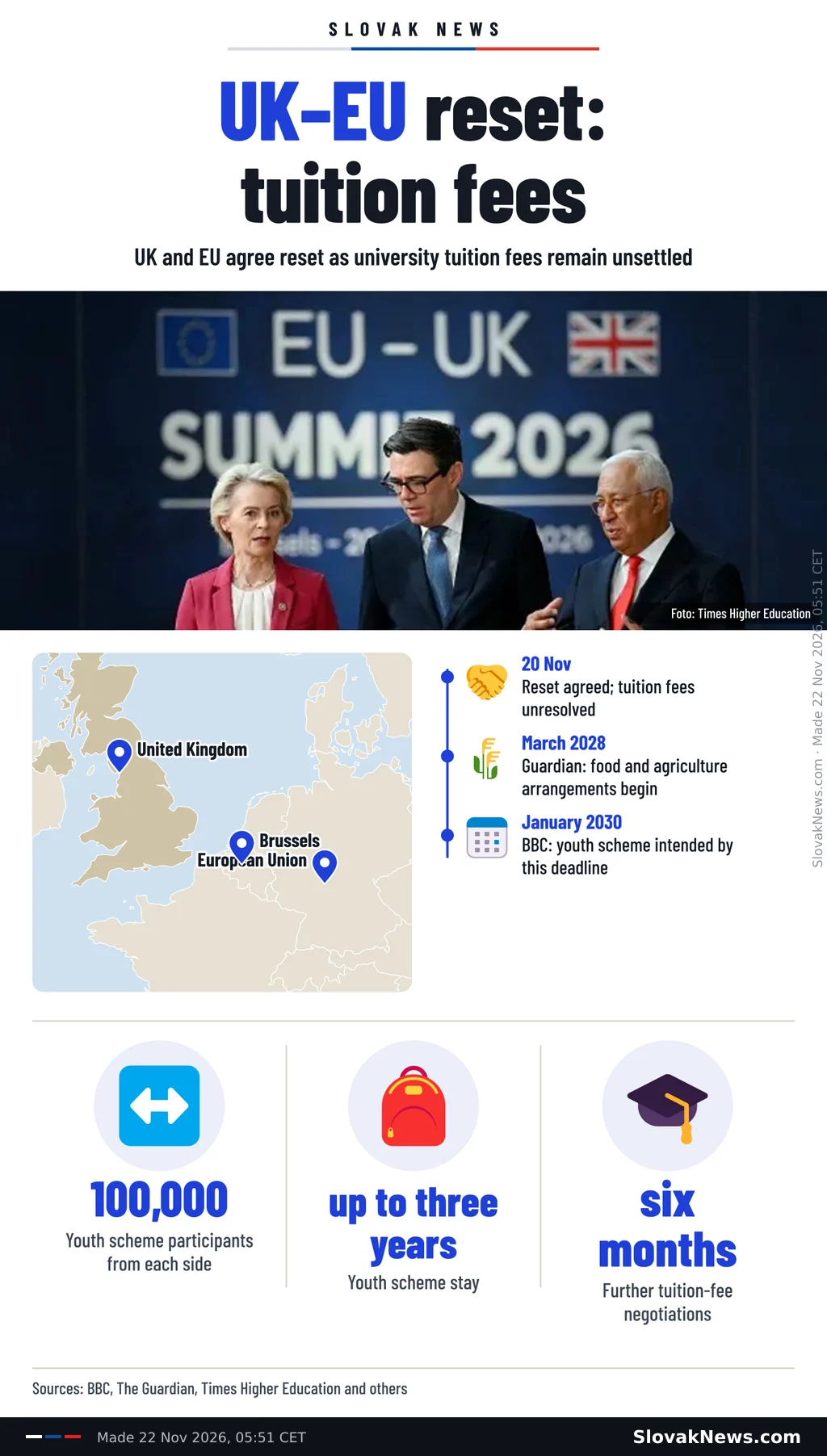
The agreement covers food exports, emissions trading and youth mobility. Negotiators have left student fees unresolved, with EU and UK officials giving different accounts of the consequences for implementation.
Listen to the story
Short version
Britain and the European Union have reached a deal to renew their relationship, while tuition rates have yet to be settled. Reporting also points to potential manufacturing cooperation and closer relations.
- The reset covers food exports, emissions trading and youth mobility.
- The youth scheme allows 100,000 participants from each side.
- Tuition-fee talks have another six months; implementation conditions remain contested.
- The UK gained potential inclusion in the EU’s Made in Europe policy.
Infographic
What's new
- The UK and EU have concluded negotiations on their reset agreement.
- Tuition-fee discussions have been extended by six months.
- The youth scheme would allow 100,000 participants from each side.
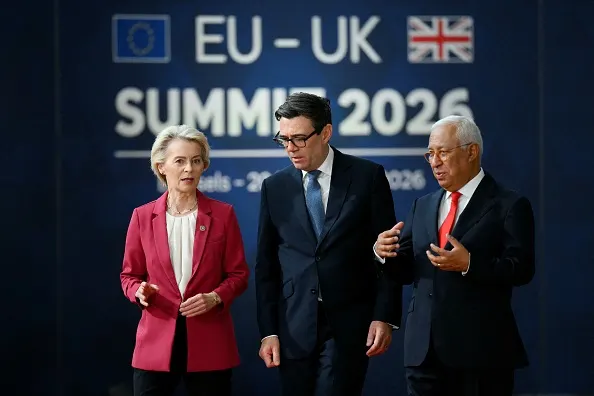
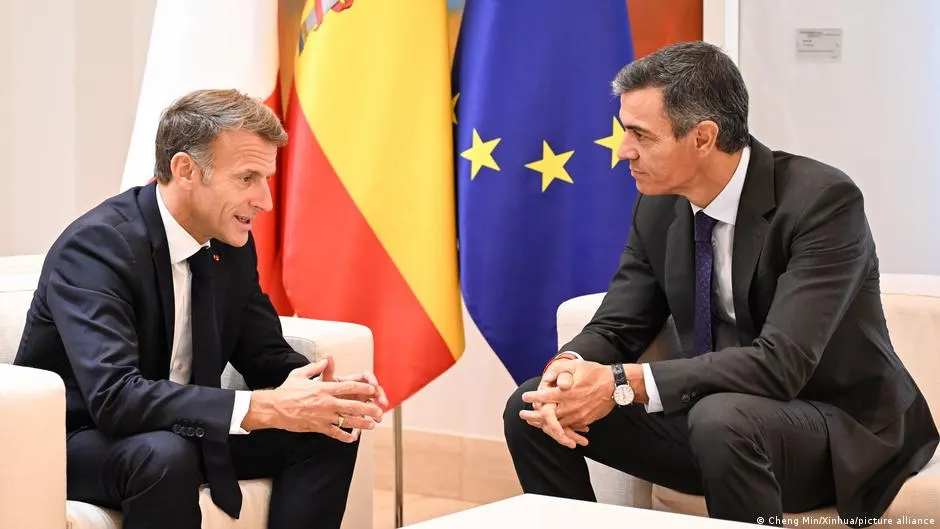
UK prime minister Andy Burnham and European Union leaders agreed a reset of their relationship in Brussels on 20 November 2026, covering food exports, emissions trading and youth mobility while leaving the tuition fees EU students would pay at British universities unsettled.12
Infographic
Fees left for further negotiation
At the summit, Burnham held talks with Ursula von der Leyen, who leads the European Commission, and António Costa, the European Council president. Downing Street said negotiations on the reset had concluded, but discussions over university fees would continue for another six months, according to the Guardian.2
The EU is seeking domestic rather than international tuition rates for its students in the UK, the Guardian reported. The European Council and Commission said the agreement should ensure the same fee treatment as nationals for all students. The newspaper reported that Britain had suggested a rate as low as £12,000, rather than settling the amount.2
Any agreement on fees would also cover British students studying in the EU. According to Times Higher Education, the planned supplementary agreement would apply to students from the other side regardless of the immigration route they used.13
The Guardian reported that the UK also gained potential inclusion in the EU’s Made in Europe policy. In reporting ahead of the summit, the BBC linked possible access to an EU manufacturing scheme with a possible reduction in fees for EU students at British universities. That reporting did not establish an agreed fee rate or guaranteed manufacturing access.12
Different accounts of implementation
EU officials said implementation of the other agreements depended on resolving tuition fees, Times Higher Education reported. British officials, by contrast, described the food, youth mobility and emissions arrangements as separate from the fee negotiations.3
The Guardian also reported that the three agreements would not take effect without a tuition settlement, while recording UK officials' assurances that failure to agree fees would not jeopardise them. It separately reported that food and agriculture arrangements would begin in March 2028 irrespective of a fee agreement. Those accounts leave the implementation conditions unresolved.2
The food arrangement will remove most checks on British food exports from 2028, with the UK following some EU regulations. The government believes this will lower business costs and could bring down prices for shoppers, according to the BBC. The broadcaster reported a Treasury estimate of an economic boost of up to £17bn annually.1
Study opportunities and university finances
The youth mobility scheme would enable 100,000 young people from each side to live, work, travel and study across the Channel for as long as three years. According to the BBC, opportunities under the annual scheme are intended to be available no later than January 2030.12
The National Union of Students welcomed lower fees, Times Higher Education reported. But Hollie Chandler, the Russell Group's director of strategic policy, warned that reducing charges for EU students would put pressure on places for UK students and reduce funding entering British higher education.3
Political responses also differed. Kemi Badenoch criticised the requirement for British farmers to follow EU rules, while Nigel Farage opposed the reset. Ed Davey welcomed the youth mobility scheme as progress but said it did not go far enough, according to the BBC.1
Scope for closer relations
According to the BBC, Burnham said before the summit that the cooperation would bring Britain and Europe into a stronger partnership without the UK re-entering the EU. The broadcaster also reported that the two sides would explore options for closer relations through informal discussions.1
The BBC reported that Burnham might propose returning to the EU’s customs union or single market, but not before the next general election. That remains a possibility rather than an agreed policy. Labour’s 2024 manifesto ruled out a return to the single market, customs union or freedom of movement.1
Why it matters
The agreement would expand opportunities for young people in Britain and the EU to work and study across the Channel, while changing the arrangements for British food exports. The unresolved tuition settlement would affect students on both sides, and officials disagree over its relationship to implementation of the wider deal.123
Videos
Related stories
Version history
- version 2 · This update adds reporting on potential manufacturing access and the scope for closer UK-EU relations without treating pre-summit expectations as superseding the agreed reset.
- version 1 ·