World · United Kingdom
Burnham Opens Door to Closer EU Ties, Possible Rejoining
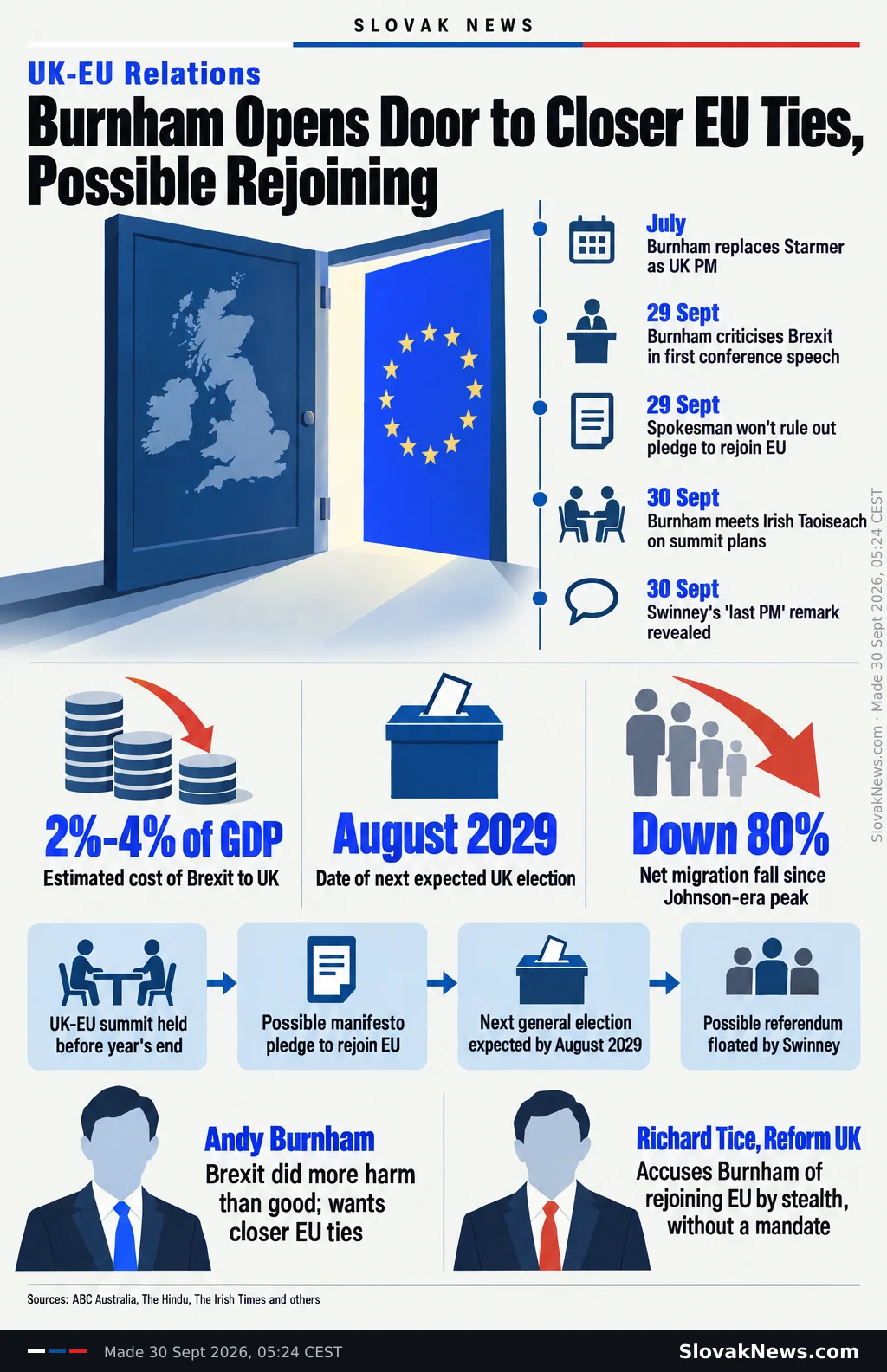
UK Prime Minister Andy Burnham told the Labour Party Conference that Brexit had done more harm than good and pledged to set out options for Britain's future relationship with the EU, including the possibility of rejoining after the next election.
Listen to the story
Short version
Burnham said Brexit had done more harm than good and opened the door to Britain rejoining the EU after the next election, with a summit set before year-end.
- Burnham raised possibility of UK rejoining EU after next election
- Spokesman would not rule out a manifesto pledge to rejoin
- UK-EU summit confirmed before end of year
- Swinney's 'last PM' remark made on day Burnham's father died
- Reform UK's Tice accused Burnham of rejoining EU by stealth
Infographic
What's new
- Burnham suggested that Britain could rejoin the EU once the next general election has taken place
- His spokesman would not dismiss the idea of committing in a manifesto to rejoining ahead of the 2029 election
- Burnham confirmed a UK-EU summit will take place before the end of the year
- He revealed that Scottish First Minister John Swinney's 'last Prime Minister' remark was made on the day his father died
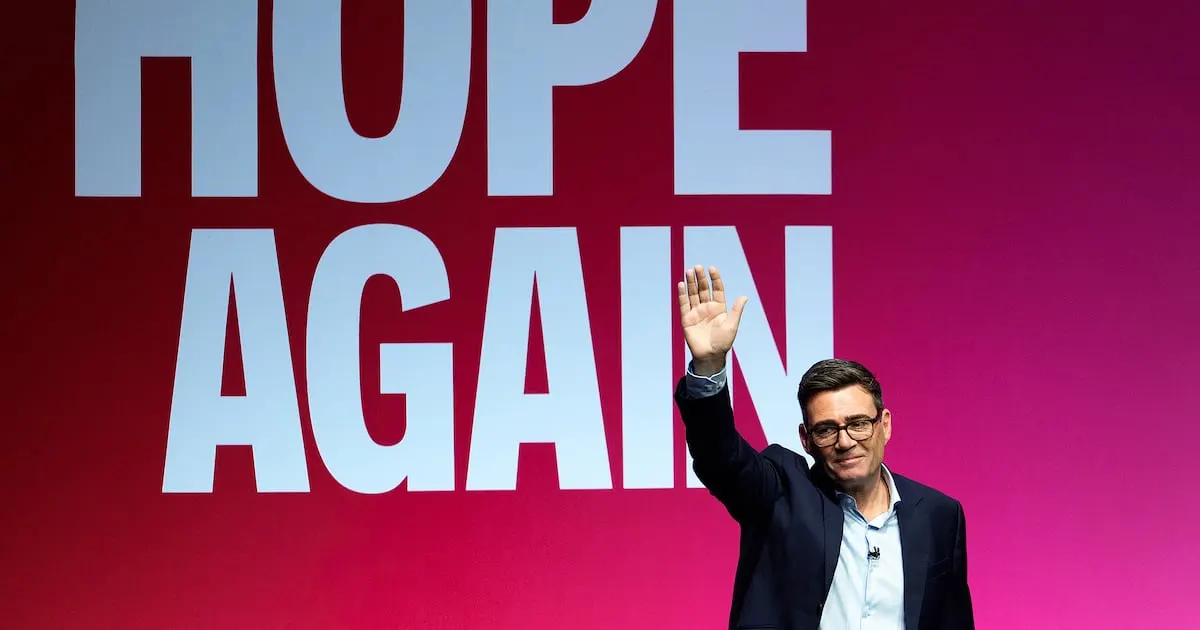
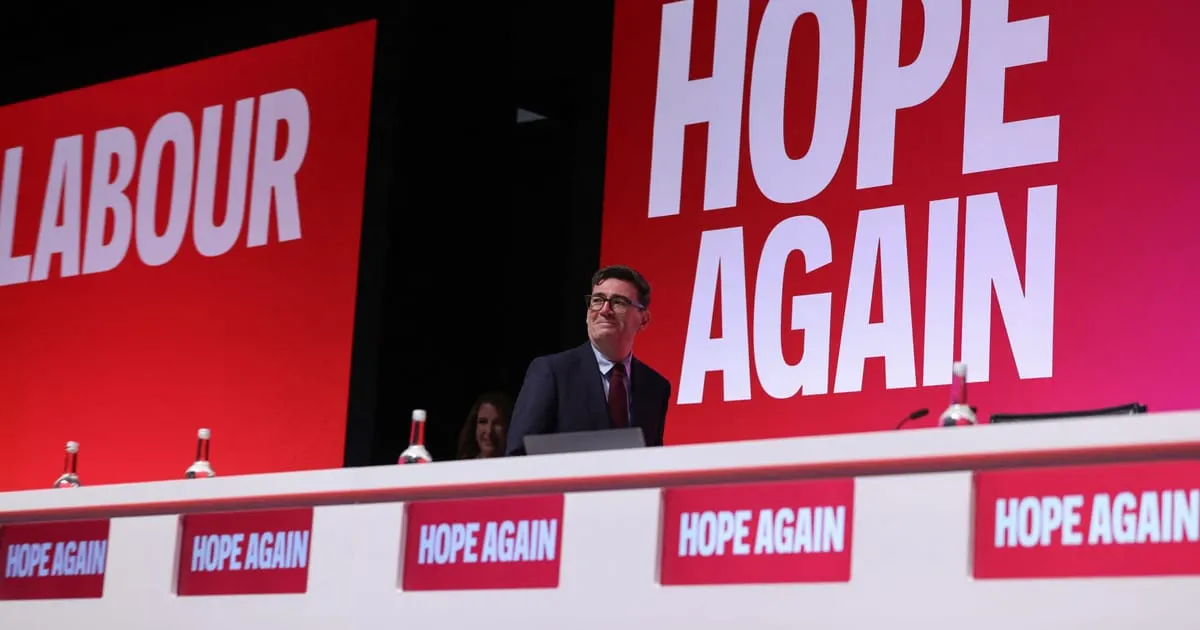
Speaking to delegates gathered for the Labour Party Conference in Liverpool on Tuesday, UK Prime Minister Andy Burnham described Brexit as having "done more harm than good," pledging to use a forthcoming summit with the European Union to outline options for Britain's long-term relationship with the bloc, potentially including rejoining once the next general election has passed.134
Infographic
EU options on the table
In his first major speech as prime minister, Burnham said the current state of UK-EU relations was not acceptable and pledged to present the country with a range of options around the time of the summit. He told the conference, "I will take the opportunity around the summit to lay out to you, to lay out to the country, what I believe the different options are for Britain's long-term relationship with our European partners."3
Burnham's spokesman refused to rule out a manifesto commitment to rejoin the EU before the next election, due by August 2029, and the prime minister himself did not exclude rejoining as one of the possible paths forward.41
Burnham said Brexit had cost Britain control over both its economy and its borders. "Brexit has done more harm than good. he said the country had ceded some of its command over both the economy, after a decade of sluggish growth left Britain weaker, and immigration, adding that those criticising the 2016 vote should recall who had relinquished that control in the first place.3
A summit between Britain and the EU has been confirmed before the end of the year, and Burnham met Irish Taoiseach Micheál Martin to discuss its planning. Brussels has said it welcomes closer cooperation on security and defence but has not yet detailed its own objectives for the talks, and according to the Irish Times, officials in Brussels remain reluctant to enter detailed negotiations while London lacks a settled position on EU policy.693
Domestic politics and a family loss
Burnham's EU remarks came in a speech that devoted most of its hour to domestic policy, including a proposed National Care Service he compared in significance to the creation of the National Health Service, changes to state pension entitlement, capped bus fares, and renewed cost-of-living measures. According to ABC Australia, foreign policy occupied less than a minute of the address, and AUKUS was not mentioned.1
Burnham also announced a cross-party commission on electoral reform and said he backed replacing the first-past-the-post voting system with proportional representation, alongside plans to make artificial intelligence central to Britain's 2027 G20 presidency. He said net migration was down by more than 80% from its peak under the Boris Johnson government, according to the Hindu.2
Burnham spoke out against independence movements following a memorandum on independence and reunification signed by the first ministers of Scotland, Wales and Northern Ireland, as well as a separate Cardiff meeting where SNP, Sinn Féin and Plaid Cymru leaders agreed to work together on upcoming referendums. Burnham insisted to the delegates that he would not go down as the final leader of the United Kingdom. instead casting himself as the leader who would restructure the union so it benefits every part of the country.16
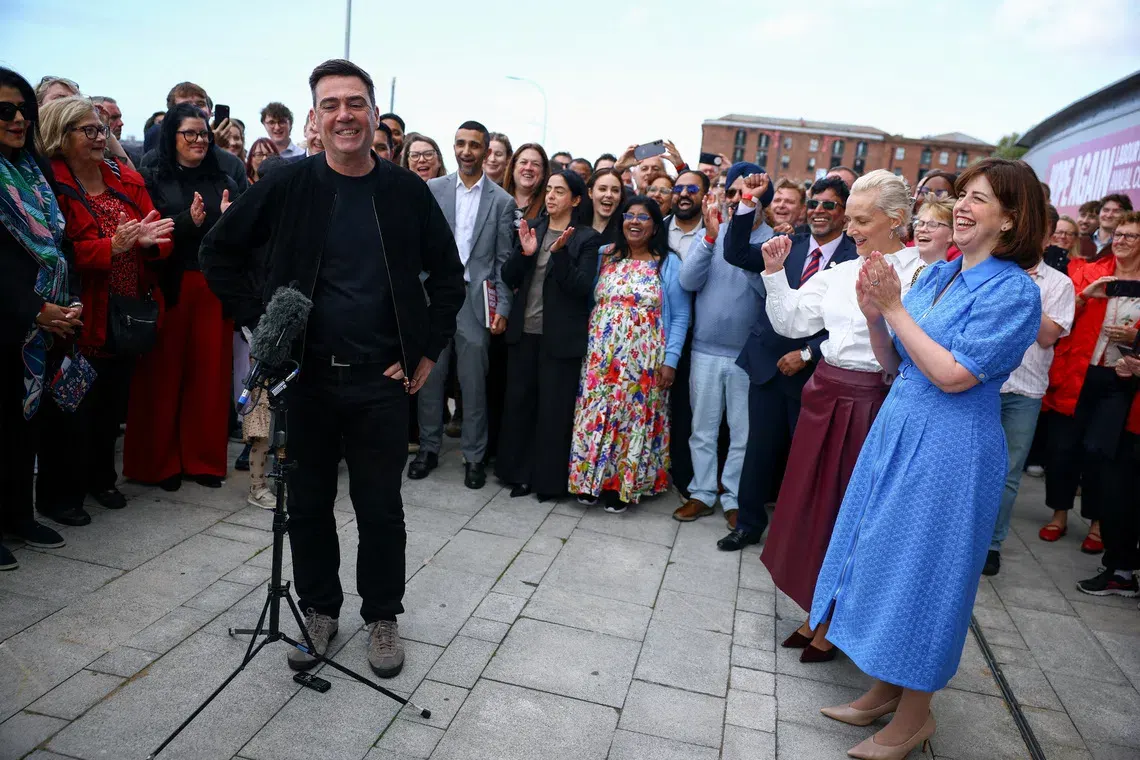
Burnham revealed that Scottish First Minister John Swinney had told him he would be "the last Prime Minister of the United Kingdom" on the same day his father, Roy Burnham, died. "On the day my dad died, the Scottish First Minister said I would be the last Prime Minister of the United Kingdom," Burnham said, adding that the remark left him "utterly determined to prove him wrong." Swinney responded by offering condolences and suggesting a referendum would settle the question.86
Reaction and economic stakes
Reform UK's deputy leader Richard Tice accused Burnham of using the summit to bring Britain back into the EU without a direct vote, saying he was "trying to sneak us back into Brussels via the back door." Tice also argued that the government's own failures on growth and migration were being obscured by talk of closer EU ties.93
The Irish Times reported that Bloomberg Economics analysis estimated Brexit had cost the UK between 2% and 4% of GDP, while closer EU ties could recover between 0.4 and 1.2 percentage points of output. The same report noted that Reform UK had, until recently, led Labour in opinion polls, and suggested Burnham's openness on Europe could help him win back centrist and left-leaning voters.3
Why it matters
A British government signalling willingness to reconsider its EU relationship, including possibly rejoining, would mark a significant shift after a decade of separation. For European policymakers, it raises questions about how far and how fast London wants to move at a summit already confirmed before year-end, at a time when Brussels has yet to set out its own conditions.39
Related stories
Version history
- version 1 ·