World · United Kingdom
Burnham Pledges Universal Free Social Care by Next UK Election
UK Prime Minister Andy Burnham told Labour's conference in Liverpool he will bring a plan for an NHS-style, free-at-point-of-use social care service to the next general election, due by mid-2029.
Andy Burnham pledged to present a universal, free-at-point-of-use social care plan for England at the next UK general election, due by mid-2029.
- Burnham unveiled the pledge at Labour's Liverpool conference, his first as PM
- He rejected an £18bn cost estimate for the plan
- Funding details remain unspecified; income tax and NI rises ruled out
- Past English care reform attempts, including in 2010, were abandoned
- Wales, Scotland and Northern Ireland have taken differing approaches to care reform
What's new
- Burnham pledged a universal social care service free at the point of use, to be detailed in Labour's next election manifesto
- He rejected a £18bn cost estimate for the plan and said it would not be as high
- Burnham said the new service would be funded by 'everybody', with no details yet on how
- He ruled out breaking Labour's pledge not to raise income tax or employee national insurance
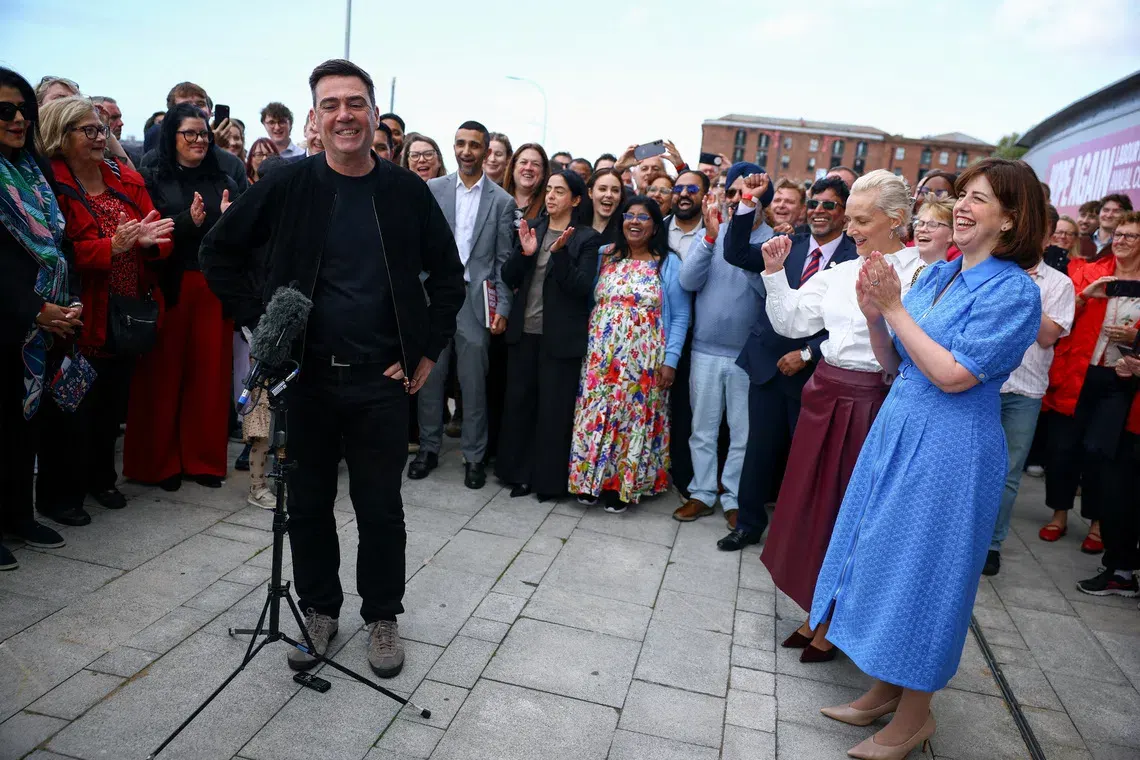
UK Prime Minister Andy Burnham used his first Labour party conference as premier, held in Liverpool, to pledge that a plan for a universal, free-at-point-of-use social care service in England would be presented to voters at the next general election, due by mid-2029.136
A universal care pledge
Burnham argued that England's existing care arrangements were as inequitable as the US healthcare system, warning that society's most vulnerable people risked losing everything under the current setup. He said an NHS-style universal service, free at the point of use, would be funded by 'everybody' but gave no further detail on how contributions would work.15
Speaking to the BBC, he warned that a failing care system would eventually undermine the NHS as well, and said full details of the planned service would be presented at the next general election.4
Burnham said he was prepared to bring forward a plan that could prove difficult or unpopular. He said he intended to demonstrate leadership on the issue and would not shy away from difficult questions. he added that he was ready to tackle the problem head-on, saying someone needed to take that painful step.6
Funding and cost disputes
Burnham rejected a projection, attributed to the Health Foundation, that a universal free social care service would cost £18bn a year, saying the true figure would be lower, according to the Guardian. He argued that social care already carries a cost under the current system. He said it was mistaken to think there is no existing cost at all. he explained that the aim was simply to distribute that cost more fairly across the population.17
He pledged to keep Labour's promise not to raise income tax or employee national insurance to pay for the plan, while saying other funding options remained open. "Nothing is off the table at this moment in time," he said. He also said consensus was necessary to fix social care, and, according to the Guardian, argued that a 'politics as usual' approach has prevented previous reform.17
Burnham's plans come against a backdrop of wider economic pressure. According to the Guardian, there is real concern in financial markets about the British economy, and the government has shown willingness to cut spending to balance the books; Burnham suggested savings could also come from a more productive approach to rough sleeping and youth unemployment. The Guardian also reported that global shocks, including the Iran conflict, have added pressure on UK finances, that the Treasury could regard a £15bn fiscal buffer as acceptable, and that the Heathrow third runway has been delayed by up to four years, with Burnham declining to confirm his position on the project in a BBC interview.1
A history of stalled reform
Proposals for a National Care Service in England date back to the later stages of Gordon Brown's Labour government, when Burnham, then health secretary, oversaw a green paper on the idea in July 2009. The Personal Care at Home Act 2010, an initial step toward the service, was passed by Parliament and the service itself launched shortly before Labour lost the May 2010 general election. The incoming Conservative-Liberal Democrat coalition abandoned the National Care Service, and the 2010 Act was later repealed.2
Other parts of the UK have taken different paths. Wales approved a National Care Service proposal in 2021 and has been phasing it in gradually across a decade-long timeline beginning in 2022. Scotland announced its own plans in 2021 but scrapped them in 2025. Northern Ireland has run a publicly funded, integrated health and social care system since 1973. In England, Labour confirmed plans to introduce a National Care Service after its 2024 election victory and included the pledge in its manifesto that year; Baroness Casey was tasked in 2024 with leading an independent commission on how such a service should be set up and funded, with the commission expected to report initial recommendations in 2026.2
Political backdrop
The pledge came as Labour's conference opened in Liverpool, Burnham's first as prime minister. Elsewhere at the conference, Defence Secretary Wes Streeting ruled out a future leadership bid, saying, "The ship has sailed on my leadership ambitions." Business Secretary Jonathan Reynolds warned that speculation about the UK rejoining the European Union was creating uncertainty for business, according to the Guardian. The Straits Times reported that the UK also faces a £4.7bn gap in its Defence Investment Plan, and that, according to unnamed defence experts cited by the outlet, the plan does not go far enough; the same report described social care reform as one of Burnham's priorities and noted that several British prime ministers have previously tried and failed to reform the sector.35
Burnham's father, Roy Burnham, who had Alzheimer's, died, and this loss has reportedly intensified the prime minister's focus on care workers, according to Archyde. Reforms are not expected to be implemented before 2029, the outlet reported.8
Why it matters
England's repeated failed attempts at reform, including the abandoned 2010 National Care Service, illustrate the political difficulty of the issue. A concrete UK manifesto commitment, alongside diverging approaches already under way in Wales, Scotland and Northern Ireland, offers a comparative case for other European governments weighing how to fund universal care.2
Videos
Version history
- version 1 ·