New releases · Film
New films: Milovník, nie bojovník and its divided critical reception
Martina Buchelová’s debut brings a troubled young romance into a vertically framed world. Critics praise its originality, but disagree about whether its storytelling matches its style.
A roundup of new releases and their reviews. We have not seen, heard or read the works ourselves: the verdicts are those of the critics cited.
Milovník, nie bojovník receives fresh October coverage after its September theatrical release. Critics disagree over the balance between Buchelová’s distinctive form and the story’s substance.
- Milovník, nie bojovník premiered theatrically on September 17, 2026.
- Martina Buchelová wrote and directed the Slovak-Czech debut.
- Kinema.sk praises its originality; Filmpress.sk questions its balance of form and content.

This week’s film roundup focuses on Milovník, nie bojovník, Martina Buchelová’s Slovak-Czech debut, with assessments published by Kinema.sk and Filmpress.sk on October 15. Its theatrical release was September 17, so it is an earlier cinema arrival receiving fresh critical attention rather than a new opening this week.123
Slovakia and Czechia
A young couple’s relationship is the starting point for this Slovak-Czech production, but the coverage also follows its treatment of family, masculinity and emotional connection. Across the three assessments, the distinction is between admiration for Buchelová’s individual approach and reservations about what that approach delivers dramatically. The film’s visual language is central to that discussion, alongside its account of young people negotiating relationships with one another and with older generations.123
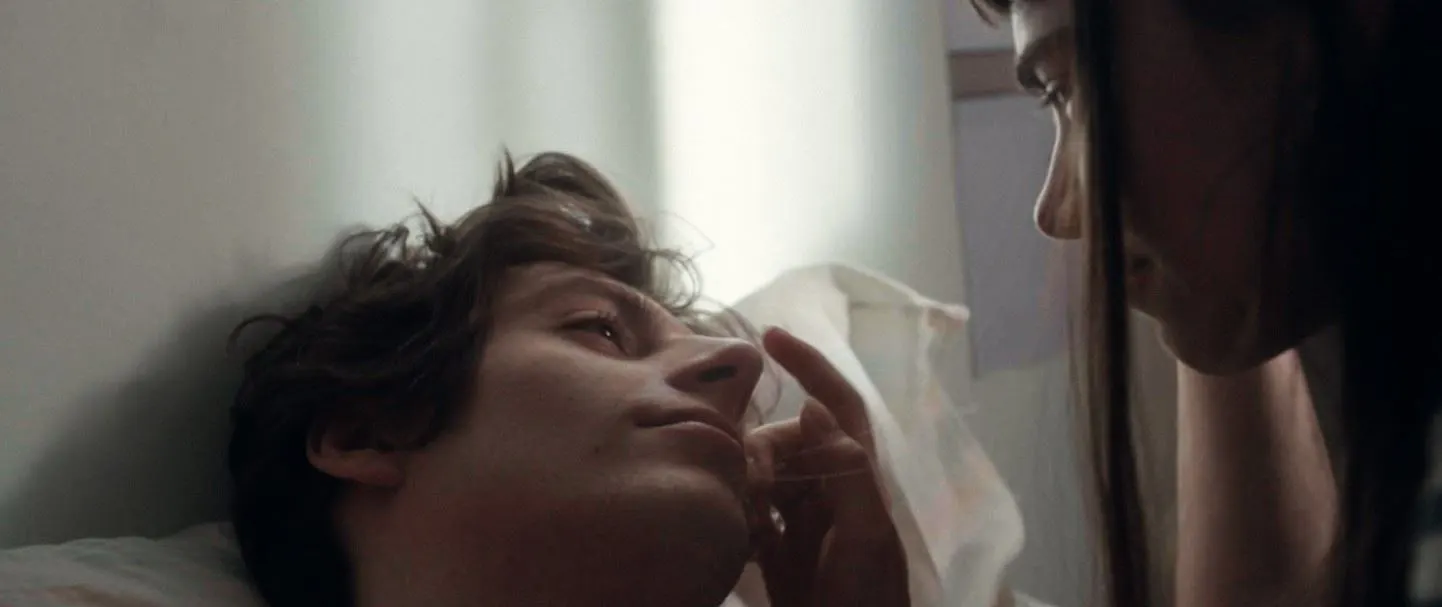
Milovník, nie bojovník
Written and directed by Martina Buchelová, the 108-minute debut follows Andrej and Miša through a relationship that develops from tentative acquaintance into intimacy, then runs into trouble. Filmsk.sk describes a progression through romantic attachment and infidelity towards the gradual healing of each other’s wounds; Kinema.sk’s account places emphasis on Andrej’s damaging decisions. Adam Kubala plays Andrej, while Michaela Kostková plays Miška, as Filmpress.sk names the character. The surrounding household and family stories extend beyond the central romance: Andrej’s cousin Peter, played by František Beleš, moves into their grandmother’s apartment, and Miška’s father builds a bunker for his family. Filmsk.sk places the young protagonists within a broader web of relationships involving parents, grandparents, siblings and peers, rather than treating the couple in isolation. Its account also identifies alcoholism, depression, sexual abuse, social care and economic fraud among the pressures shaping their world. The film is distributed by ASFK, with Filmsk.sk recording its distribution premiere as September 17, 2026. That date distinguishes its cinema release from the October coverage bringing it into this edition.123
The accounts of its filmmaking describe several ways that this relationship story departs from conventional presentation. Kinema.sk reports a vertical frame associated with internet platforms and written text on screen that comments on the protagonists’ inner lives. It also describes a fragmented narrative that moves through time and space and shifts emphasis between principal and supporting characters. Filmsk.sk notes footage shot on mobile phones and a division into chapters. For that outlet’s Katarína Mišíková, however, the generational dimension is not simply a matter of reproducing social-media habits: she reads the film as avoiding the stereotype that Generation Z inhabits a separate online reality. Her discussion instead highlights changing relations between men and women and the need to reconsider established expectations of masculinity. In that reading, the male characters seek genuine emotional closeness rather than discipline or aggression. Filmpress.sk’s Viera Langerová offers a contrasting emphasis, describing the men as essentially infantilised and the women as more rational. These are the reviewers’ interpretations of the film’s relationships, not a single shared assessment of what its characters represent.123
Related stories
Version history
- version 1 ·