World · France
Hundreds of Thousands Join French Student Protests Over School Conditions
A nationwide day of action on Tuesday drew students, teachers and unions into the streets as weeks of school blockades turned increasingly violent, with disputed turnout figures and rising injury tolls.
Hundreds of thousands protested across France on October 6 over school funding and conditions, with violent clashes and disputed turnout figures.
- Turnout estimates range from 256,000 to 450,000 nationwide, disputed
- 215 students and 715 police injured since late September
- In Lens, a stun grenade severed a 15-year-old's hand
- Government announced schedule normalization and online grievance platform
What's new
- Turnout estimates for Tuesday's march range from 256,000 to 450,000, a figure disputed between unions and the Interior Ministry
- In Lens, a stun grenade severed a 15-year-old's hand, while in Tours a 16-year-old was blinded in one eye by a similar device
- Prime Minister Lecornu condemned 'ultra violence' while rejecting allegations of racist policing
- Government announced schedule normalization and removal of enrolment fee provisions from the 2027 budget
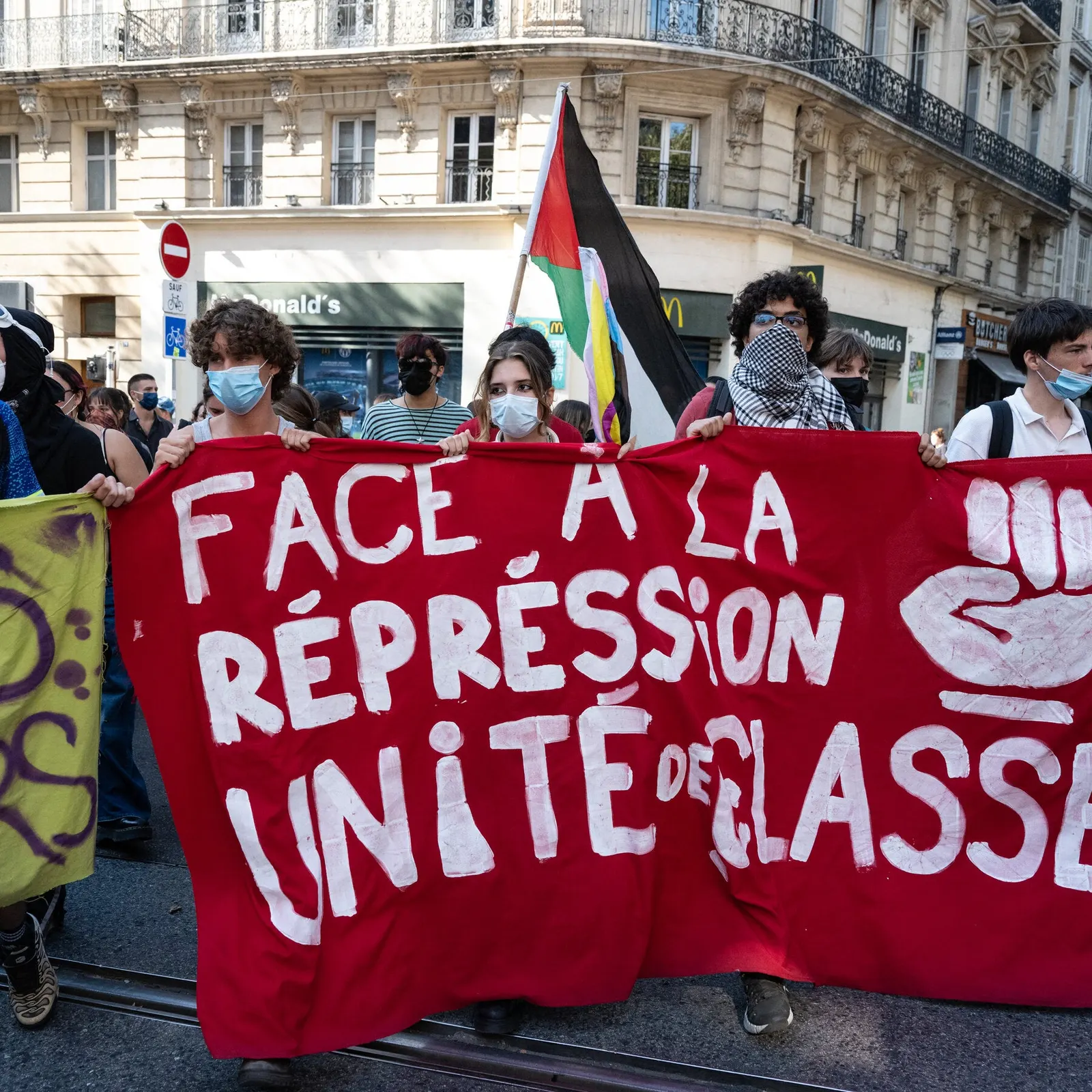
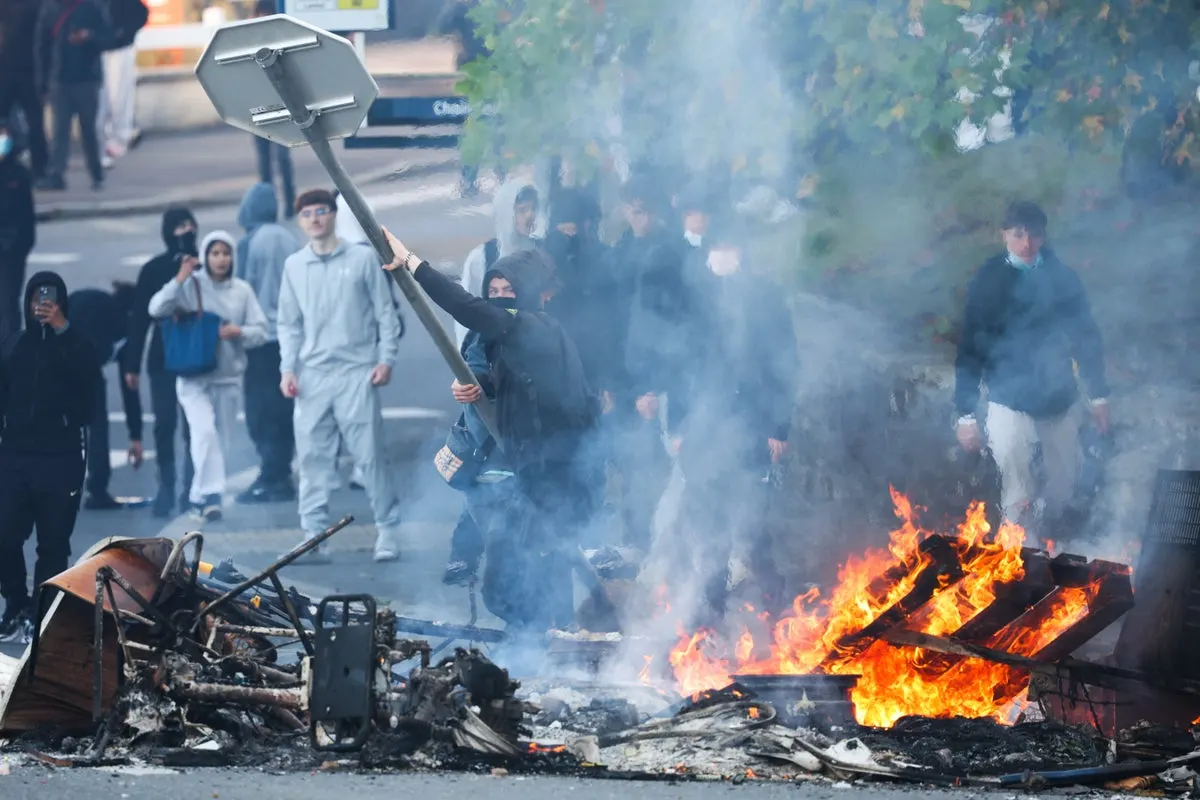
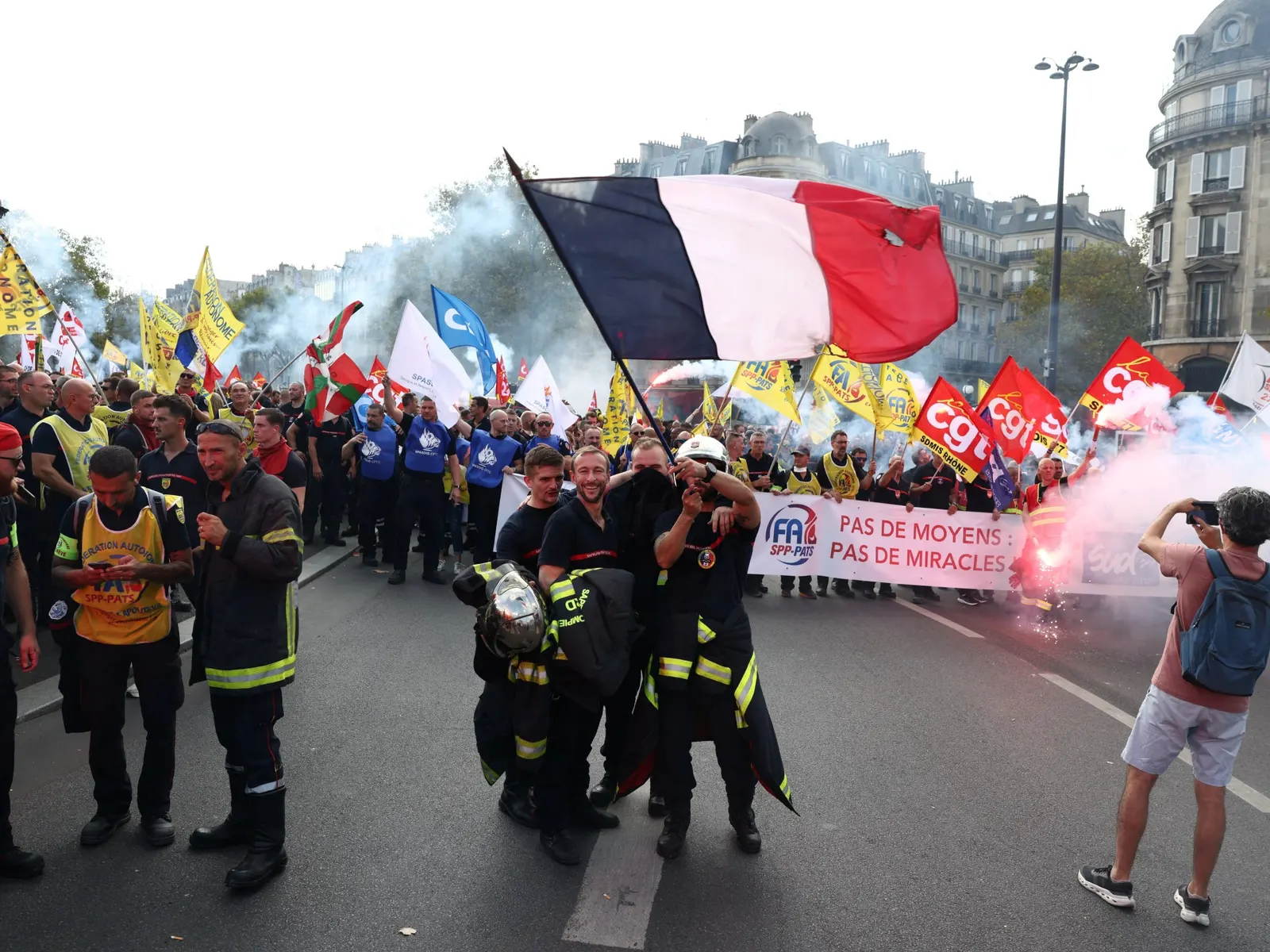
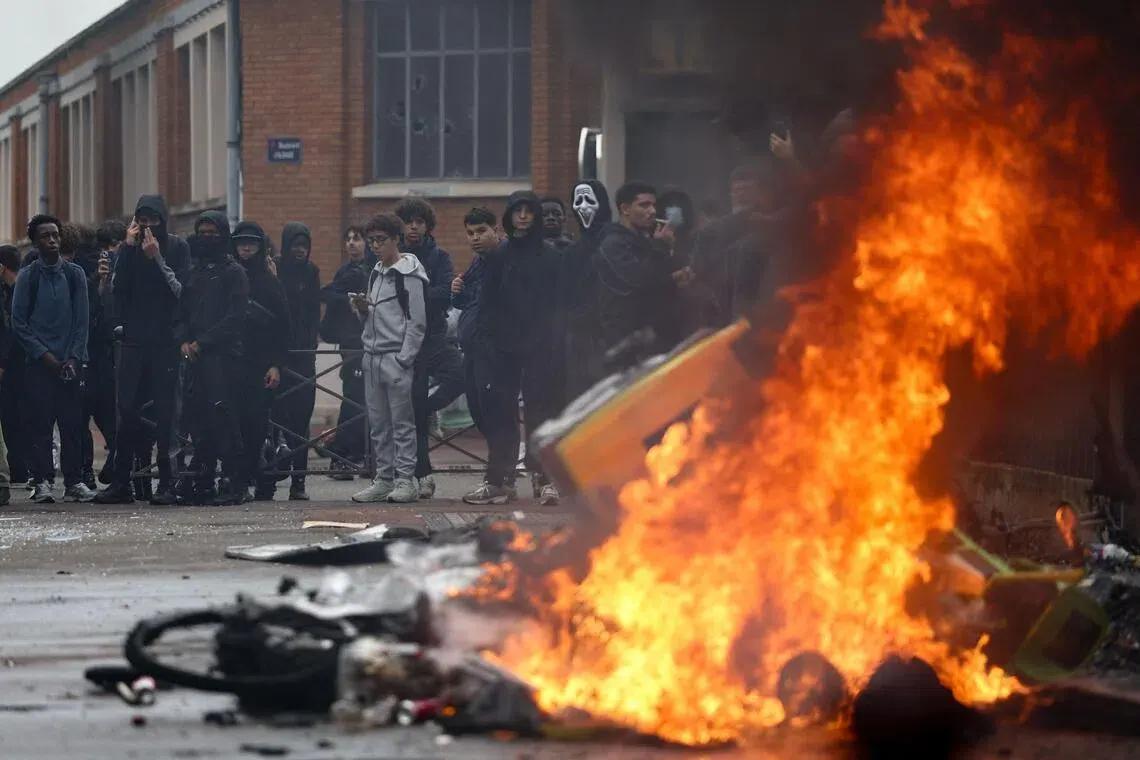
Hundreds of thousands of people marched across France on Tuesday, October 6, 2026, alongside high school and university students, as weeks of school blockades over funding and classroom conditions escalated into violent clashes with police in Paris, Strasbourg and Rennes.1456
Disputed scale of the march
Turnout figures varied sharply by source. Union étudiante put the national total at 450,000, including 100,000 in Paris, while the CGT counted more than 260,000 protesters outside the capital and major cities. The Interior Ministry put the nationwide figure at 256,000, with 56,000 in Paris, a count disputed against the unions' own tallies.25
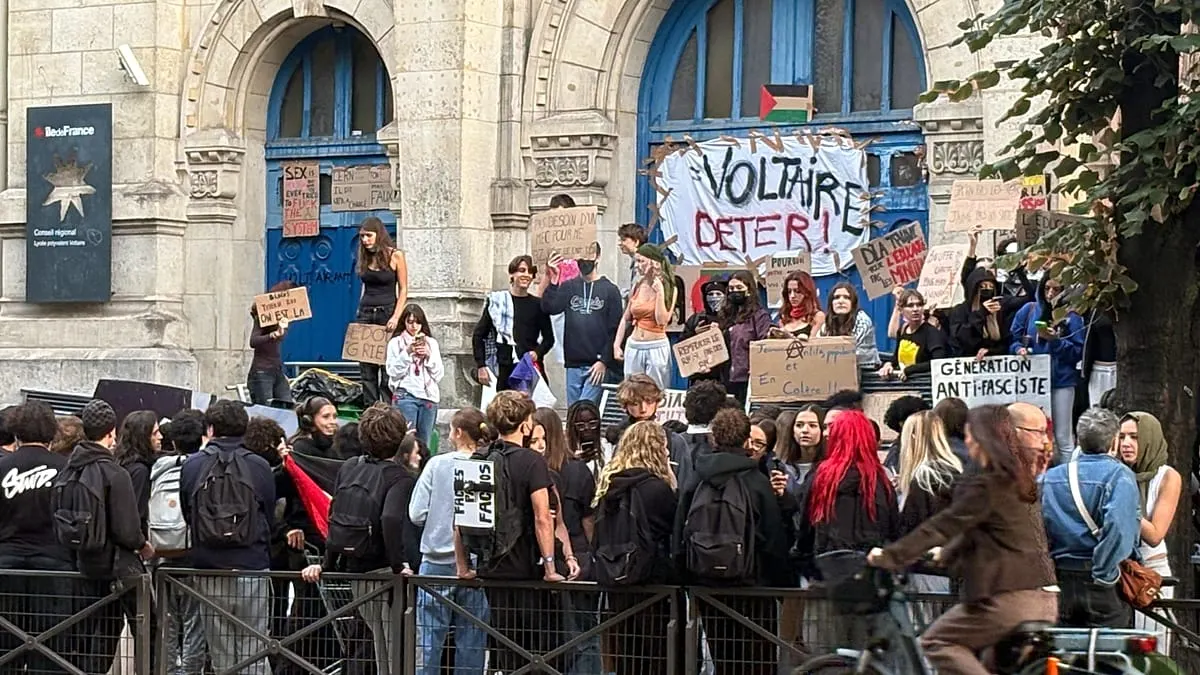
The Connexion reported roughly 1,800 lycées affected by blockades or disruption on Tuesday, while Al Jazeera put the figure at 589 disrupted schools that week, down from 735 the previous Friday, after about 30 sites were already blockaded by Monday.213
Student organiser Eloïse Lefebvre-Milon of Union étudiante urged continued blockades to sustain the movement, saying: "On appelle à massivement bloquer tous les lieux d'études pour être en capacité de continuer à faire grandir la mobilisation."3
Injuries and allegations of excessive force
The French government said 215 students have been injured since the movement began, alongside 715 police and gendarmes and roughly 85 to 100 teaching staff, according to Al Jazeera and Blick. An earlier Al Jazeera count had put injured students at least at 190 before the tally rose.132
Among the most serious cases, a 15-year-old student in Lens lost a hand after being struck by a stun grenade, and a 16-year-old lost sight in one eye during a blockade in Tours, according to Blick.3
Unions, rights groups and students have accused authorities of using disproportionate force, pointing to police use of batons, tear gas and riot-control rounds; the police oversight body has opened ten internal investigations into allegations of brutality, according to Al Jazeera.1
They fall into the category of war weapons," she added, "I never imagined that my classmates or I could be endangered by weapons of war, as happened yesterday." They are classified as weapons of war," adding, "I never would have believed that I or any of my classmates could be threatened by weapons of war, as happened yesterday."2
Grievances behind the mobilization
According to Al Jazeera, students at the protesting schools – especially those in lower-income neighborhoods – describe unfilled teaching vacancies, decaying buildings sometimes infested with rodents, not enough desks and chairs, overcrowded classrooms and lengthy school days, conditions that were made worse by the summer heat in facilities without air conditioning.1
Sociologist Olivier Galland described the movement as unusual because it does not follow an education or youth reform, saying, "c'est la première fois qu'un mouvement survient qui ne suit pas une réforme de l'éducation ou une réforme concernant la jeunesse," and calling it "quelque chose de plus spontané, de plus éruptif." Education Minister Edouard Geffray said a generation feels insufficiently consulted on decisions affecting it directly: "Il existe une génération qui a l'impression de ne pas suffisamment être prise en compte dans l'élaboration des décisions qui la concernent directement."3
The grievances come amid a strained fiscal backdrop: the proposed 2027 budget targets 54 billion euros in savings, including a salary freeze intended to save about two billion euros, according to Al Jazeera.1
Government response
Prime Minister Sébastien Lecornu condemned what he called threatening violence at schools, saying: "L'ultra-violence a frappé à la porte des lycées. Elle doit être condamnée sans condition," while also stating the government approached the protests "avec beaucoup de respect." He separately rejected allegations of racist policing.56
Interior Minister Laurent Nunez said he had instructed prefects to keep police at a distance where protests proceed peacefully, stating: "J'ai donné pour instruction aux préfets d'avoir des forces de l'ordre qui se tiennent à distance dès lors que les manifestations se passent bien," and expressed confidence in security forces overseeing the demonstrations.5
Lecornu announced a complete normalization of the school schedule for Wednesday through Friday to allow time for internal democratic discussion in each high school. The Education Ministry launched an online platform for pupils to submit grievances, the government removed enrolment fee provisions from the 2027 budget draft, and the Union Syndicale Lycéenne called for a further day of action on Thursday.25
Why it matters
The scale and duration of the protests, alongside disputed turnout figures and rising injury counts on both sides, illustrate strains on French public services amid budget austerity.12
Videos
Related stories
follow-up
Version history
- version 1 ·