World · France
French student protests intensify as police suspend stun grenades after teen loses hand
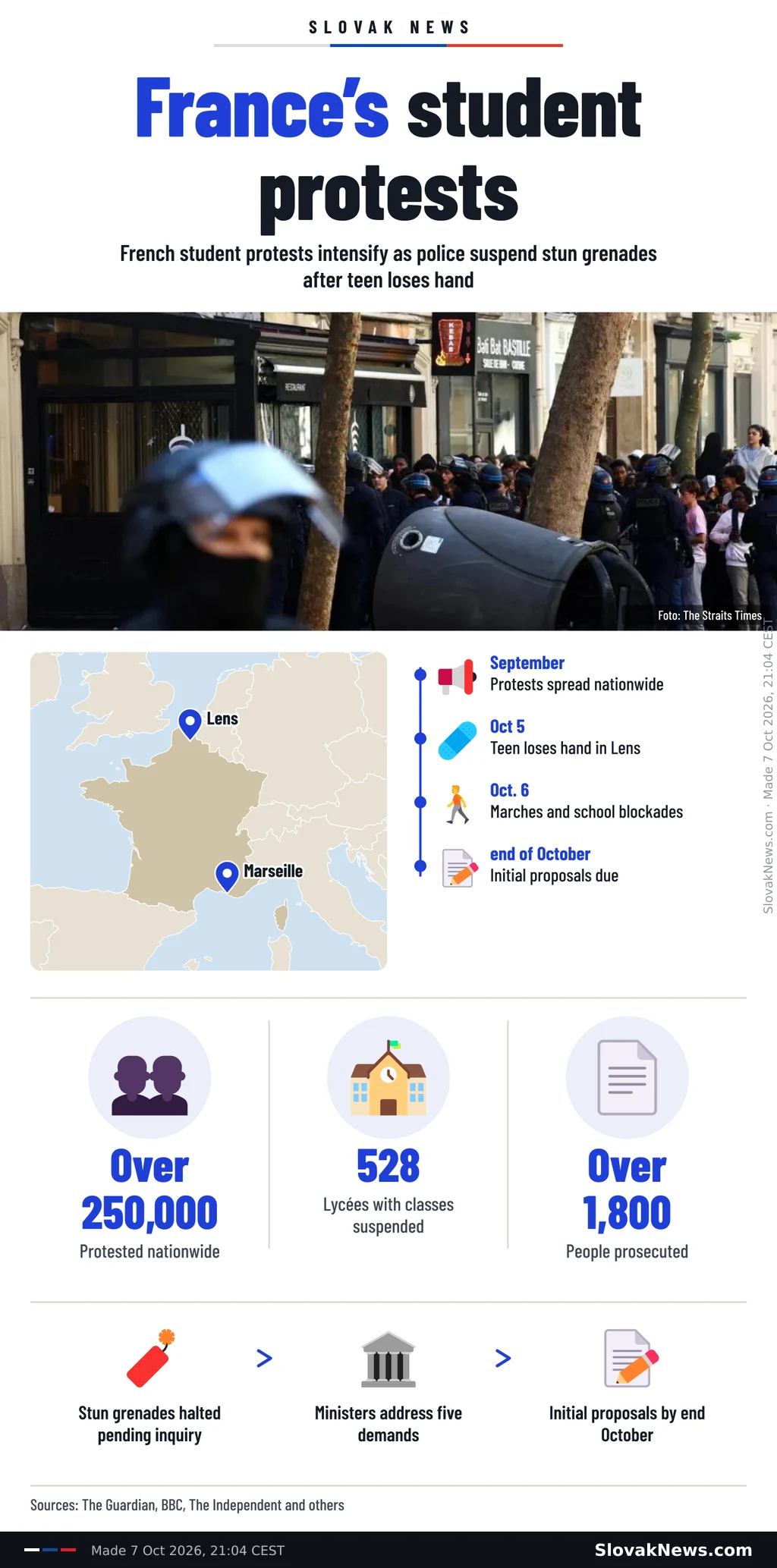
After a 15-year-old picked up a police stun grenade in Lens and lost his hand and part of his forearm, the interior minister ordered a temporary suspension of such devices at school protests; meanwhile, demonstrations across the country attracted 250,000 people calling for increased education funding and improved working conditions.
Listen to the story
Short version
French student protests escalated after a teen lost his hand to a police stun grenade, prompting a suspension of such weapons and mass demonstrations amid fiscal strain.
- Stun grenades suspended after 15-year-old lost hand in Lens.
- Over 250,000 protested nationwide demanding education funding.
- Justice ministry reports over 1,800 prosecutions, nearly 1,500 minors.
- Twenty-four schools burned or ransacked since protests began.
- France's bond yield hit 24-year high over 5% amid unrest.
Infographic
What's new
- Following an incident in Lens on Monday where a 15-year-old lost his hand and part of his lower arm after interacting with a police stun grenade, French authorities have halted the deployment of such weapons during high-school demonstrations. (s1, s2, s3, s4, s5, s7, s13)
- Interior Minister Laurent Nuñez ordered a temporary halt to stun grenade use pending investigation into the Lens incident. (s1, s13)
- Education ministry reported school suspensions in 528 lycées due to protests and related unrest. (s1)
- Justice ministry confirmed over 1,800 prosecutions, nearly 1,500 of them involving minors. (s1)
- On the movement’s largest day of action so far, no fewer than 250,000 students, parents, educators and union members took part in protests throughout France. (s1)
- Since the start of the protests, 24 schools have suffered damage from arson or looting. (s1)
- Boris Vallaud, who leads the Socialist parliamentary group, announced that his colleagues plan to introduce legislation concerning the use of sub-lethal weapons. (s13)
- Originating in working-class areas of Paris due to teacher shortages, the protest movement has expanded across the country, with participants calling for greater investment and improved conditions in secondary schools. (s13)
After a 15-year-old lost his hand and part of his lower arm in Lens following contact with a police stun grenade, French police have stopped using such devices at high-school demonstrations, and the interior minister has ordered a temporary ban pending investigation. Nationwide marches drew 250,000 participants demanding education funding and better working conditions, while the justice ministry reported over 1,800 prosecutions, nearly 1,500 of them minors.113
Infographic
Confrontation outside the school
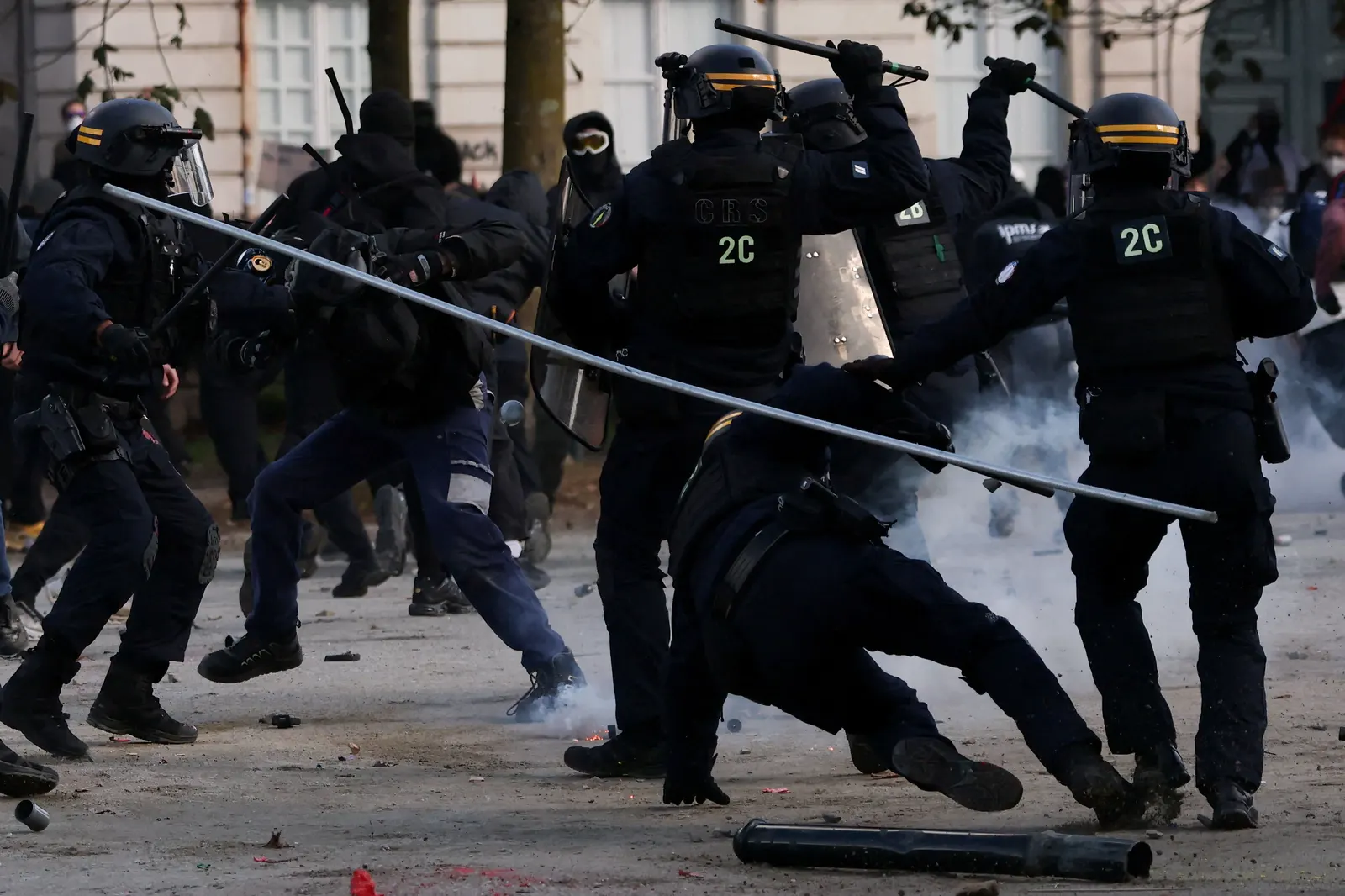
About 200 to 250 protesters had been throwing objects at police near Auguste Béhal high school before riot officers were deployed. Amid the confrontation, a police stun grenade exploded after a 15-year-old handled it, resulting in the amputation of his hand and a portion of his forearm.2467
François-Xavier Lauch, the prefect of Pas-de-Calais, confirmed that the teenager had been transferred to hospital. Sylvain Robert, the mayor of Lens, said the circumstances still had to be established. The IGPN will conduct the investigation into the incident.2
Auguste Béhal high school moved to distance learning after the confrontation and established a listening and support unit for its community. The school said the change was intended to ensure safety following the morning’s events.2
Protests spread across France
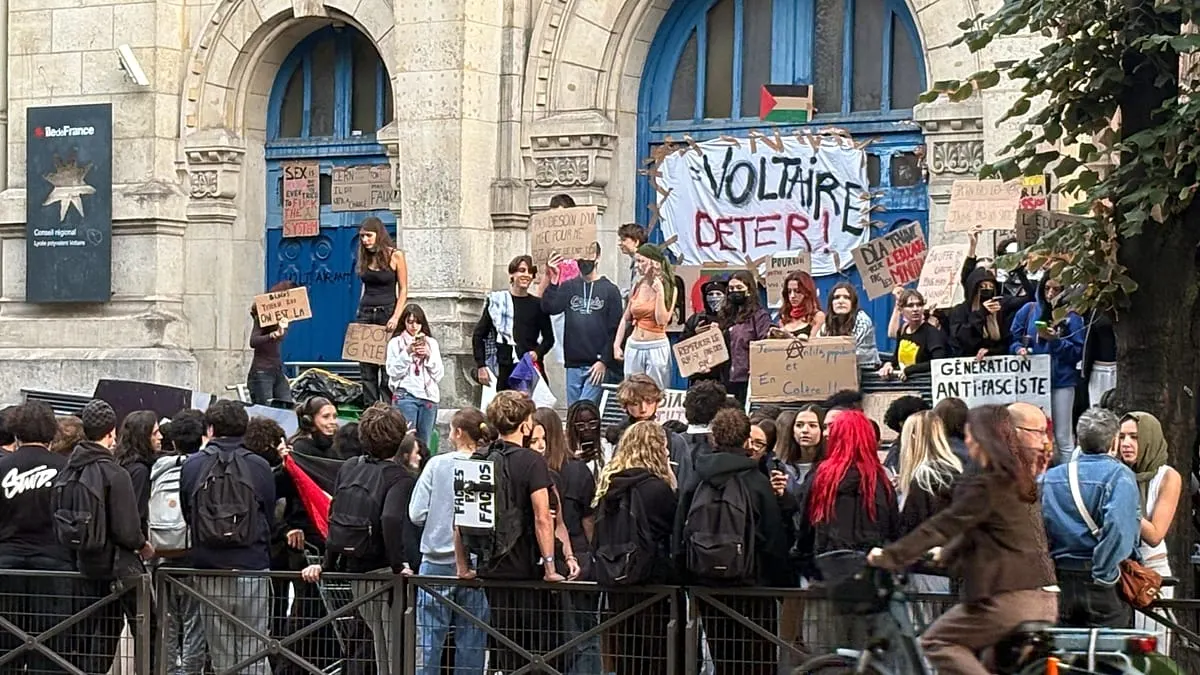
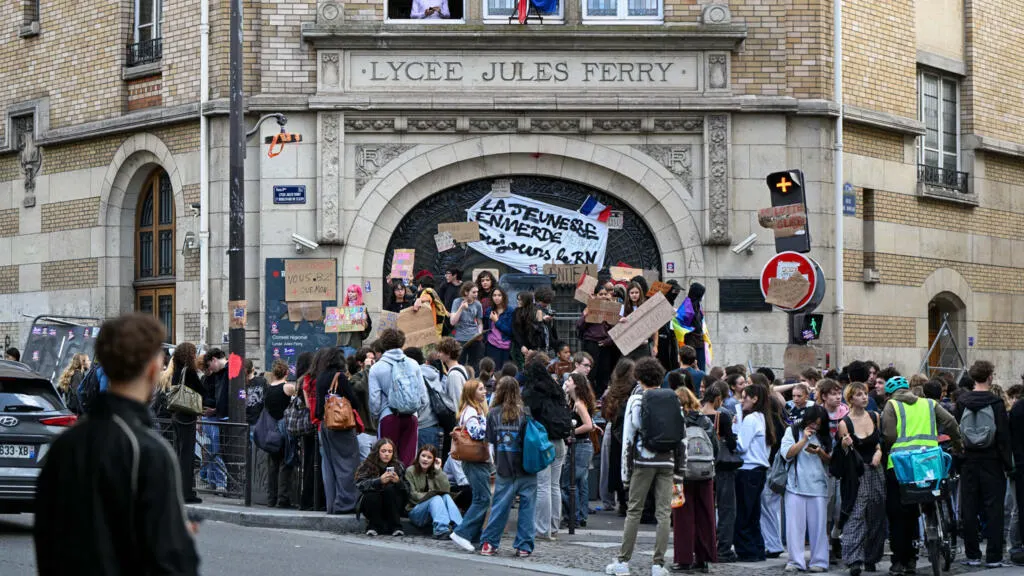
The movement began in September in the Paris region over teacher shortages before spreading across France. Students have demanded action on understaffing, class sizes, ageing buildings and other school conditions. Hundreds of schools were blockaded during the biggest day of action so far.4678
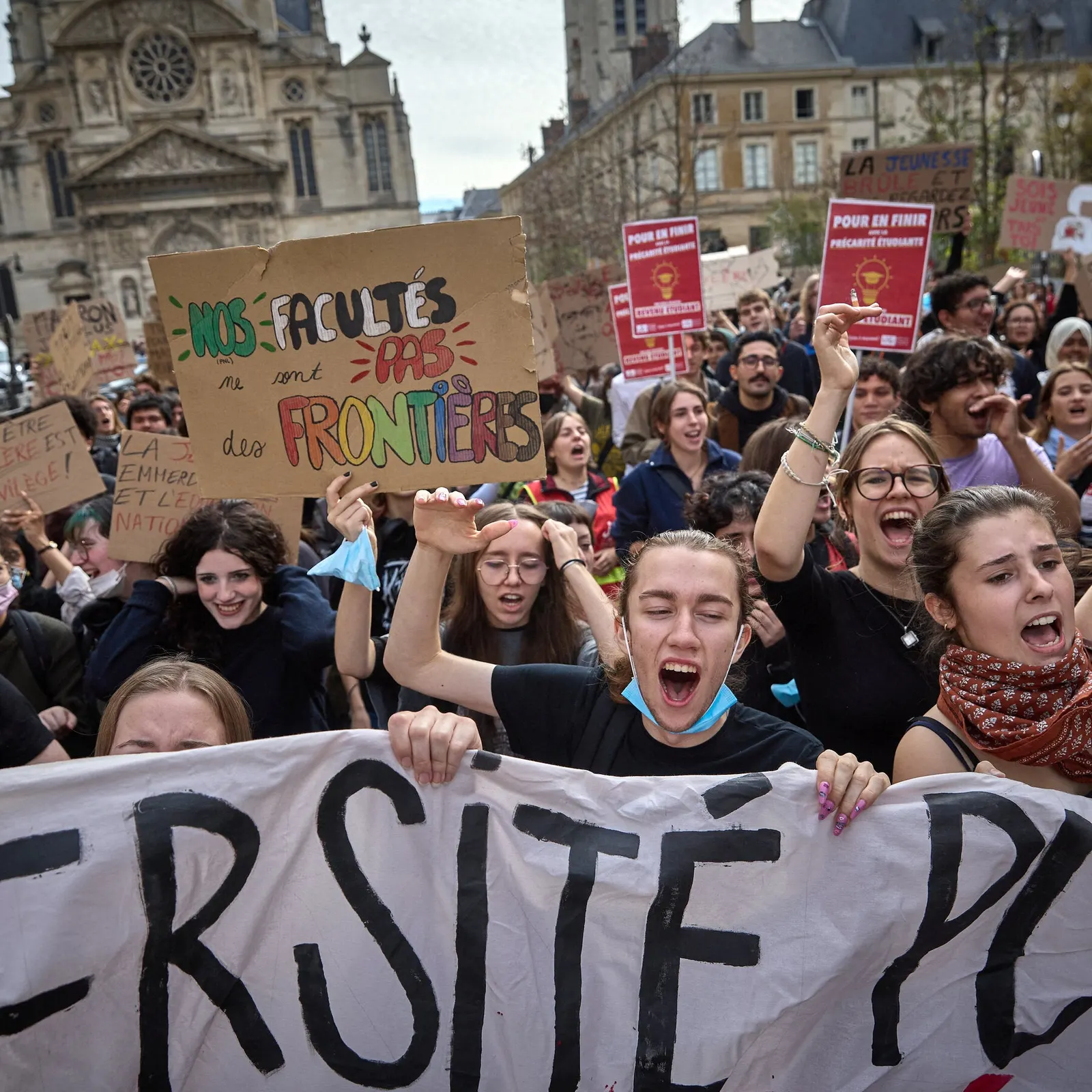
Marches in French cities drew students, teachers and parents.681012
Street demonstrations began peacefully in Marseille, Nantes and Lyon. The largest demonstration of the day was expected later in Paris.6810
According to the High School Students Union, 1,800 high schools had either been blockaded or were expected to close that day. Separately, multiple reports confirmed that hundreds of schools were blockaded.6812
The Justice Ministry reported 5,060 arrests since the protests began, with most outlets citing that 87% were minors, though one report put the figure at 85%. The ministry also said 790 cases had been dismissed. More than 1,800 people were being prosecuted, including 1,483 minors, and clashes had injured no fewer than 715 officers and 215 adolescents.1246
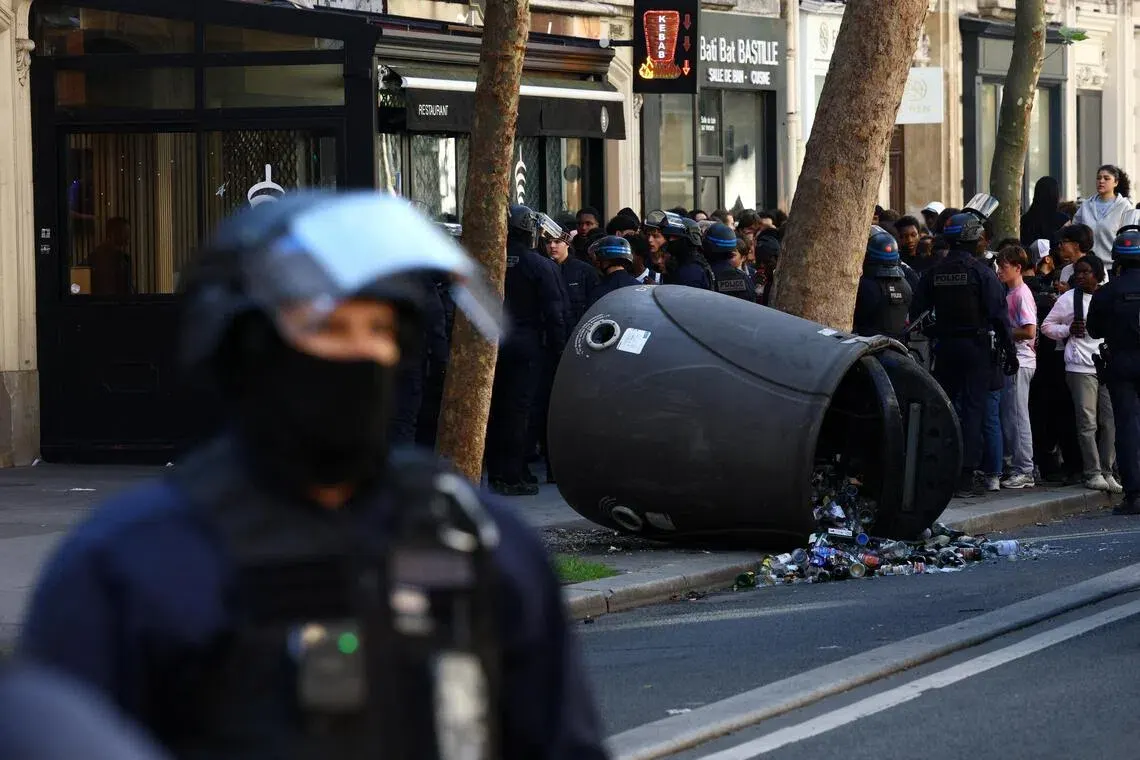
Teenagers built barricades at schools nationwide, from Lille to Marseille and Strasbourg to Nantes, including one made of wheelie bins, metal barriers and shopping trolleys outside Lycée Sophie-Germain in central Paris. Government officials claimed outside agitators had hijacked the movement and turned it violent, even though tens of thousands of students, union members and parents were anticipated to join peaceful marches nationwide.146
Interior Minister Gérald Darmanin put the number of schools touched by violent unrest at 735 out of France's approximately 3,700 total–a figure from a single source that differs from the High School Students Union's separate tally of 1,800 schools shut down or blockaded.106
Government and union responses
Prime Minister Sébastien Lecornu said the students’ grievances were legitimate and ordered ministers to address their demands and submit initial proposals. The Hindu reported that his instructions included replacing absent teachers, reviewing the school day and considering longer lunch breaks. The Union Syndicale Lycéenne nevertheless said the government had offered “nothing concrete”.126
CBC reported that the government said it would fast-track legislation making young people who damage property, or their parents, financially liable. CBS News reported that the plan would allow compensation to be taken from family allowances and housing aid, subject to a protected minimum income. CGT leader Sophie Binet called it a “populist announcement” targeting vulnerable families. The proposal’s status is disputed.45
According to the Guardian, the number of teacher absences without substitute cover had risen twofold in a decade, while class sizes had reached their highest level on record. Sophie Binet, head of the CGT trade union, said union members would attend demonstrations to “protect high school students”. She accused the government of carrying out an unprecedented crackdown, an allegation reported by the Independent.13
Rights organisations and the Union Syndicale Lycéenne accused security forces of excessive force against young people, citing batons, tear gas and other crowd-control weapons. CBS News reported that internal investigations had been opened into at least three alleged instances of police brutality. Nathalie Tehio of the French Human Rights League criticised what she described as a lack of instructions to show restraint around children. Interior Minister Laurent Nuñez defended the police response, characterising officers’ handling of the demonstrations as highly proportionate.1456
Other reported injuries
A 16-year-old pupil in Tours sustained an eye injury when police used rubber bullets against demonstrators. The state prosecutor said the injury was consistent with the impact of a police rubber bullet.247
Education Minister Edouard Geffray reported that, since the protests started, fires or vandalism had affected 24 schools and 78 education employees had been hurt.3457
The BBC reported that Eden suffered a double jaw fracture and underwent major surgery.1
Political reactions
Jean-Luc Mélenchon of La France Insoumise called the demonstrations the strongest youth movement involving high school and university students since 1968 and urged it to grow. The government and the National Rally said elected LFI representatives, including MPs and mayors, had fuelled the demonstrations; LFI rejected the claim. National Rally leader Marine Le Pen alleged that the unrest consisted of professionally organised riots overseen by LFI deputies.13
Marseille Mayor Benoît Payan denounced violence in the city but said young people had valid worries about their future and public services and should voice them peacefully.1
Bally Bagayoko, who serves as La France Insoumise's mayor in Saint-Denis, condemned the violence while voicing solidarity with the demonstrating students.11
Protests collide with fiscal strain
The unrest has unfolded against a backdrop of fiscal turmoil facing President Emmanuel Macron's government. France's 10-year bond yield briefly surpassed 5% last week, its highest level in 24 years, as investors weighed Paris's ability to control spending. Finance Minister Roland Lescure said there was no need for European Central Bank intervention.4611
Officials cautioned that finding spare money to meet the five demands Lecornu ordered ministers to address would be difficult for a government already trying to narrow the budget deficit.46
Voices from the protests
Students described the policing as disproportionate. Livia, 17, said, "We're teenagers with wheelie bins, and the police have heavy weapons, it's totally mismatched." Lily, 17, called the policing "catastrophic," citing a boy who lost an eye. A teacher at Lycée Sophie-Germain said she had never seen protests this big in more than 20 years of teaching.1
Amnesty International France president Anne Savinel-Barras said images and testimonies raised concerns about the use of teargas, batons and other policing techniques. Green party leader Marine Tondelier urged supporters to "go and protect our children during demonstrations."1
Police union official Stanislas Gaudon said the legitimacy of force used depended on whether it targeted those who had attacked officers. Teacher union president Jean-Rémi Girard cautioned against turning the protests into "a political tool, because it is very dangerous." FCPE vice-president Mustafa Ozcelik said parents and students alike wanted to be able to return to school.10
Why it matters
The use of stun grenades in school protests has come under scrutiny after a teenager suffered life-altering injuries, raising questions about proportionality in policing minors. As protests collide with fiscal strain–France's 10-year bond yield briefly topped 5%, a 24-year high–the government faces pressure to address both education demands and budget constraints, with over 250,000 participants in recent demonstrations highlighting the movement's scale.14610
Videos
Related stories
cause
Version history
- version 9 · Full Slovak retranslation with Codex Terra low
- version 8 ·
- version 7 · French police suspended stun grenade use after a 15-year-old lost his hand in Lens, while nationwide protests grew to 250,000 participants demanding education reforms amid fiscal strain.
- version 6 · Protests have escalated into nationwide barricades and record arrests even as France's fiscal crisis deepens, with Lecornu ordering ministers to respond by month's end.
- version 5 · Students, teachers and parents have joined nationwide marches and hundreds of school blockades on the movement’s biggest day of action, with the main demonstration expected in Paris.
- version 4 · New reporting shows renewed nationwide blockades, clashes in Strasbourg, school closures and preparations for the largest demonstration yet, with up to 50,000 protesters expected.
- version 3 · New reporting adds a nationwide day of action, precise arrest and prosecution figures, at least 190 reported student injuries, Eden’s serious injury and competing assessments of the government and police response.
- version 2 · New reporting details the teenager’s lower-arm injury, quantifies the Lens crowd, corroborates school damage and staff injuries, and adds scrutiny of police tactics and the government’s disputed liability proposal.
- version 1 ·