World · France
French school protests hit about 735 sites as budget anger grows
New reporting traced the movement to a Sept. 17 protest supporting striking teachers, as students challenged shortages, unequal conditions and below-inflation education spending.
Listen to the story
Short version
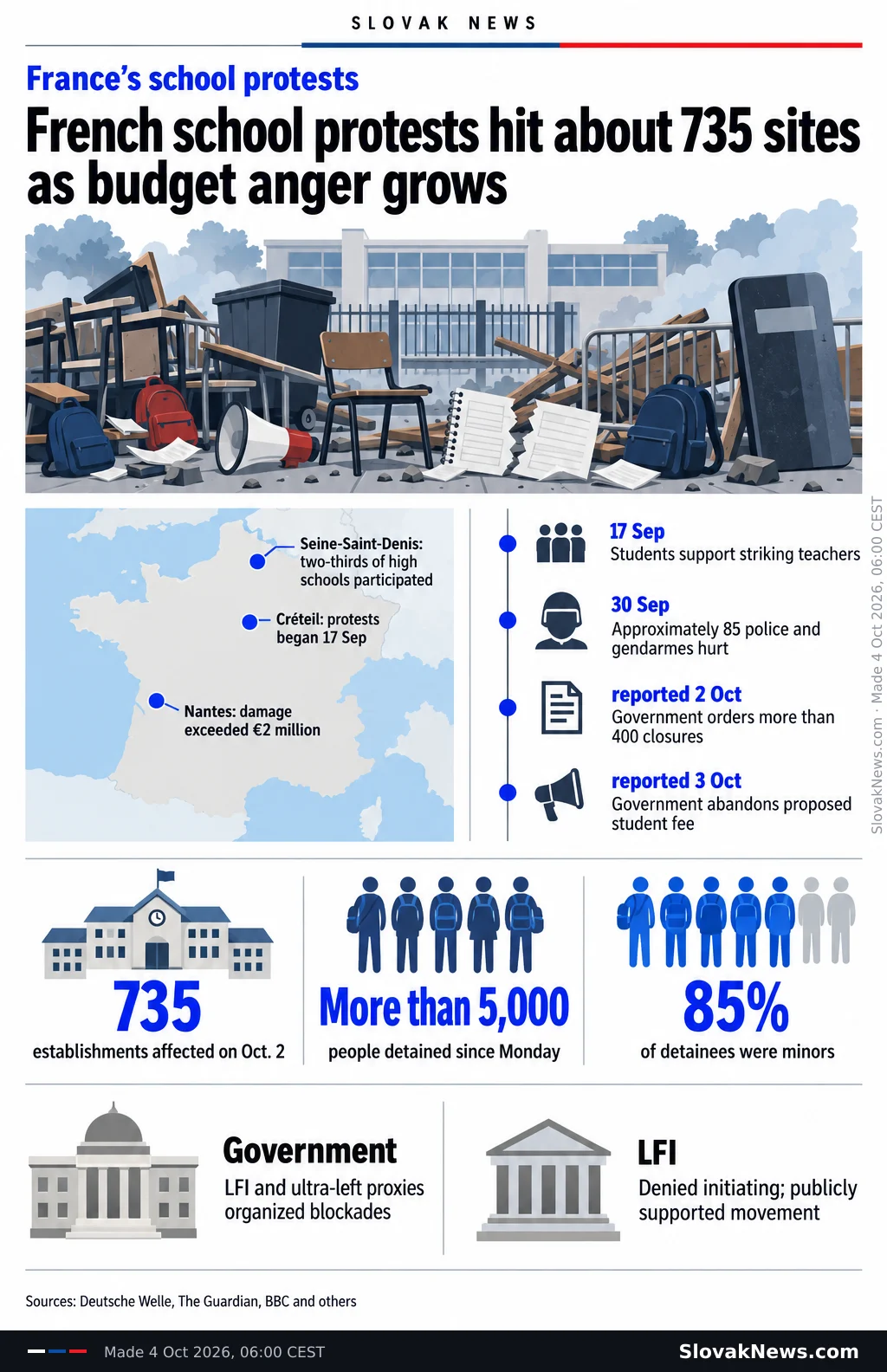
France’s school protests spread nationwide after beginning in support of striking teachers. About 735 establishments were affected amid shortages, budget concerns, arrests and clashes.
- The movement began Sept. 17 at a Créteil high school.
- An estimated 735 educational institutions were impacted in October. 2.
- Two-thirds of Seine-Saint-Denis high schools participated.
- More than 5,000 people, mostly teenagers, were arrested.
- LFI denied organizing the movement but publicly supported it.
Infographic
What's new
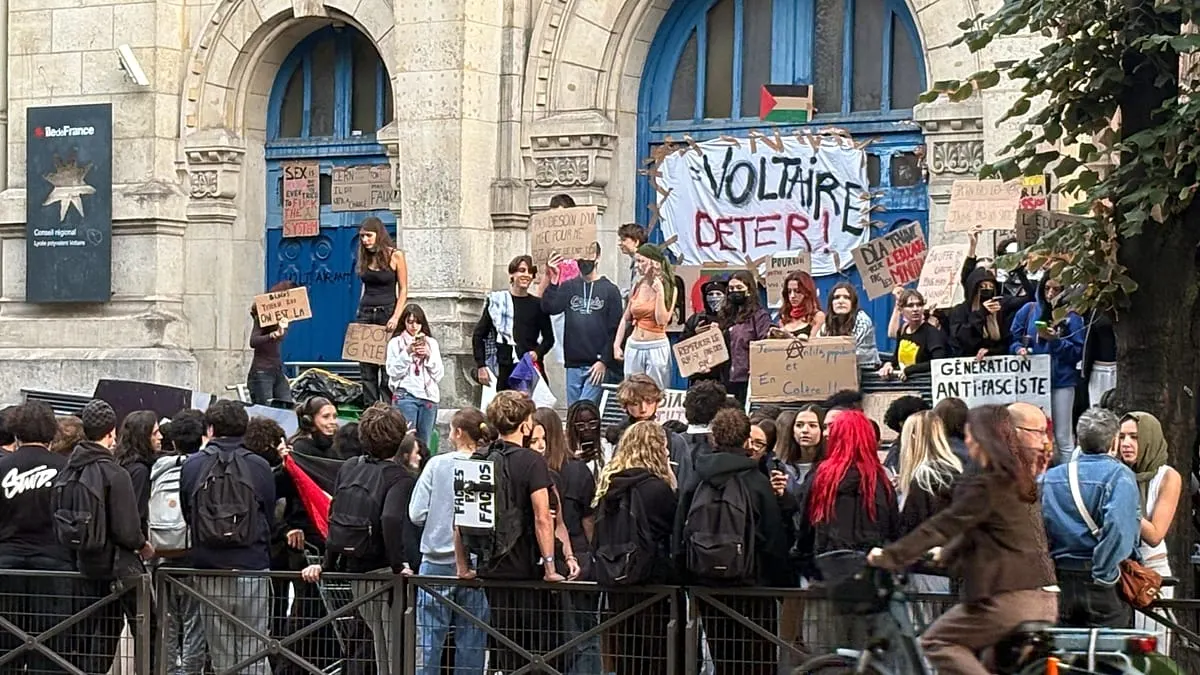
- The Straits Times reported that the movement began Sept. 17 at Saint-Exupéry high school in Créteil, where students supported striking teachers demanding more staff and resources.
- An estimated 735 educational institutions were impacted in October. 2, according to the report, while two-thirds of high schools in Seine-Saint-Denis took part.
- At Lycée Le Corbusier in Aubervilliers, classes in maths, humanities, English and sport were canceled because of teacher shortages.
- The protests have expanded amid planned cuts in France’s 2027 budget, with education spending set to rise by less than inflation.
New reporting traced France’s spreading school protests to a Sept. 17 blockade at Saint-Exupéry high school in Créteil in support of striking teachers. An estimated 735 educational institutions were impacted in October. 2, while students protested teacher shortages, overcrowding, deteriorating buildings and planned budget cuts.5
Infographic
Fires, damage and arrests
Blazes at two Paris high schools caused damage to their entryways, prompting firefighters to respond. At a high school in Marseille, teachers were inadvertently splashed with petrol. Young people also forced firefighters to abandon a fire engine near Saint-Exupéry high school before setting it alight. Elsewhere in Marseille, a passerby suffered facial burns after a masked man sprayed a makeshift flamethrower at her. Marseille halted public transport after staff members were injured; Strasbourg saw at least one vehicle set ablaze, and riot officers confronted young people in Toulouse.1234
In Nantes, a fire destroyed the glass entrance and damaged interior areas of Nelson Mandela high school, causing more than €2 million in damage, according to reports. Investigators believed the fire was probably deliberate, although its precise origin had not been established. No injuries were reported at the school.25
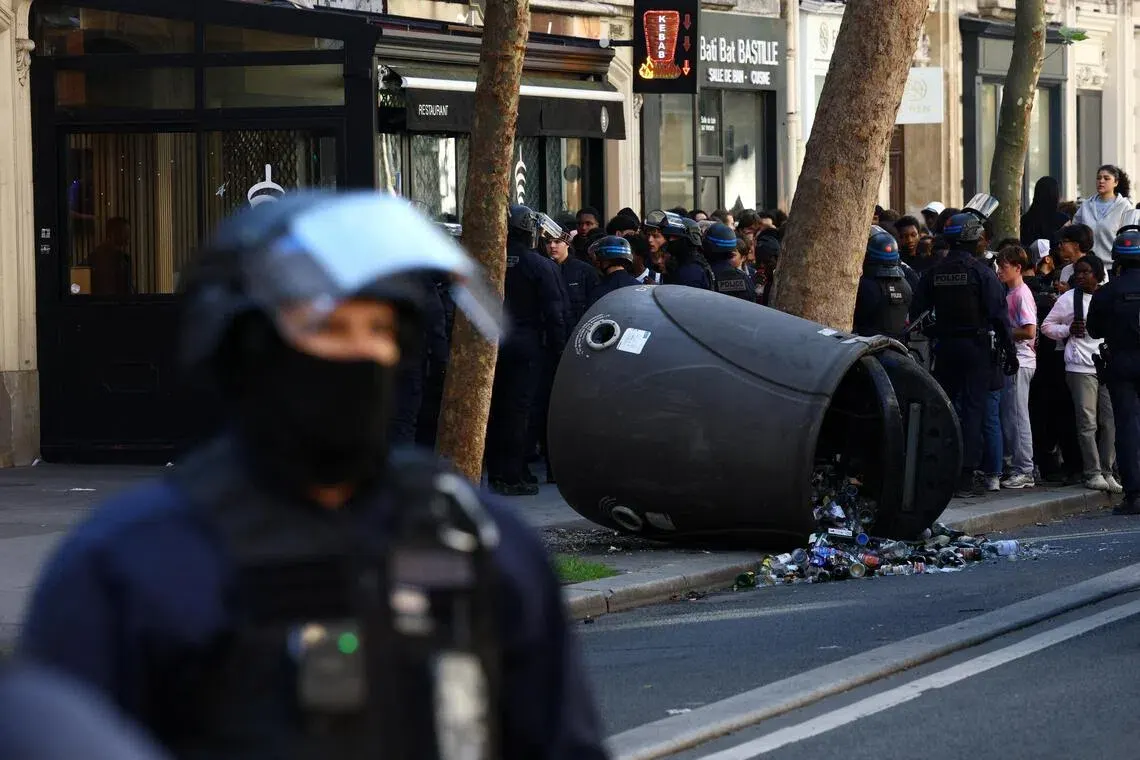
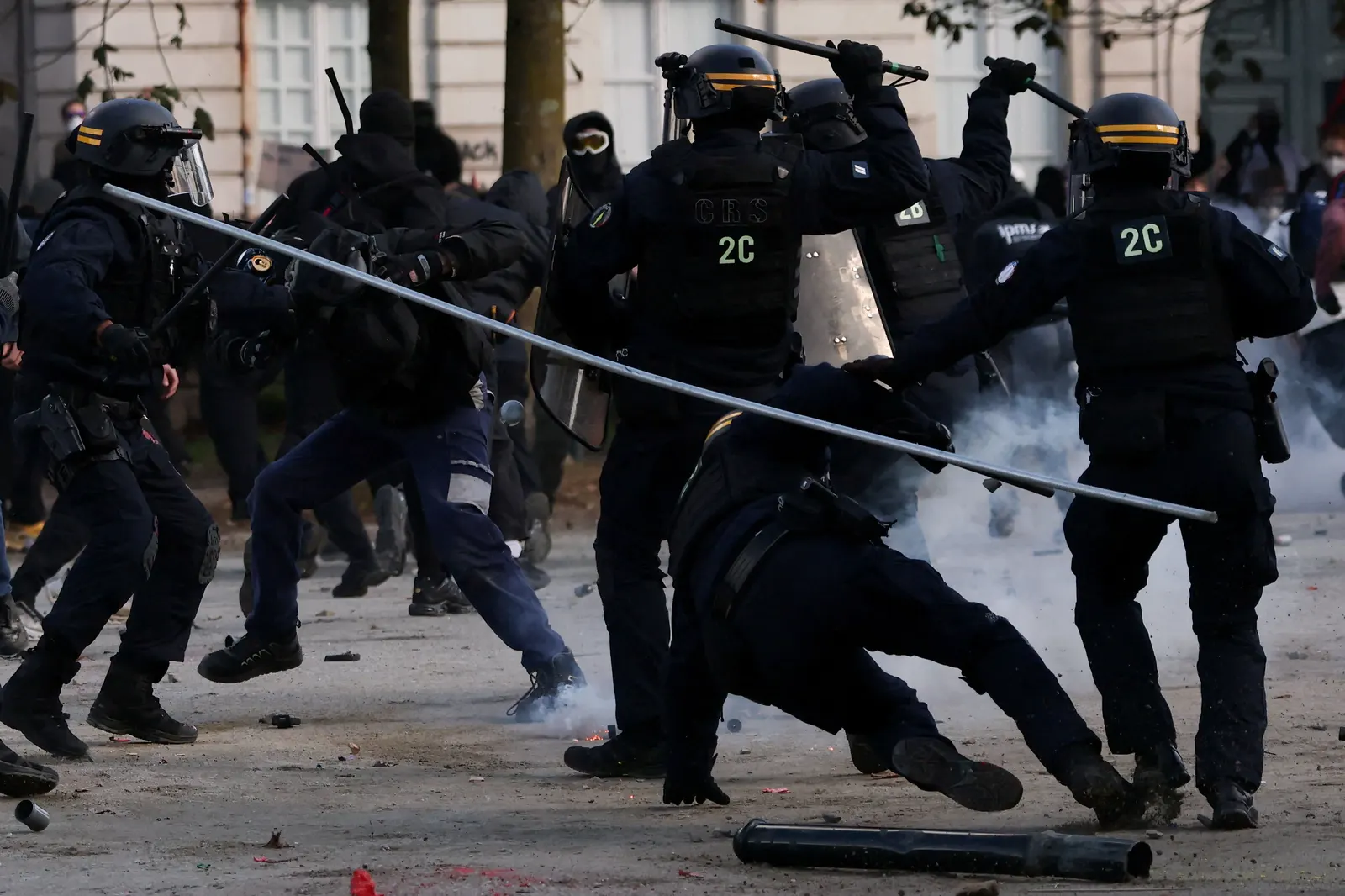
Police charged protesters and made arrests in Pantin after projectiles were thrown at officers. Tear gas was deployed in Strasbourg, while rubbish bins were set alight in Rennes and Paris. Police also seized petrol bombs, an axe and mortar-style fireworks from demonstrators.2
Interior Minister Laurent Nuñez said more than 5,000 people had been detained since Monday, including 1,747 on Friday, and that most were teenagers. Education Minister Edouard Geffray said roughly 170 students, at least 65 school staff and more than 300 police officers had been injured. In Belfort, a 17-year-old was arrested after a police officer was chased, beaten and kicked by youths, prompting an attempted-murder investigation.2345
More than 100 high schools sustained severe damage, according to reports cited by CNA and EL PAÍS. In Auvergne-Rhône-Alpes, the regional authority estimated losses at between €25 million and €30 million and said 400 complaints were being prepared. It deployed about 100 private security agents to deter further intrusions.4810
Education grievances and the police response
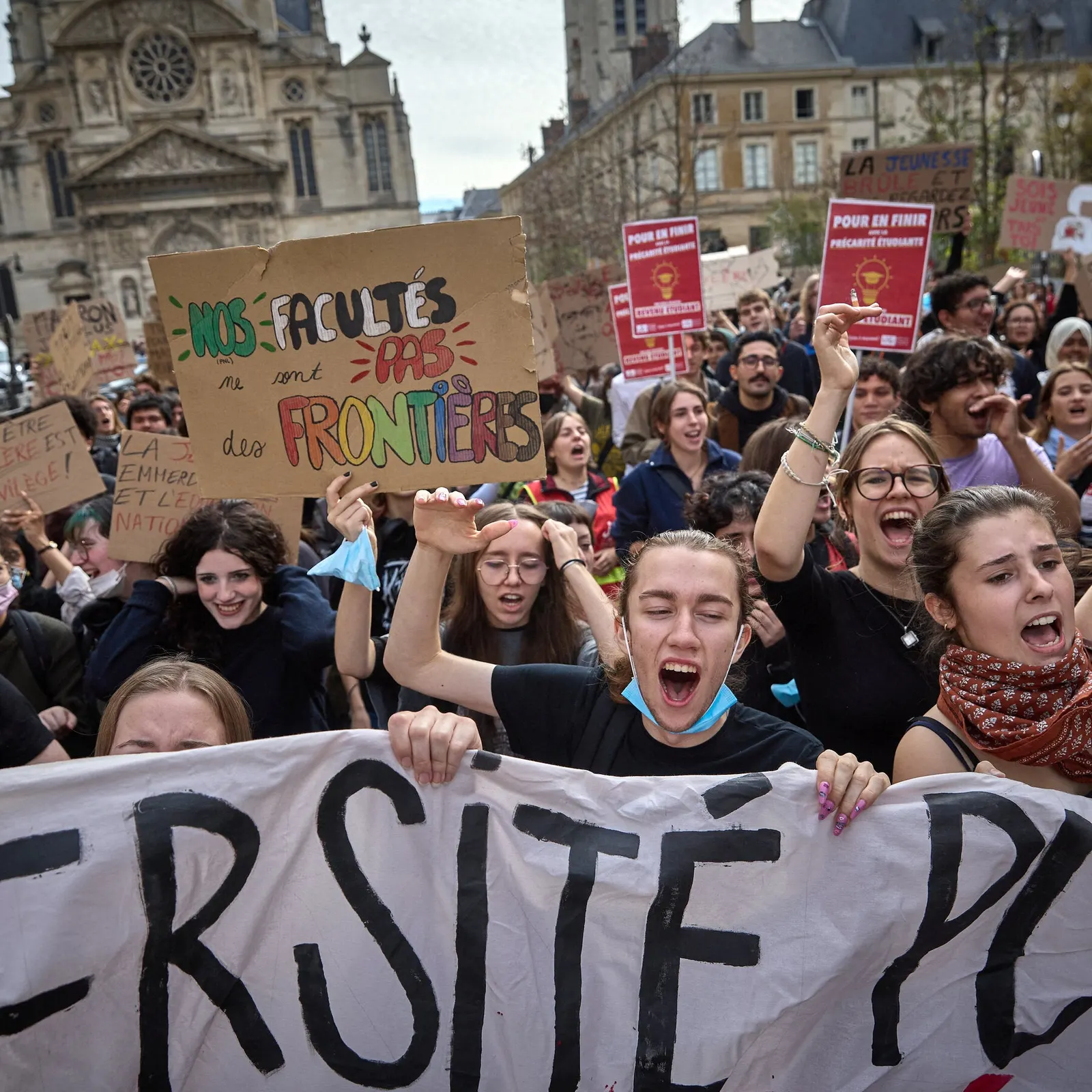
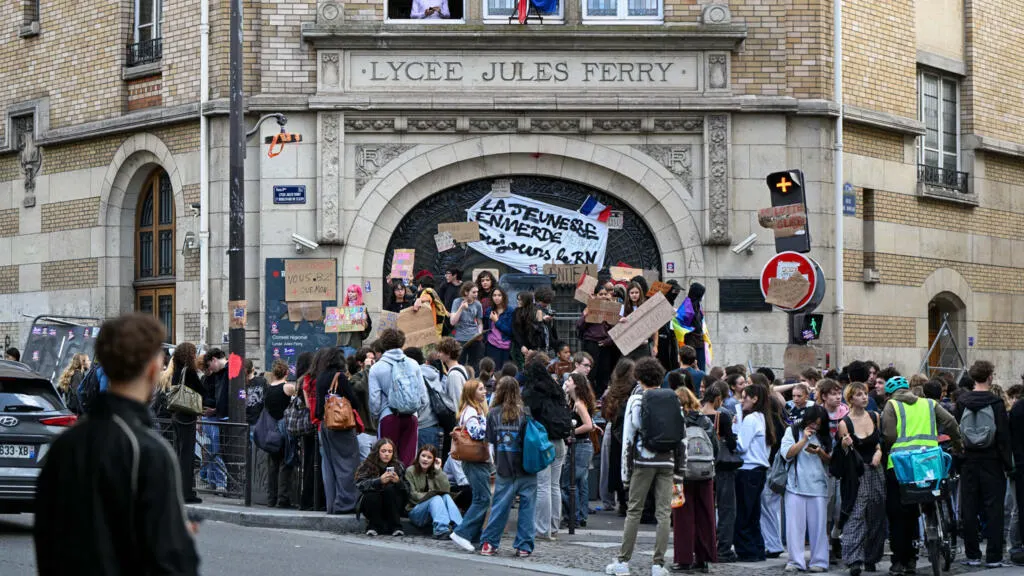
Students have cited shortages of teachers, overcrowded classes, unsafe buildings and insufficient resources. The movement began in the Paris region and spread nationwide, including to smaller towns, as pupils blockaded school entrances and disrupted lessons. The Education Ministry said 564 schools had been affected in its latest reported count.2356
The Straits Times traced the movement’s start to Sept. 17 at Saint-Exupéry high school in Créteil, where pupils supported striking teachers seeking more staff and resources. Education authorities later sent additional personnel, including a deputy principal and a nurse, and conditions there returned to normal. The movement continued spreading, however, and two-thirds of high schools in Seine-Saint-Denis took part.5
Some students accused police of using excessive force. Three investigations by the police oversight body, the IGPN, were opened after injuries during blockades, and Nuñez said five officers had been referred to the watchdog over actions whose proportionality would be assessed by the justice system. A 16-year-old in Tours suffered a serious eye injury after being struck by a police projectile. The Independent reported that a 14-year-old in Val-d’Oise lost several teeth and suffered severe facial injuries after being struck by a tear-gas grenade launcher. Amnesty International France said police used tear gas, grenades and batons while detaining students in large numbers.1358
At Lycée Le Corbusier in Aubervilliers, shortages led to the cancellation of maths, humanities, English and sport classes. Seventeen-year-old Maisa said she had taken the previous year’s French examination without having a French teacher, while other students argued that schools in lower-income suburbs received inferior resources.5
Authorities also imposed local restrictions. In the Loire, the prefecture banned gatherings around eight high schools from Oct. 2 until classroom teaching resumes. Those schools were instructed to provide remote lessons, while Geffray said distance education could be used elsewhere when damage or safety concerns prevented attendance.59
The protests also unfolded against a contentious budget backdrop. Students called for Parcoursup to be improved or abolished, saying the admissions system deepened competition and inequality. France’s 2027 budget included broader spending cuts, while education spending was set to rise by less than inflation. Geffray attributed the below-inflation increase to a declining student population. As demonstrations intensified, the government dropped a planned fee measure affecting some students preparing for university and Grandes Écoles.58910
Students filmed burning rubbish bins and police deploying tear gas, and edited footage circulated through online platforms including TikTok. Sociologist Valerie Becquet said social media allowed students to present their own account of the protests rather than relying only on traditional media narratives.5
Dispute over political involvement
The prime minister’s office said French intelligence agencies regarded the blockades as an organized effort involving La France Insoumise and other elements of the radical left. Prime Minister Sebastien Lecornu convened an interministerial crisis unit on Oct. 1, while Darmanin sought a firm criminal-justice response in an urgent meeting with 36 senior prosecutors.125
A leaked internal police report cited by the BBC alleged that far-left elements in student unions and groups including LFI were encouraging students. It suggested the tensions could form part of a strategy to advance political ideas before national elections, citing the presence of non-students, broad demands, Palestinian and Algerian flags and calls for protests outside police stations.3
La France Insoumise politicians rejected the government’s allegation, saying the party had done no more than support a movement it considered legitimate. LFI lawmaker Louis Boyard and senior official Manuel Bompard denied the accusations. Le Monde reported that Boyard and Clémence Guetté provided early support through visits and videos, while party leader Jean-Luc Melenchon backed the movement but urged students to use nonviolent methods.1235
Geffray met student representatives, parents and teachers and announced immediate work on student participation in the education system, teacher replacements and timetable reviews. Student organizations supported continuing the mobilization and called a nationwide demonstration for Oct. 6.14814
Why it matters
The movement has exposed stark inequalities between schools, particularly in lower-income suburbs, while drawing tens of thousands of students into a wider dispute over public services and France’s 2027 budget. Arrests, serious injuries and allegations of political orchestration have also made the protests a national flashpoint.351214
Videos
Related stories
background
background
Version history
- version 7 · The update traces the movement to a Sept. 17 protest supporting striking teachers and adds new details on participation, school shortages, social media and the 2027 budget.
- version 6 · The update traces the movement’s reported origin to Seine-Saint-Denis and adds a leaked internal report alleging far-left encouragement, along with LFI’s denial.
- version 5 · The update adds the Education Ministry’s count of 564 affected schools, more than 300 injured police officers, a 14-year-old’s severe facial injuries and new investigations into alleged police violence.
- version 4 · The update adds the reported toll of about 170 injured students, a teenager’s loss of sight, facial burns to a Marseille passerby, new education measures and the withdrawal of a proposed tuition-fee plan.
- version 3 · The update raises the reported detention total above 5,000, adds the proportion of minors detained, records a decline to 735 affected establishments and includes the Belfort attempted-murder investigation.
- version 2 · The update adds reports of more than 3,000 detentions, Interior Ministry figures showing 1,027 high schools affected, expanded injury reporting, additional security deployments and the budget backdrop.
- version 1 ·