World · France
Hundreds arrested as France protests unite students and cost-of-living campaigners
Demonstrations across France brought school grievances together with demands over living costs. Authorities reported about 400 arrests after clashes, fires and looting.
Listen to the story
Short version
France's October 17 school and cost-of-living protests brought about 400 arrests. Earlier reporting adds background on police injuries, alleged police violence and weapons restrictions.
- Government estimated 550,000 participants; organizers estimated about 800,000.
- Sixty law-enforcement officers were injured during the day's unrest.
- Earlier reports counted over 900 police injuries since the movement began.
- The police oversight body is examining 24 or more allegations of violence by officers.
- Stun grenades were suspended at student demonstrations, with Saturday use still possible.
What's new
- Authorities reported about 400 arrests nationwide after the October 17 protests.
- Interior Minister Laurent Nuñez estimated turnout at 550,000; organizers put it at about 800,000.
- Emmanuel Macron said those responsible for attacks, looting and damage would face prosecution.
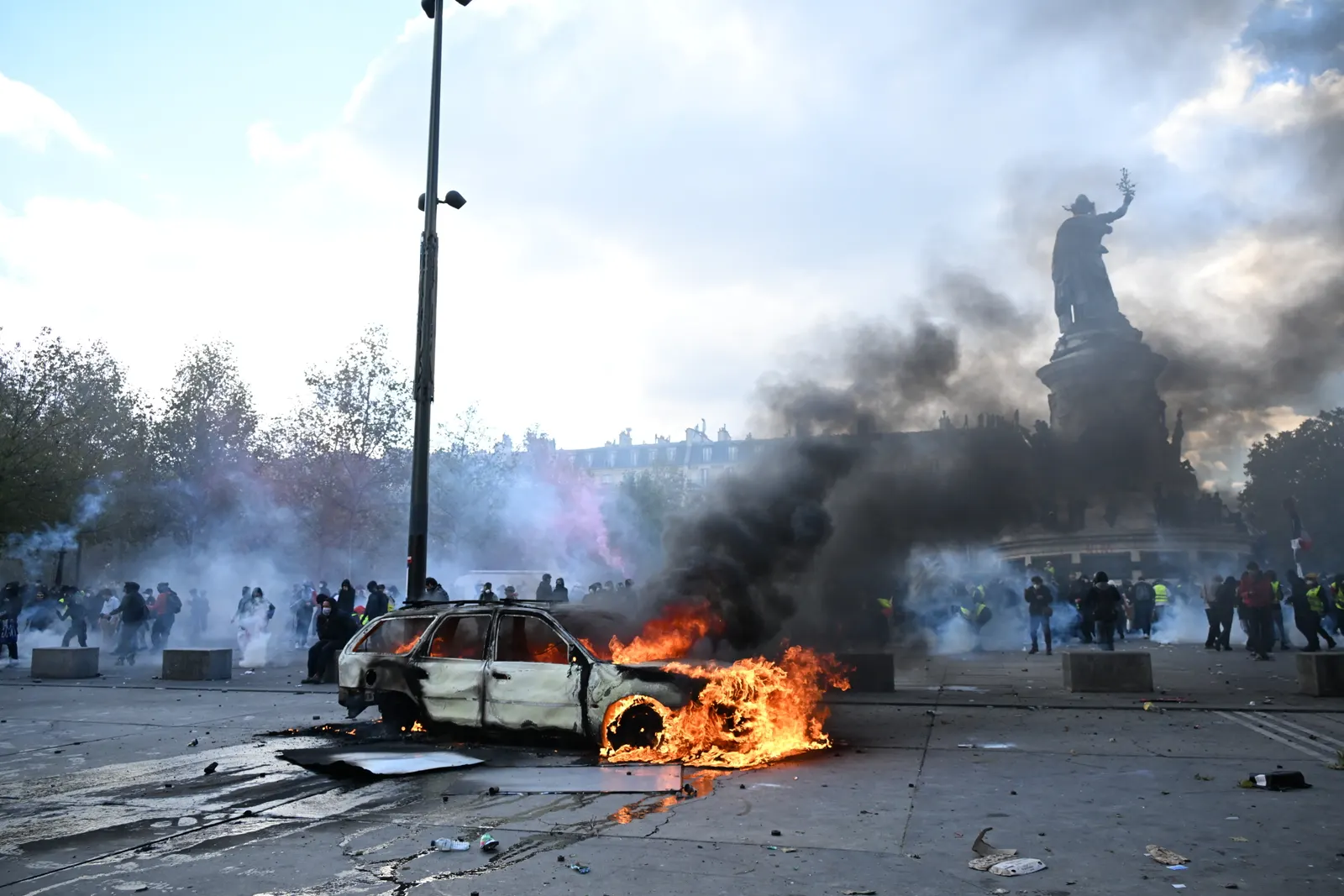
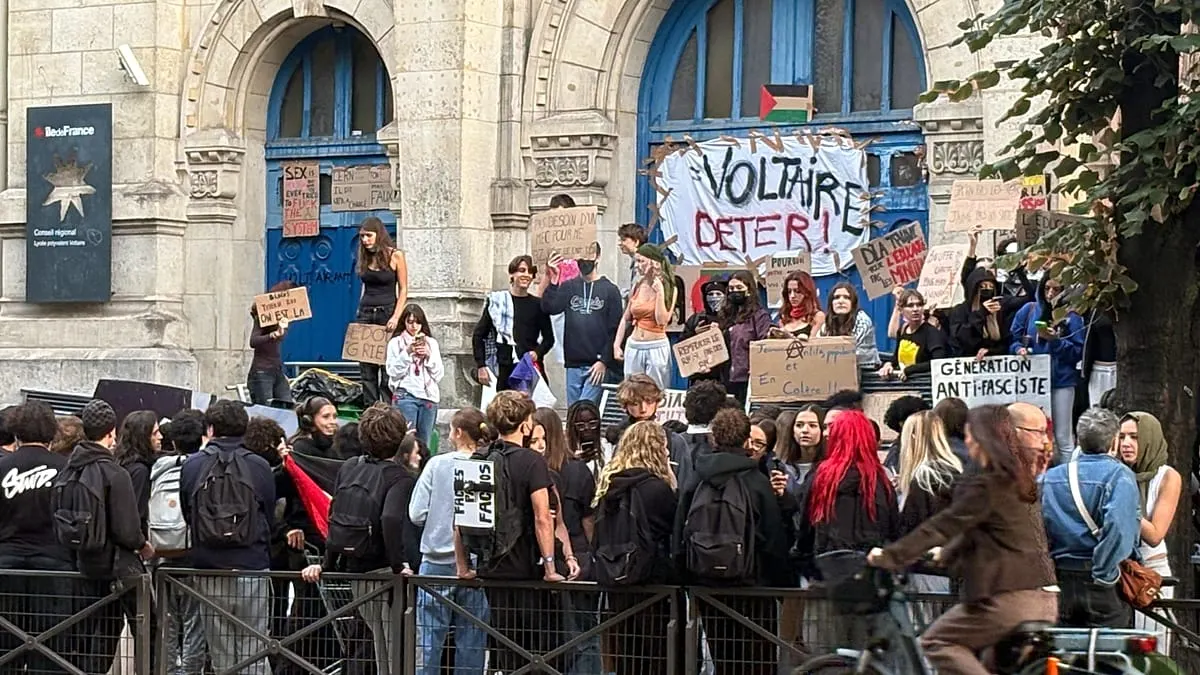
Students, trade union members and other protesters demonstrated across France on October 17, 2026, over rising living costs and school conditions, with authorities reporting about 400 arrests after clashes, fires and looting in several cities.1567
Different counts, shared grievances
Interior Minister Laurent Nuñez estimated that 550,000 people demonstrated nationwide, including 110,000 in Paris. Organizers gave a higher national estimate of about 800,000. Most participants demonstrated peacefully, although clashes and vandalism occurred in several cities.578
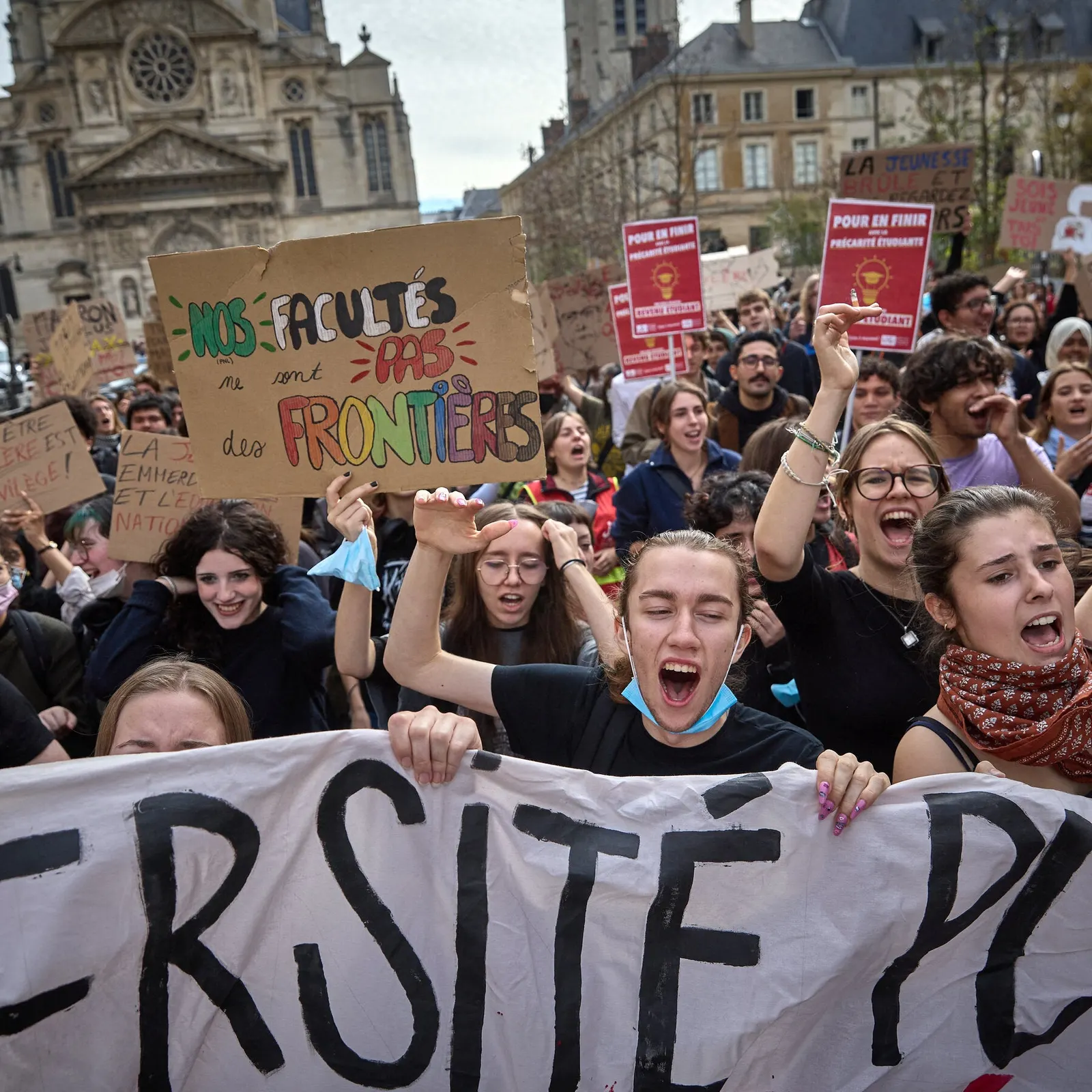
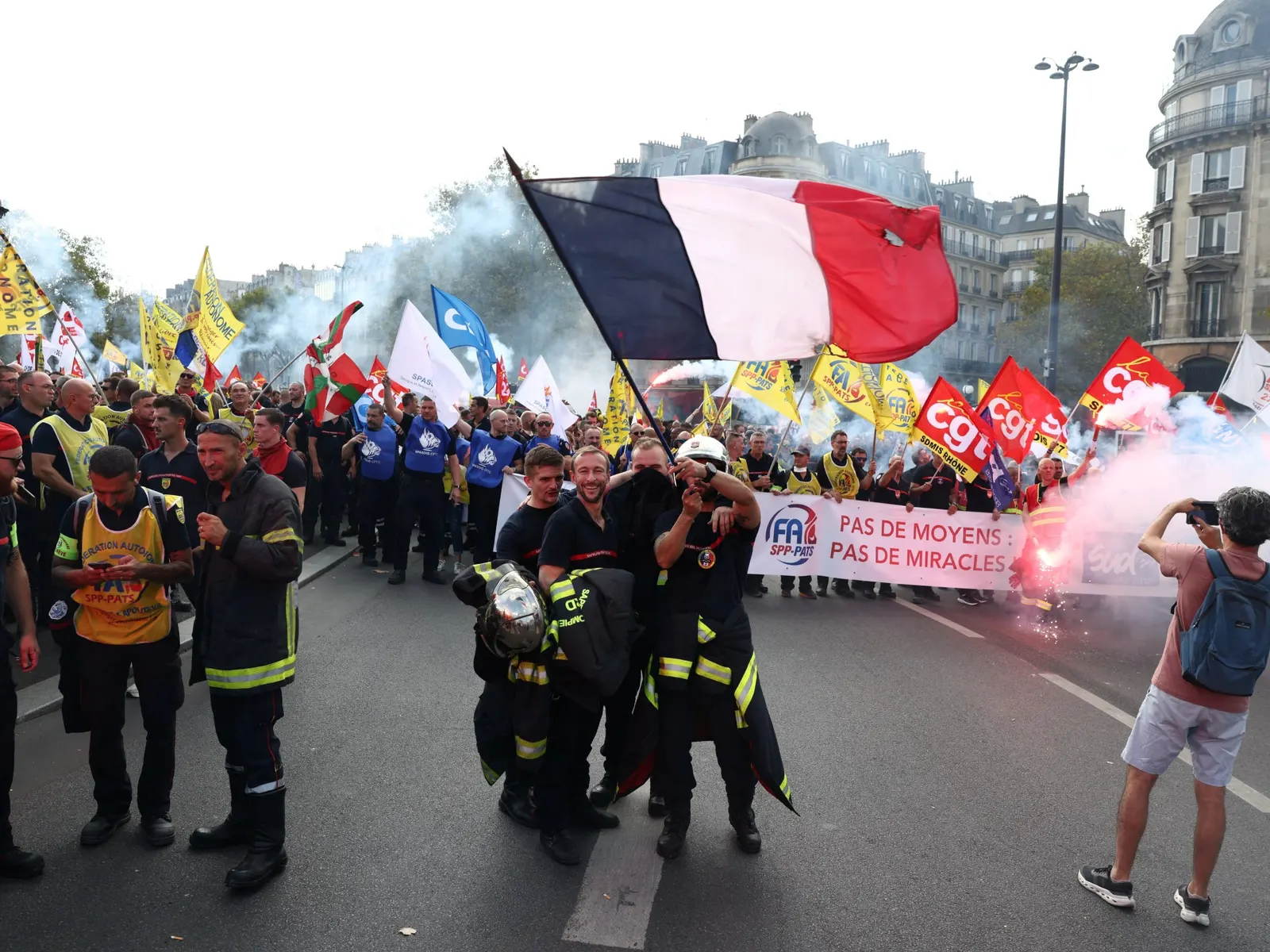
The demonstrations widened a student protest movement to include teachers, unions and groups campaigning over economic pressures and public services. Members of the Yellow Vest movement also joined the October 17 rallies, linking the school protests with opposition to austerity, fuel prices and living costs.56
The movement began at high schools in Paris's poorer northern suburbs before spreading nationwide, with grievances encompassing inequality, inadequate public spending and declining standards. The Yellow Vest movement began in 2018 in opposition to diesel taxes and broadened into protests over living costs and income inequality.34
According to NPR, student groups have used school blockades since mid-September. The BBC reported that hundreds of thousands of students had recently protested over shortages of staff and deteriorating lycée buildings. Édouard Geffray promised 3,000 additional supply teachers.12
The CGT's demands included increased wages and pensions, reduced prices and safeguards for public services. NPR reported that gasoline, energy and food prices had risen sharply in recent months. The government accused La France Insoumise of inflaming the protests; the party denied that accusation.234
Fires and injuries
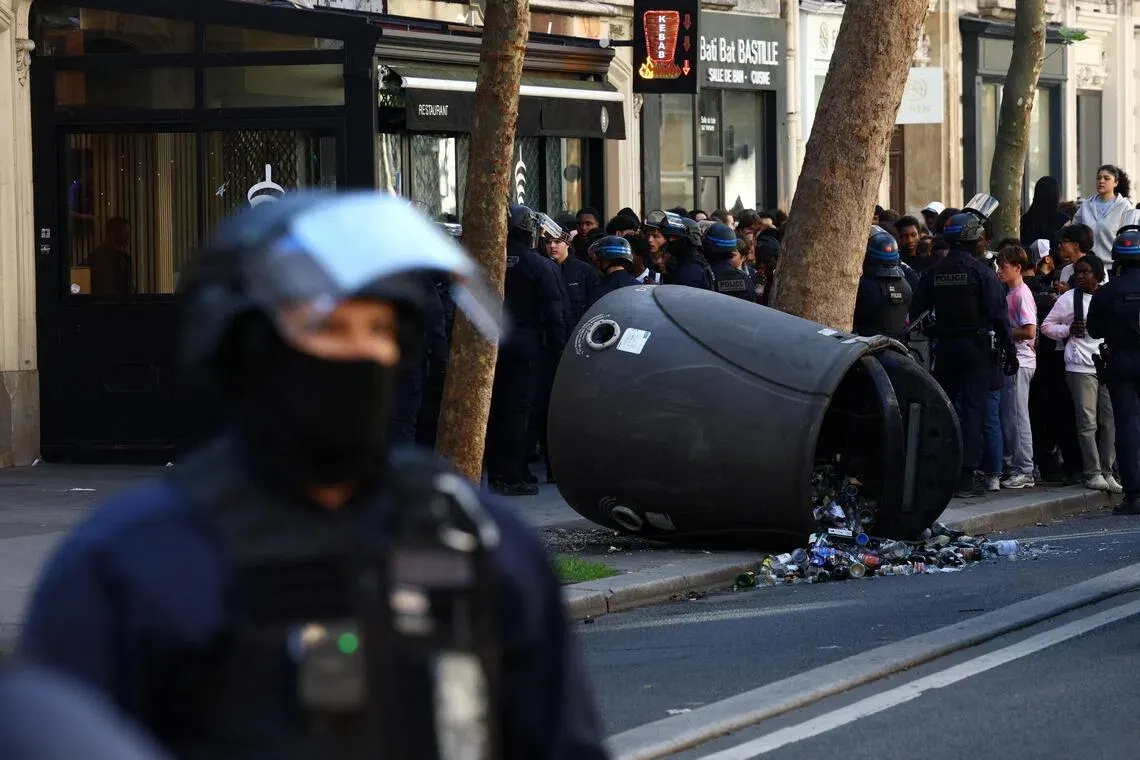
Police used tear gas and water cannons during the unrest. According to Nuñez, clashes left 60 members of law enforcement hurt; the BBC said two officers arrived at hospital unconscious. The Interior Ministry said hooded individuals had carried out targeted violence in several cities.156
A fire at Limoges town hall caused part of its roof to collapse. A tourism office was also set ablaze in Lyon, and police there said aggressors made it unsafe for firefighters to do their jobs. NPR put participation in the Lyon march at about 20,000.1256
The BBC reported damage to buildings in Grenoble, Avignon, Pau, Montpellier and Valence, and said an Apple store in Lille had been broken into and emptied. NPR reported that damage to Marseille City Hall was limited.12
A protester in Saint-Étienne lost a hand in a grenade incident. A student in Lens had suffered a similar injury earlier in October. The reports also described shops being looted and vehicles and buildings being set on fire during the nationwide demonstrations.56
France had suspended stun-grenade use at student demonstrations after an adolescent lost a hand on picking one up. Ahead of Saturday's rallies, however, Nuñez said intermediate weapons could be used if clashes broke out. Groups were also forming to provide medical assistance in anticipation of possible police violence.34
Reporting published before Saturday's rallies put police injuries since the movement began at more than 900, a cumulative figure distinct from the 60 reported for October 17. The Straits Times and France 24 also said the national police oversight body had opened inquiries into 24 or more allegations of violence by officers.134
Government response
President Emmanuel Macron said those responsible for attacks, looting and damage would be prosecuted and punished. Prime Minister Sébastien Lecornu said police had confronted violence of extreme intensity and warned against using violence to advance political demands.156
Political reactions also focused on responsibility for the unrest. According to the BBC, Jean-Luc Mélenchon accused police of attacking protesters while condemning looting and arson. Marine Le Pen accused the far left of taking over protesters' demands and blamed Mélenchon for encouraging violence.1
Why it matters
The demonstrations bring together disputes over school staffing and facilities with demands over wages, pensions, prices and public services. They put those concerns before the French government ahead of the presidential election scheduled for spring 2027.1256
Videos
Related stories
follow-up
same place
Version history
- version 2 · This update adds pre-rally context on the movement's origins, cumulative police injuries, police-violence investigations and stun-grenade restrictions, while retaining the later turnout and arrest totals and correcting source references.
- version 1 ·