World · Germany, Slovakia, Russian Federation
German Minister Warns Slovakia Against Tilting Toward Russia
On a visit to Bratislava, Germany's top diplomat said Putin's imperialism is Europe's greatest threat and pressed Slovakia to back EU sanctions, as the country's energy ties to Russia and domestic political turmoil complicate the message.
Germany's foreign minister warned Slovakia in Bratislava that Russia poses Europe's greatest threat and urged stronger backing for EU sanctions, as Slovakia's coalition lost its parliamentary majority at home.
- Wadephul called Putin's imperialism Europe's greatest threat on Sept 29 visit
- EU lifted sanctions on oligarchs Usmanov and Fridman
- Blanár said Russia talks inevitable, no military solution exists
- Slovak coalition lost majority after minister's recall on Sept 30
- Fico later affirmed Slovakia will honour NATO commitments
What's new
- Wadephul told Slovak leaders questioning the Russian threat would be irresponsible and a lack of solidarity
- EU removed oligarchs Alisher Usmanov and Mikhail Fridman from its sanctions list around the same time
- Blanár said talks with Russia are inevitable and cutting Russian energy supplies cannot happen overnight
- Slovak coalition lost its parliamentary majority after an opposition-led recall of a minister
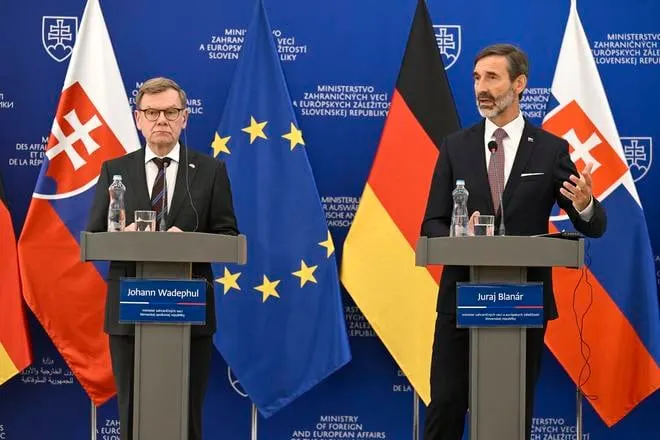
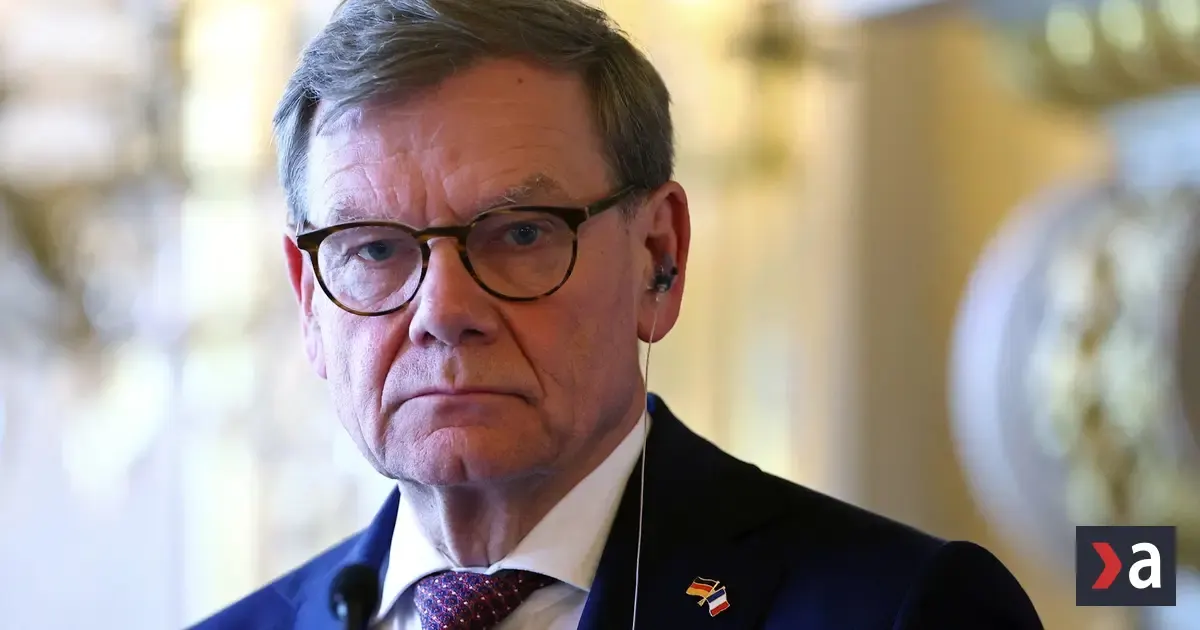
German Foreign Minister Johann Wadephul warned during a visit to Bratislava on September 29 that Russian imperialism under President Vladimir Putin is the greatest threat facing Europe, urging Slovakia to back European Union sanctions against Moscow and cautioning against questioning NATO's collective-defence commitments.157
Wadephul's warning
Meeting Slovak Foreign Minister Juraj Blanár and Prime Minister Robert Fico, Wadephul said Russia has shown no serious willingness to enter negotiations for a just and lasting peace, while Ukraine has repeatedly demonstrated its readiness to work toward ending the war it has been defending against since the Russian invasion of February 2022.15
He said blocking common EU decisions weakens the bloc and told reporters, "it would be not only a lack of solidarity, but also irresponsible to question that the greatest threat to Europe is Putin's belligerent imperialism."27
According to Denník N, the warning came amid reports that Slovakia is considering a foreign policy more favourable to Russia and that Fico has recently questioned NATO security guarantees for member states, though Slovak officials have said they oppose building what they describe as an "iron curtain" between Russia and the EU.3
Slovakia's response
Blanár denounced Moscow's invasion of Ukraine as a flagrant breach of international law, yet he argued the war cannot be resolved militarily and that eventually sitting down with Russia will be unavoidable.24
He pointed to Slovakia's dependence on Russian energy, saying, "Slovakia has built its entire infrastructure on the basis of Russian energy supplies," and that "cutting those ties would cause huge problems and could not happen overnight."4
Sanctions and energy
The visit coincided with the EU's removal of Russian businessmen Alisher Usmanov and Mikhail Fridman from its sanctions list, a step Slovakia had pushed for. Wadephul warned the EU could not afford individual member states blocking sanctions and said ending Russian energy imports should be part of full support for Ukraine.1524
Blanár noted that ending reliance on Russian energy will be tough given decades of entangled ties, adding that Slovakia is trying to broaden its sources by importing natural gas from Algeria, even as the Adriatic pipeline running through Croatia remains too limited in capacity to replace Russian oil.2
Political turmoil at home
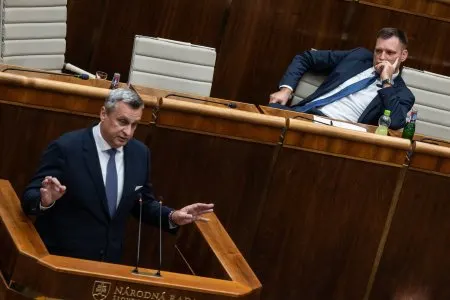
The talks took place as Slovakia's governing coalition faced internal strain. On September 30, parliament recalled Environment Minister Tomáš Tarabus against the prime minister's will, the first such move in 33 years, leaving Fico's coalition without a parliamentary majority.6
Opposition figures said the government had lost direction. SaS chair Branislav Gröhling said, "Yesterday was a breakthrough. Fico not only lost parliamentary majority, but today I must say he lost sense of reality," and called for early elections, while Progressive Slovakia's Michal Šimečka said the coalition would otherwise "struggle from crisis to crisis."6
According to Hospodárske noviny, Fico said Slovakia should not become part of a military conflict under NATO's Article 5 mutual-defence clause, before later stating Slovakia would honour its NATO commitments. Reuters reported that Slovak opposition parties criticised the prime minister for calling into question the country's commitment to NATO collective defence.17
Why it matters
The exchange illustrates strain within the EU and NATO over maintaining a united front on Russia, as one member state's leadership questions sanctions and alliance guarantees while facing its own loss of parliamentary control. The outcome could affect the bloc's ability to sustain sanctions and energy policy toward Moscow.267
Related stories
background
same place
Version history
- version 1 ·