World · Germany, Russian Federation
German intelligence chief warns Russia confrontation could turn violent
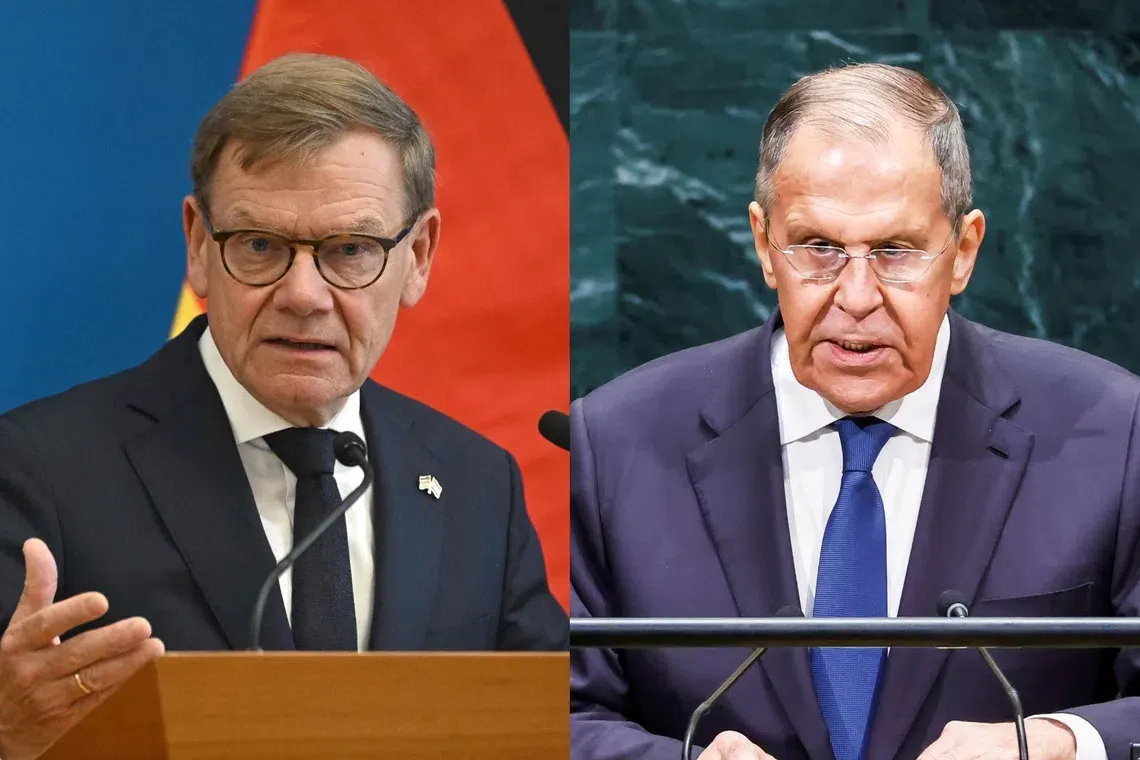
Martin Jaeger said Germany could be drawn into violent conflict as Russia intensifies what German officials describe as a shadow campaign. Moscow denies intending to attack and says it would respond only to aggression.
Listen to the story
Short version
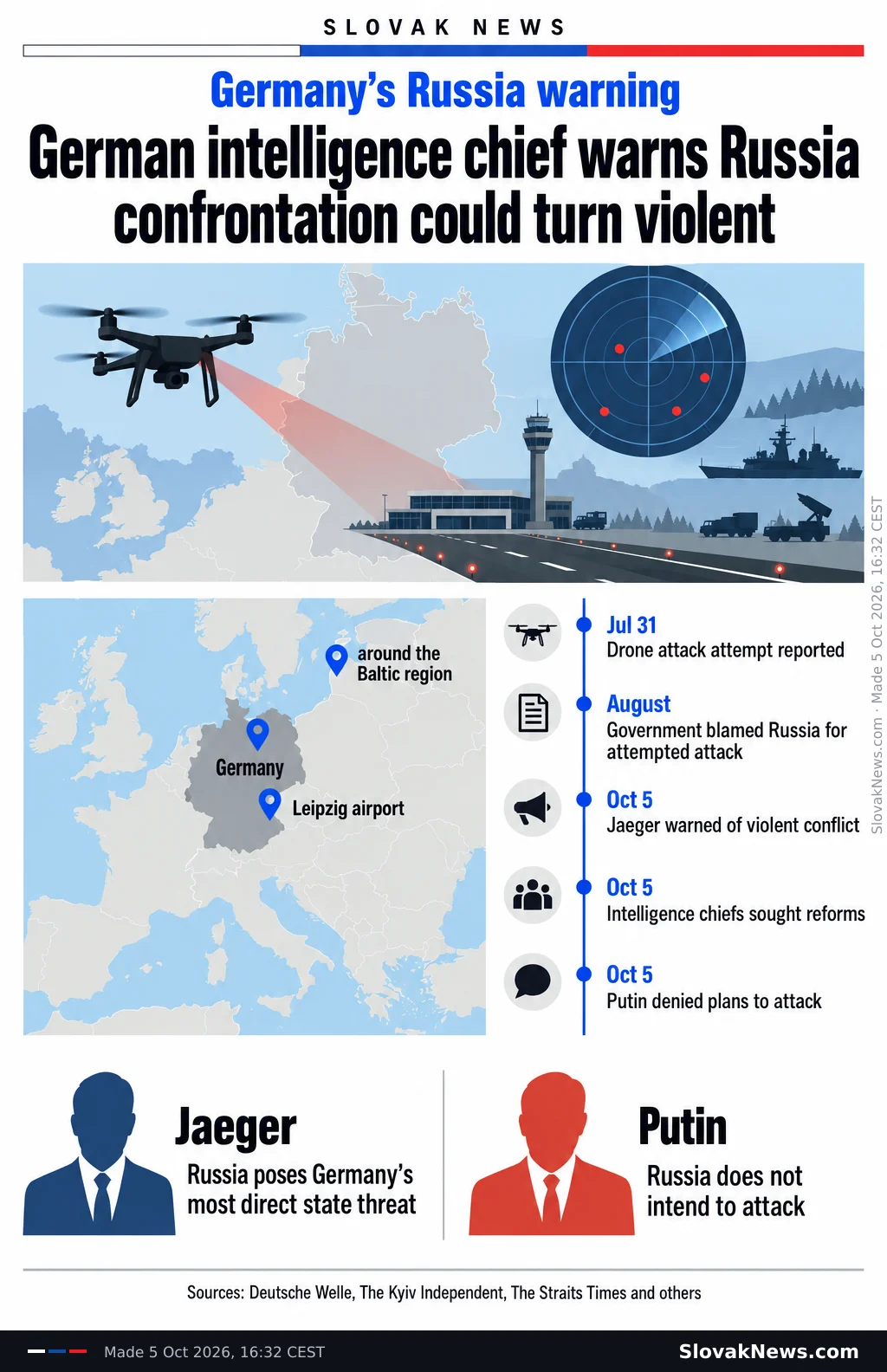
Germany’s foreign intelligence chief says an alleged Russian shadow campaign could pull Germany into violent conflict, although the BND sees no sign of a large-scale attack on NATO.
- Jaeger said the Russia confrontation had become more dangerous.
- Germany blames Russia for an attempted Leipzig airport drone attack.
- The BND sees no large-scale attack on NATO being prepared.
- Intelligence chiefs want more offensive powers against security threats.
- Putin denies plans to attack other countries.
Infographic
What's new
- Jaeger warned lawmakers on Oct 5 that confrontation with Russia had become more dangerous.
- He cited an attempted drone attack at Leipzig airport as an example.
- Germany’s foreign intelligence agency has identified no indication that Russia is preparing a major assault on NATO territory.
- Germany’s intelligence chiefs called for powers to act more offensively against threats.
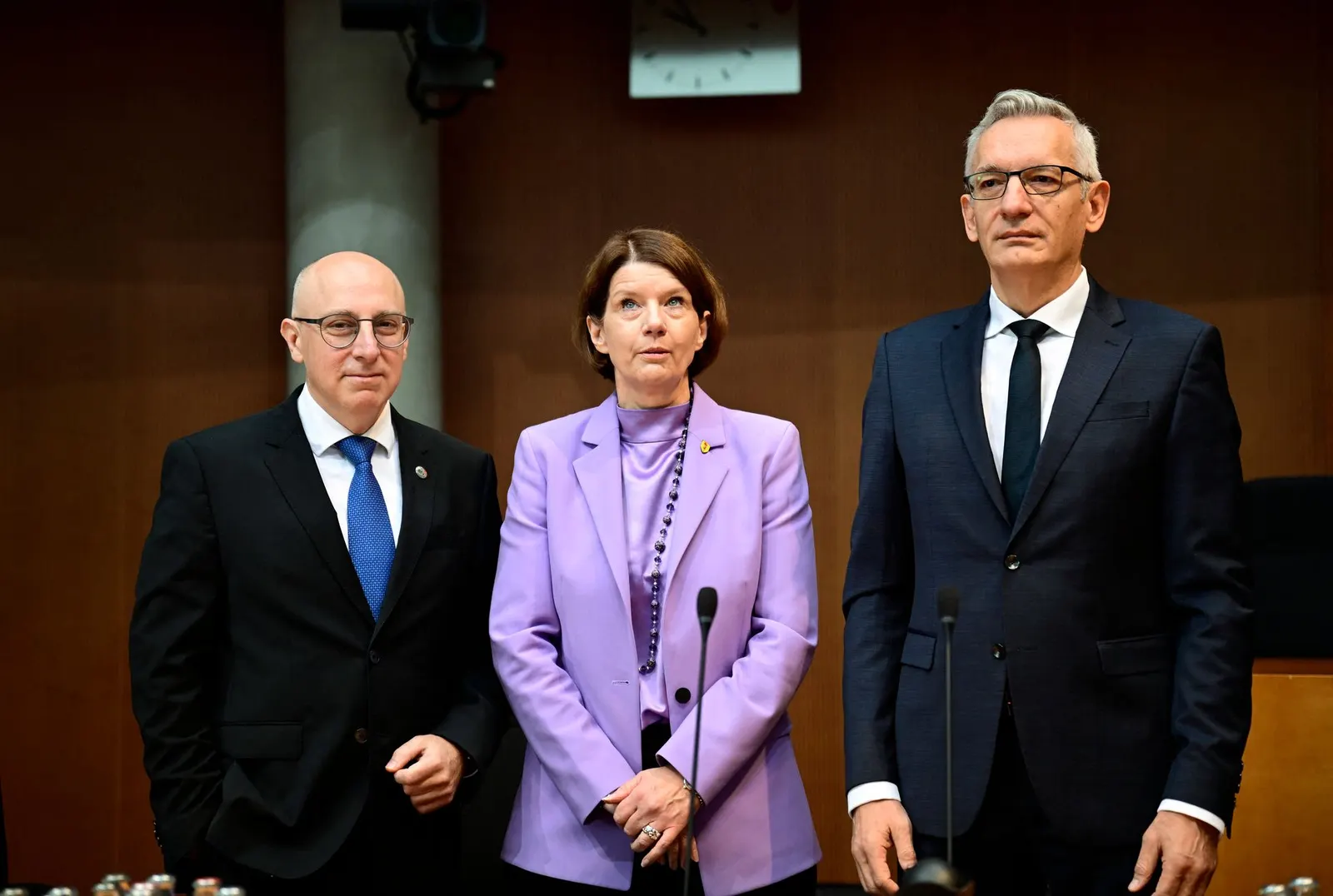
At the Bundestag’s annual public hearing on Oct 5, Martin Jaeger, who leads Germany’s foreign intelligence agency, told lawmakers that the country faced an increasing risk of being pulled into a violent conflict with Russia, pointing to the attempted drone strike at Leipzig airport as an illustration.13
Infographic
A more dangerous confrontation
Jaeger said the confrontation between Germany and Russia had entered a more dangerous phase. He described Russia as the most direct, wide-ranging and concrete state threat facing Germany, while characterising Moscow’s actions as an undeclared shadow campaign against the country. German authorities have described Russian activity in Europe as involving hybrid methods, including drone and cyber operations.123
The German government has blamed Russia for an attempted attack involving an explosives-laden drone at Leipzig airport in August. The Kyiv Independent dated the attempted attack to July 31, while Deutsche Welle and The Straits Times described it as occurring in August. Jaeger presented the Leipzig incident as one indication of the risks confronting Germany.123
According to The Kyiv Independent, Jaeger warned that Russia could use further acts of sabotage and nuclear intimidation to discourage action against Moscow and interrupt support and weapons deliveries to Ukraine. He said the possibility of Russian attacks against targets in Germany remained immediate, although the dossier provides no further details about specific potential targets.2
No sign of a large NATO attack
The BND does not currently see indications that Russia is preparing a large-scale attack on NATO territory, according to The Kyiv Independent. Jaeger nevertheless pointed to lower-level Russian military activity, particularly in the Baltic region, as part of the security picture facing Germany and its allies.2
The leaders of Germany’s other intelligence agencies also issued warnings. Sinan Selen, head of the domestic federal intelligence service, said Russia was prepared to conduct sabotage and killings. Martina Rosenberg, who leads military intelligence, said the German armed forces faced both external and internal enemies. These assessments were reported by The Kyiv Independent and were not independently detailed by the other sources in the dossier.2
The three intelligence chiefs called for changes that would allow their agencies to work more offensively against cyberattacks and adversaries’ weapons programmes. The dossier does not specify the proposed legal changes, their timetable or the degree of political support for them.2
Moscow denies plans to attack
Russian President Vladimir Putin denied that Russia intended to attack other countries, including NATO members. He said Moscow would respond if it faced aggression. The sources do not provide an independent assessment of that statement or a Russian response to Germany’s accusation concerning the Leipzig airport incident.13
The warnings coincided with Chancellor Friedrich Merz’s visit to Kyiv, which The Kyiv Independent said was intended to reaffirm Berlin’s support for Ukraine. Ukrainian Foreign Minister Andrii Sybiha welcomed Merz and said the chancellor would meet President Volodymyr Zelensky to discuss bilateral relations, European matters and international issues. Politico Europe reported that Merz was also seeking to reassure concerned allies in Ukraine and elsewhere in Europe while urging Germans to maintain opposition to Moscow.25
Why it matters
The assessment places the risk to Germany below the level of an imminent large-scale attack on NATO but warns that sabotage, intimidation and lower-level military activity could still affect European security. It also connects Germany’s domestic security concerns with continued European support and arms deliveries for Ukraine.2
Videos
Related stories
same actors
background
background
Version history
- version 1 ·