World · Iraq
Baghdad orders federal control of Kurdish crossings and oilfields
Reuters reported that Iraq’s prime minister directed federal agencies to assume responsibility for Kurdish border crossings and oversee oilfields controlled by Kurdish security forces. Kurdish leaders rejected the measures, according to L’Orient Today.
Listen to the story
Short version
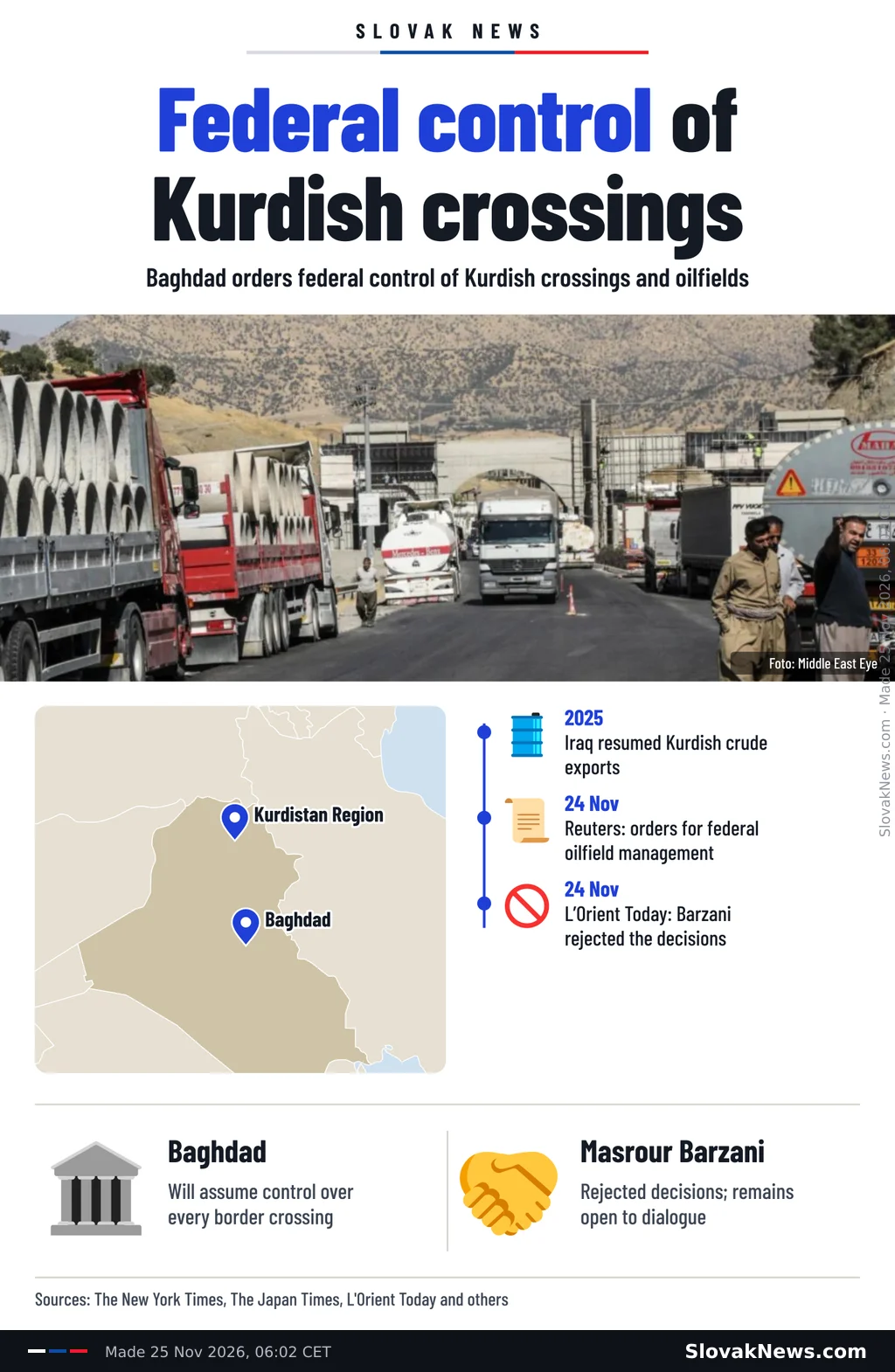
Baghdad has ordered federal control of Kurdish border crossings and management of oilfields under Kurdish security control, Reuters reported. Kurdish leaders rejected the measures, according to L’Orient Today.
- Numan announced plans covering every border crossing in the Kurdistan Region.
- Reuters linked the orders to an alleged oil-smuggling network investigation.
- L’Orient Today reported Barzani rejected the decisions but remained open to talks.
Infographic
What's new
- Baghdad announced plans to control all border crossings in the Kurdistan Region.
- Reuters reported orders for federal management of oilfields under Kurdish security control.
- L’Orient Today reported that Kurdish leaders rejected the decisions while leaving dialogue open.
Iraq’s prime minister, Ali al-Zaidi, has ordered federal authorities to assume control of border crossings in the Kurdistan Region and manage oilfields under Kurdish security control, Reuters reported on November 24, 2026. The agency said the measures coincided with a probe of a suspected network trafficking oil.5
Infographic
Crossings and oil management
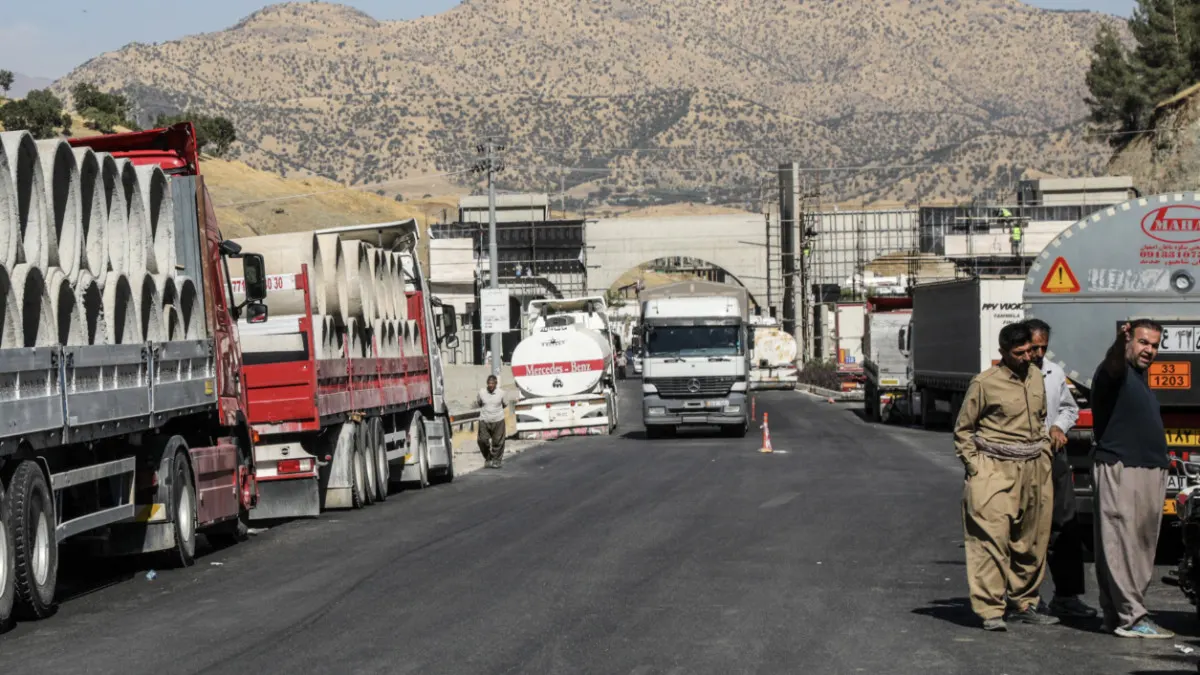
Zaidi’s spokesperson, Sabah al-Numan, announced that Baghdad would control all border crossings in the Kurdistan Region. L’Orient Today reported that the Border Ports Commission had been instructed to take responsibility for those crossings as part of measures the government presented as an effort to curb oil smuggling.34
The oil instructions also concern territory outside the autonomous region. According to L’Orient Today, Numan said the oil ministry was directed to manage fields outside the Kurdistan Region that were under Kurdish security authority. The Japan Times described the order as covering oilfields in four provinces under Kurdish control.32
Zaidi also instructed the Kurdish government not to authorise oil exports other than through the federal oil ministry, L’Orient Today reported. The outlet said he ordered unofficial crossings closed, stronger security around oilfields and the placement of oil ministry staff at checkpoints.3
Kurdish objections
Kurdistan Region Prime Minister Masrour Barzani called the decisions “completely unacceptable”, according to L’Orient Today, but said dialogue remained possible. The region’s two ruling parties called for disagreements with Baghdad to be settled under the constitution and warned against infringement of the region’s rights.3
Middle East Eye reported that Kurdish leaders broadly condemned the move as an attempt to reduce their autonomy, amid divisions within the Kurdistan Regional Government. The Japan Times said the decision renewed longstanding disagreements between Baghdad and the regional government over petroleum, finances, territory and trade.42
Smuggling investigation
Reuters connected the orders with Zaidi’s attempt to curb Kataib Hezbollah and a probe of a suspected oil-trafficking network. The Japan Times reported accusations that senior officials had operated a smuggling ring for years, generating hundreds of millions of dollars from stolen oil. Those accounts describe allegations, rather than established findings.52
According to L’Orient Today, the government alleged that oil smuggling took place in Jurf al-Sakher, a Kataib Hezbollah stronghold. The outlet reported that government forces entered the area under an agreement that avoided confrontation with the militia. It also reported the dismissal of the border authority’s head, suspension of the North Oil Company chief and removal of security officials in Kirkuk.3
The orders follow the resumption in 2025 of Kurdish crude exports through the Iraq-Turkey pipeline after a stoppage lasting more than two years, L’Orient Today reported. Before that interruption, Kurdish authorities had exported oil without federal approval or supervision, the outlet said.3
Why it matters
For European readers following regional energy developments, the dispute concerns control of oil production and an export route through Turkey. L’Orient Today reports that crude sales account for 90 percent of Iraq’s revenues and that Iraqi oil exports have only recently recovered from disruption during the Middle East war; the dossier establishes no specific effect on European supplies.3
Videos
Related stories
Version history
- version 1 ·