World · Iraq, United States of America
Iraq Declares Full Security Control as Coalition Ends Mission
Baghdad marked the formal conclusion of the US-led coalition's 12-year campaign against Islamic State, as Iran-backed Kataib Hezbollah denied any disarmament deal and Kurdish officials voiced concern over a security vacuum.
Listen to the story
Short version
Iraq declared the US-led coalition's anti-ISIS mission over on September 30, taking full security responsibility, while Iran-backed militias disputed disarmament terms and Kurdish officials warned of security gaps.
- PM al-Zaidi declared coalition mission over, Iraq assumes full security control
- Final US troops left Erbil and Victoria bases; equipment moved abroad
- Kataib Hezbollah denies any disarmament deal, vows to monitor airspace
- Disarmament deadline pushed to June 2027
- Kurdistan warns of air defence gap after coalition departure
What's new
- Iraqi PM Ali Faleh al-Zaidi declared the coalition mission over and announced Iraq assumes full security responsibility
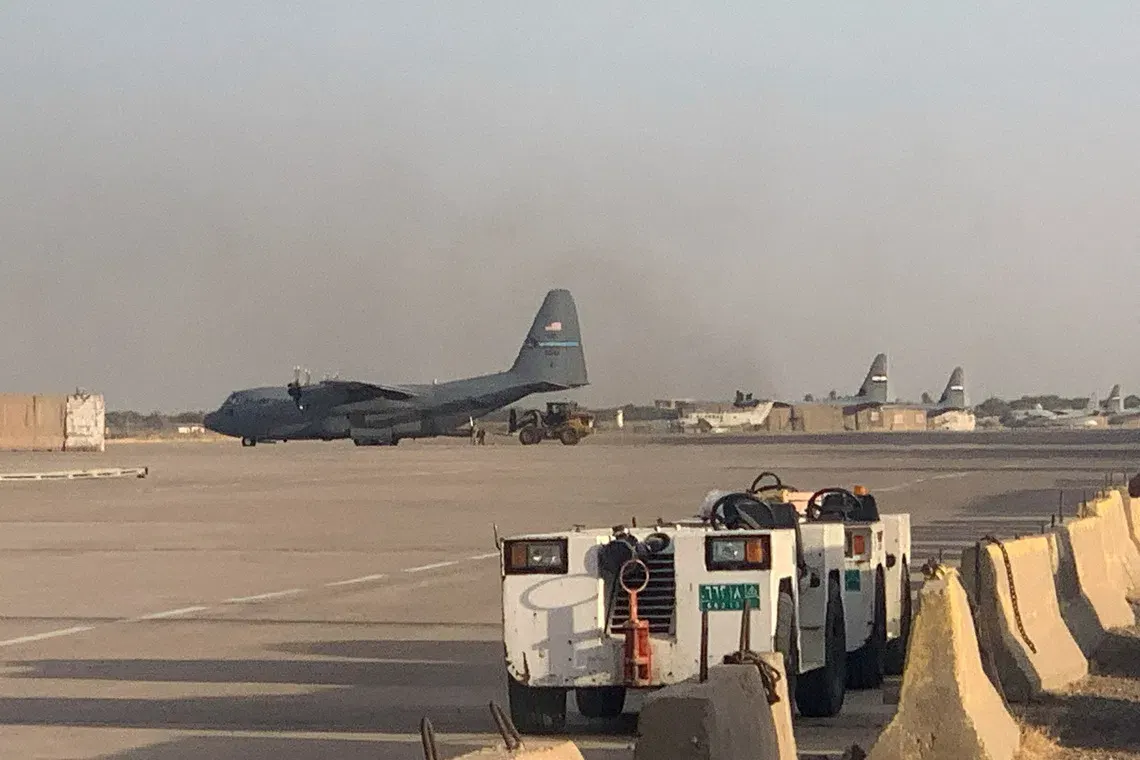
- Final US forces left Erbil Air Base and Victoria base near Baghdad, with equipment moved to Kuwait, Turkey and Jordan
- Kataib Hezbollah publicly denied reaching any disarmament agreement with the prime minister
- Kurdish officials and the Ministry of Peshmerga Affairs warned of a gap in air defence after the coalition's exit
Iraqi Prime Minister Ali Faleh al-Zaidi declared on September 30 that the mission of the US-led international coalition against Islamic State had concluded, with Iraq assuming full responsibility for its own security, as the final American forces withdrew from bases including Erbil Air Base in the north and Victoria base near Baghdad International Airport.56
Coalition withdrawal completed
The coalition's campaign, launched in 2014 when forces first entered Iraq and Syria to battle Islamic State, is winding down under a 2024 accord reached between Baghdad and Washington. The Pentagon announced the military mission had concluded, and the United States transferred its remaining equipment to Kuwait, Turkey and Jordan, a departure sources describe as substantially different from the 2011 US withdrawal, which left large quantities of military equipment and infrastructure at Iraqi bases.16
US President Donald Trump said the day marked a victory for the United States, Iraq and the fight against ISIS. Al-Zaidi said cooperation among friendly forces and peoples had resulted in victory over ISIS, adding that security cooperation with coalition partners "will remain an open avenue and will become more effective and focused." Interior Minister Qasim al-Araji said that although the mission had ended, the partnership itself would continue, evolving into a more solid bilateral relationship.15
Dispute over militia disarmament
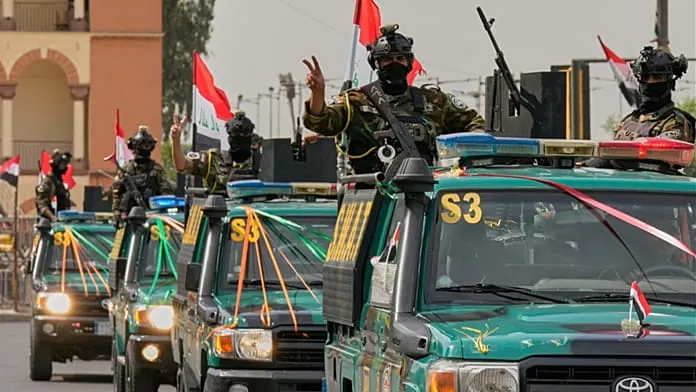
Al-Zaidi declared October 1 a day of full Iraqi sovereignty and the beginning of exclusive state control over weapons, pledging that the government would strip all non-Iraqi armed groups operating within the country of their arms and stop Iraqi land and airspace from being used to menace neighbouring states. A law cementing the status of the Popular Mobilisation Forces within the security system was approved the same week.3
Kataib Hezbollah rejected the notion that it had struck any deal on disarmament with the prime minister. Group leader Abu Hussein Al Hamidawi stated that his fighters had held off for a response from the government until the final hour and concluded it was time to begin again, asserting that "the resistance has won this round, and the victor is the one who imposes his conditions on the enemy." The Islamic Resistance in Iraq reported that talks lasting over 40 days through a four-party panel had yielded no reply from officials, maintaining that its arms would stay "as a trust in the hands of our mujahideen" and that no political deadline bound the group. Only two pro-Tehran groups plus Saraya Al Salam said they had placed weapons under state authority, while hardline factions said they would not disarm until foreign troops left.3
Zaidi announced a 90-day halt to attacks by armed factions, to be followed by six months to hand over weapons, with the process concluding by June 30, 2027 — a deadline that had initially been tied to the September 30 withdrawal but was pushed back. The militia Ashab al-Kahf warned it would respond militarily to any foreign forces detected on land or in the sky starting Wednesday night, while a security official from Kataib Hezbollah said the group intended to watch Iraqi airspace and try to down any hostile planes.5
Kurdish security concerns
About 2,500 coalition personnel had been deployed across Iraq before the 2024 drawdown agreement, with roughly 1,500 troops stationed at Erbil Air Base before the final withdrawal. More than one thousand drone and ballistic missile strikes have hit the Kurdistan region since February 28, and the Ministry of Peshmerga Affairs warned that the coalition's exit would leave it lacking air defence, a worry Middle East Eye framed as alarming.2
Kurdistan Regional Government Prime Minister Masrour Barzani dismissed claims that the region would be left vulnerable, saying "Kurdistan has more than enough Peshmerga, heroes, and patriots prepared to sacrifice their lives." Iraq said it was acquiring air defence equipment from three countries — South Korea, Turkey and the United States — while Turkey agreed to progressively transfer control of its Bashiqa base to Baghdad.5
Why it matters
The transition tests whether Baghdad can assert control over Iran-backed factions that retain weapons while managing relations with Washington and neighbouring states. Any failure to contain armed groups or protect Kurdish territory from attack risks renewed instability in a region whose security has wider implications beyond the Middle East.23
Videos
Related stories
Version history
- version 1 ·