Business · Saudi Arabia, Islamic Republic of Iran, Yemen
Saudi Crude Exports Hit War-Time High After Pipeline Attack
Saudi Arabia rerouted crude shipments through the Strait of Hormuz after a drone strike shut a key pipeline, pushing September exports to their highest level since the U.S.-Iran war began, though tracking firms disagree on the exact volume.
Saudi Arabia's oil exports hit their highest level since the U.S.-Iran war began, after a pipeline attack forced rerouting through the Strait of Hormuz.
- September exports were the highest since the war started in February
- Estimates range from 5.28 million to 6 million barrels a day
- East-West pipeline shut after a drone attack from Iraq
- Brent crude briefly neared $110 a barrel
- Aramco has not confirmed a full pipeline restart
What's new
- September exports reached the highest monthly level since the war began in February, though estimates range from 5.28 million to 6 million barrels a day depending on the tracker
- The East-West pipeline was shut after a drone attack launched from Iraq, forcing Saudi Arabia to route almost all exports through the Strait of Hormuz
- Brent crude briefly rose to nearly $110 a barrel after the pipeline closure
- Aramco has not confirmed whether the pipeline has fully restarted, though industry sources report it resumed at reduced rates this week
According to CNBC, Bloomberg and other outlets citing tanker-tracking data, Saudi Arabia's September crude shipments climbed to their strongest monthly total since the U.S.-Iran war erupted about seven months earlier, as the kingdom moved cargoes through the Strait of Hormuz after a major pipeline was damaged.1234
Conflicting figures on export volume
CNBC, the Saudi Gazette, UA.News and SEE.news reported that September crude shipments from Saudi Arabia averaged roughly 6 million barrels daily, marking the strongest pace since the war started. Bloomberg gave a different figure, which it said reflected differences in data cut-off timing and methodology compared with other trackers.1634
Bloomberg reported that its tanker-tracking data diverges from estimates by Kpler because of differences in the timing of data cut-offs and in methodology. CryptoBriefing separately put the September average at 5.28 million barrels a day, describing it as the highest monthly figure since the conflict began in early 2026, after August exports had collapsed to between 2.4 and 3 million barrels a day, the kingdom's lowest in nine years. TASS, citing Reuters, said Saudi Arabia shipped around 2.4 million barrels a day in August and that the September level marked the highest since the U.S.-Israeli operation against Iran began in late February.275
CNBC and UA.News reported that shipments surged nearly 80 percent over August's level of 3.4 million barrels a day, a figure not corroborated elsewhere in the dossier, while the Saudi Gazette and SEE.news also cited an 80 percent month-on-month rise without specifying the August baseline.1364
Pipeline damage forces rerouting
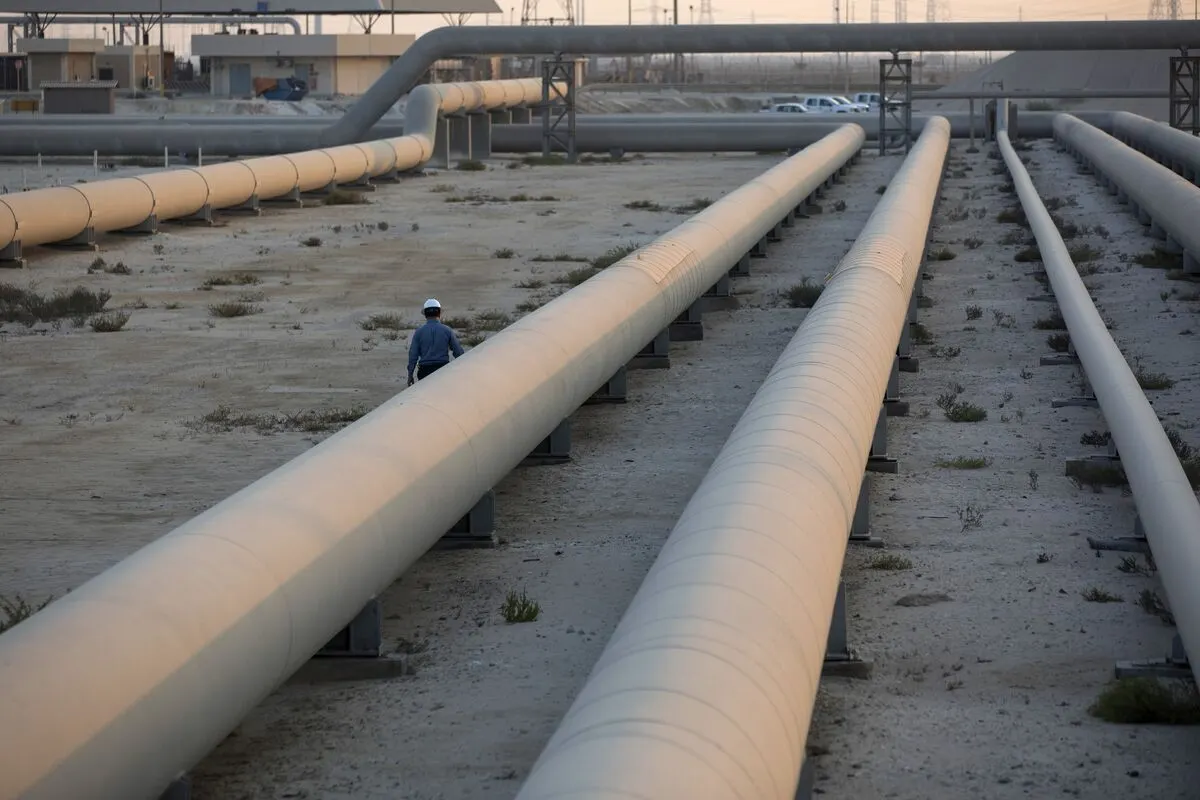
CNBC and UA.News reported that the East-West pipeline, which typically transports oil across Saudi Arabia to the Red Sea, was taken offline this month following a drone strike originating in Iraq. CryptoBriefing reported that Aramco stopped loading tankers at the Yanbu terminal after September 12 and abandoned Red Sea loadings entirely, shifting operations to Gulf coast terminals instead.137
Brent crude briefly jumped to nearly $110 a barrel after the shutdown, before easing as markets assessed the scale of the disruption, CNBC and SEE.news reported. The U.S. military set up a shipping lane off Oman's coastline, while Saudi Arabia sent its exports instead through the Strait of Hormuz, a passage that had typically handled about 17 million barrels daily before wartime disruptions, CNBC and UA.News reported.143
CryptoBriefing said that near September 21, Aramco filled seven supertankers with a combined 14 million barrels, and separately arranged the sale of roughly 60 million barrels for delivery in September and October via ship-to-ship exchanges at Oman's Sohar port. Roughly 20 percent of global oil supply normally transits the Strait of Hormuz, according to the same report.7
Aramco says disruptions are temporary
CNBC and UA.News reported that Saudi authorities have offered no official confirmation the pipeline is running again, though industry sources indicated it began pumping modest volumes earlier in the week and is increasing output, while SEE.news and UA.News characterized the restart as happening at lower-than-normal flow rates. Aramco chief executive Amin Nasser told Nikkei that in his experience, "temporary interruptions to oil infrastructure last usually for days, not weeks or months ... on every occasion."134
Nasser also said Aramco was exploring alternative export routes and additional overseas storage. "Aramco continues to explore additional export routes and expand its storage capacity outside the Kingdom," he said, adding that "the company is capable of withstanding and managing severe disruptions, thanks to its advanced infrastructure."6
Kpler's Matt Smith said the rise in Gulf shipments reflected both the pipeline outage and growing confidence in using the strait despite the risks. "The ramp-up from the Mideast Gulf is a consequence of the pipeline outage, but it likely also signals a greater confidence in using the Strait of Hormuz given rising traffic," he said. Kpler estimated that Middle East crude exports stood at just under 80 percent of pre-conflict levels.1
Wider war and diplomatic context
The export rebound comes amid a wider war between the United States and Iran that CNBC said has lasted about seven months, having begun in February. U.S. and Iranian officials each met privately with go-between negotiators on Monday, CNBC reported, and Iranian Foreign Minister Abbas Araghchi told reporters in New York, "We talked about ideas and how to find solutions to fulfil Iran's conditions," adding, "Whenever the Qataris have a response, they know how to get it to us." Tehran's proposal is said to seek a four- to five-day U.S. timeline to release frozen funds and lift sanctions, and for nuclear talks to begin within seven days.1
President Donald Trump said of the conflict, "We're going to win. It's going to go pretty quickly," and separately called an unspecified development "unacceptable," according to CNBC. The outlet also reported that Iran says a recent school attack involved two separate U.S. Tomahawk missiles, even as both Washington and Israel have declined to formally acknowledge involvement, and it noted that U.S. retail diesel prices sit close to an all-time high of $6.53 a gallon, with a possible export restriction that would keep about 1.2 million barrels a day within the country.1
Why it matters
The pipeline attack and the Brent price spike to near $110 a barrel illustrate how quickly regional escalation can feed through to fuel costs relevant to European consumers and industry.147
Videos
Related stories
background

background

background

same actors
Version history
- version 1 ·