World · State of Palestine, Israel
Settler attacks disrupt Palestinian olive harvest across West Bank
Reports published on 16 October describe assaults on Palestinian farmers and the burning of cars and olive trees. Washington Post photographer Heidi Levine was also attacked.
Reports describe settler attacks on Palestinian harvesters across the occupied West Bank. Cars and olive trees were burned, and a Washington Post photographer was attacked.
- Palestinian authorities reported attacks in eight villages and at least 20 injured.
- The BBC said it witnessed attacks and olive trees being burned.
- Levine was hospitalised, according to the BBC.
- The prime minister’s office disputed the circumstances of the attack on Levine.
What's new
- Palestinian authorities reported attacks in eight villages and at least 20 people injured.
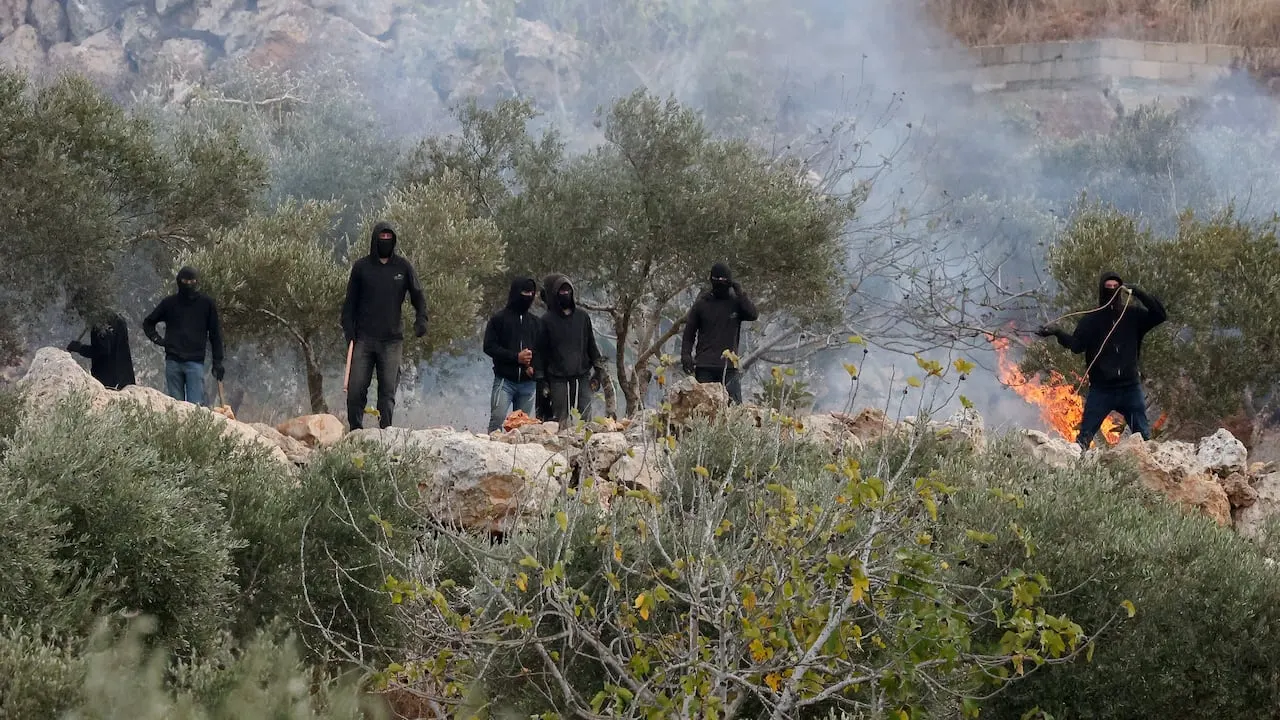
- The BBC reported witnessing settlers attack harvesters and burn olive trees.
- Heidi Levine was taken to hospital after an attack, according to the BBC.
Israeli settlers attacked Palestinian olive harvesters and burned trees and cars across the occupied West Bank, according to reports published on 16 October 2026. Palestinian authorities recorded attacks in eight villages and injuries to at least 20 people; Washington Post photographer Heidi Levine was also among those attacked.123
Attacks in the olive fields
The BBC said its journalists witnessed about a dozen settlers descend a hill near an outpost towards a field where Palestinians and activists were gathering olives. It reported that settlers used slingshots to throw stones and set approximately a dozen olive trees alight.2
Near Abu Falah, the Guardian reported that at least 80 settlers assembled and threw rocks at farmers using slingshots. Israeli forces fired tear gas after Palestinians picked up stones, it said. The BBC also described an exchange of stones, followed by the arrival of Israeli forces and the withdrawal of Palestinian farmers.12
Three cars were burned during an attack on harvesters near Turmus Ayya, according to the Guardian. The Associated Press reported assaults on residents and a foreign journalist, as well as fires involving cars and olive trees, in at least eight villages in the northern West Bank.13
Photographer injured
Levine, an American photographer working for the Washington Post, was taken to hospital after being attacked at the scene, the BBC reported. The Guardian said settlers beat her for more than 10 minutes and took her passport, telephone, wallet and equipment.12
The Israeli prime minister’s office said the circumstances of the attack on Levine were unclear and attributed blame to a group it described as 200 Arabs and far-left activists. The US embassy in Jerusalem said it knew of the reports but would not comment further because of privacy laws.1
The Israeli Foreign Press Association said Israeli authorities had repeatedly failed to act over settler attacks on journalists and civilians. The association said Levine’s assault was part of a broader pattern of violence targeting journalists and civilians elsewhere in the occupied West Bank.1
Violence and restrictions on harvesting
The United Nations said the preceding two weeks had brought more violent settler attacks than the whole of the previous year’s harvest season, according to the BBC. It also said settler violence this year had reached its highest recorded level. Yesh Din separately reported at least 170 attacks since 27 September, the Guardian said.12
The Guardian reported that new Israeli rules require military permission for Palestinians to enter about 8,800 hectares of agricultural land, an increase of 30% over the previous year. According to Peace Now, land barred to Israeli citizens as a safeguard against settler violence shrank to 680 hectares in 2026, compared with roughly 1,070 hectares the year before.1
Some harvesters have sought protection by working together. Landowner Amin Khalil said people from three villages joined the harvest on his land for that purpose, according to the BBC. His land is surrounded by seven Jewish settlements and outposts.2
Why it matters
For European readers, the reports document violence affecting Palestinian agricultural work and journalists covering it in the occupied West Bank. The UN’s comparison with the previous harvest season and the reported expansion of land-access restrictions provide measures of the pressures facing farmers.12
Videos
Related stories



Version history
- version 1 ·