Climate · Tuvalu
Leaders visit Tuvalu as rising seas sharpen climate demands
Pacific leaders and other dignitaries toured threatened areas and adaptation projects in Tuvalu before COP31. Tuvalu called for faster climate finance and continued commitment to moving away from fossil fuels.
Leaders visited Tuvalu to see climate damage and adaptation work before COP31. Tuvalu called for faster finance and action on fossil fuels.
- Rising seas are increasing Tuvalu’s flood risk.
- Leaders toured reclamation and coastal-protection projects.
- Tuvalu requested faster access to global climate finance.
- A 2024 heatwave destroyed nearly all remote-island coral.
- COP31 is scheduled for Turkey in November.
What's new
- Pacific leaders and other dignitaries visited Tuvalu on Oct. 6 ahead of COP31.
- Visitors toured coastal-defence and land-reclamation work on Funafuti.
- Tuvalu urged quicker access to climate finance as extreme events worsen.
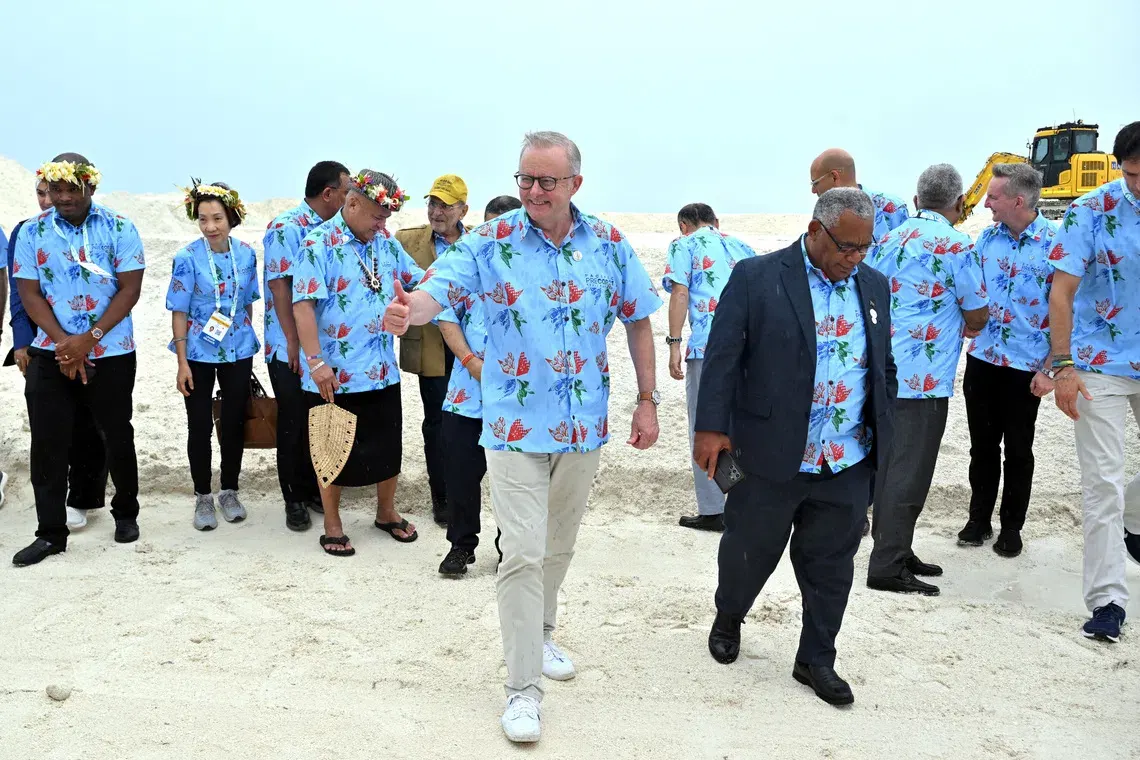
Pacific leaders and other dignitaries visited Tuvalu on Oct. 6, touring vulnerable parts of the low-lying island nation and its adaptation projects as they sought to build momentum before the COP31 United Nations climate summit in Turkey in November.1234
A visit to the frontline
The Guardian reported that about 50 dignitaries, including 14 national leaders, travelled to Tuvalu. The Straits Times described more than a dozen leaders as taking part, while ABC Australia said the turnout was somewhat below expectations and that the presidents of Mauritius and Timor-Leste were the only attending heads of state from outside the Pacific. The preparatory meeting is jointly hosted by Tuvalu and Fiji.123
The programme brought officials to places affected by climate change and to projects intended to protect communities. Visitors toured the Tuvalu Coastal Adaptation Project, met residents and travelled through Funafuti, including one of the island’s narrowest points at the Funafuti Causeway. Tuvalu’s government said the visit was designed to let decision-makers observe both the country’s exposure and its resilience work.2456
Land raised against the sea
At a reclamation site, representatives from 30 countries watched sand dredged from the atoll lagoon being used to create land. The Guardian said the broader work would provide about 20 hectares for housing and infrastructure. The Straits Times reported that the site visited covered six hectares, formed part of roughly US$50 million in donor-supported work and was the third in a series expected to add about 21 hectares to Funafuti.12
According to The Straits Times, sea level around Tuvalu rose by about 15cm during the three decades through 2023, twice the global average. It reported that another 30cm by 2050 would produce flooding substantially greater than historical once-in-a-century events. The Guardian cited projections that annual losses from flooding and storm surges could reach US$34 million by 2050 and US$63 million by 2100.12
Damage to reefs and food sources
In 2024, extreme ocean warming wiped out roughly 99.9% of the coral underpinning Tuvalu’s outlying islands. Climate change is also affecting established food sources, according to The Straits Times, which reported that fishers were finding red snapper and other species less often and that catches included smaller fish. The Guardian reported projections of a 16% fall in coastal fishing catches and the possible loss of tuna stocks worth US$4 million a year.126
Tuvalu has about 10,600 residents, according to The Guardian and The Straits Times, with roughly half living in one part of Funafuti. The Guardian said most of the country, which consists of three reef islands and six atolls, is below two metres in elevation. The Straits Times reported that Tuvalu is preparing for the possibility of relocating its population if the country is overtaken by the ocean, although the details and timing of any move were not given.12
Finance and fossil fuels
Tuvaluan Prime Minister Feleti Teo called for island countries to receive climate finance more quickly as they confront worsening extreme events. Jamie Ovia, Tuvalu’s climate-change director, said rising seas were making floods that were previously considered once-in-a-century events increasingly likely. He asked governments to act while Tuvalu still had time to adapt.1
Pacific leaders also argued that the 2023 agreement reached at the United Nations climate summit in Dubai to move away from fossil fuels must be maintained. The Guardian reported that support for the agreement had weakened, particularly among oil-producing countries, and that more than 30 fossil-fuel projects had been approved in Australia in less than five years. Australia is leading the 2026 climate negotiations and helped fund the Tuvalu gathering.12
Fijian Prime Minister Sitiveni Rabuka urged visitors to listen to communities experiencing the effects of climate change and to accelerate work towards the 1.5C temperature goal. Papua New Guinean Prime Minister James Marape pledged financial support for Tuvalu’s reclamation work and criticised countries that continue emitting carbon without addressing harm in the Pacific, according to ABC Australia.34
Why it matters
The trip to Tuvalu connects firsthand evidence of local harm to COP31 decisions due in Turkey on funding for adaptation, renewable power, marine conservation and limiting warming to 1.5C. For readers in Europe, it illustrates the consequences at stake in global negotiations over emissions and support for countries adapting to rising seas.1247
Videos
Related stories

Version history
- version 1 ·