World · Malaysia
Malaysia Deports Myanmar Nationals Despite UN Safety Warnings
Malaysia has begun returning Myanmar nationals, including Rohingya refugees, under a deal with the country's military government, prompting warnings from the UN and rights groups that Myanmar remains unsafe.
Malaysia has begun deporting Myanmar nationals, including Rohingya refugees, under a deal with Myanmar's military government, despite UN and rights-group warnings that the country remains unsafe.
- First batch of 1,476 people repatriated on Myanmar navy ships from Lumut
- Malaysia plans to return up to 5,000 people in total
- Malaysia calls it voluntary; critics call it deportation
- UNHCR says it had no role in the agreement
- 160+ civil society groups urged a halt to the operation
What's new
- First batch of 1,476 Myanmar nationals repatriated from Malaysia on Myanmar navy ships
- Malaysia plans to return up to 5,000 people in total under the agreement
- UNHCR states that it played no part whatsoever in either the deal or the actual transfer operation
- More than 160 civil society groups urged Malaysia's prime minister to halt the deportations
This week Malaysia started sending Myanmar nationals, among them Rohingya refugees, back home, with an initial contingent of 1,476 individuals departing aboard Myanmar naval vessels from the Lumut base, even as the UN's refugee body and various rights organizations cautioned that Myanmar's current situation makes safe repatriation impossible.134
First phase departs
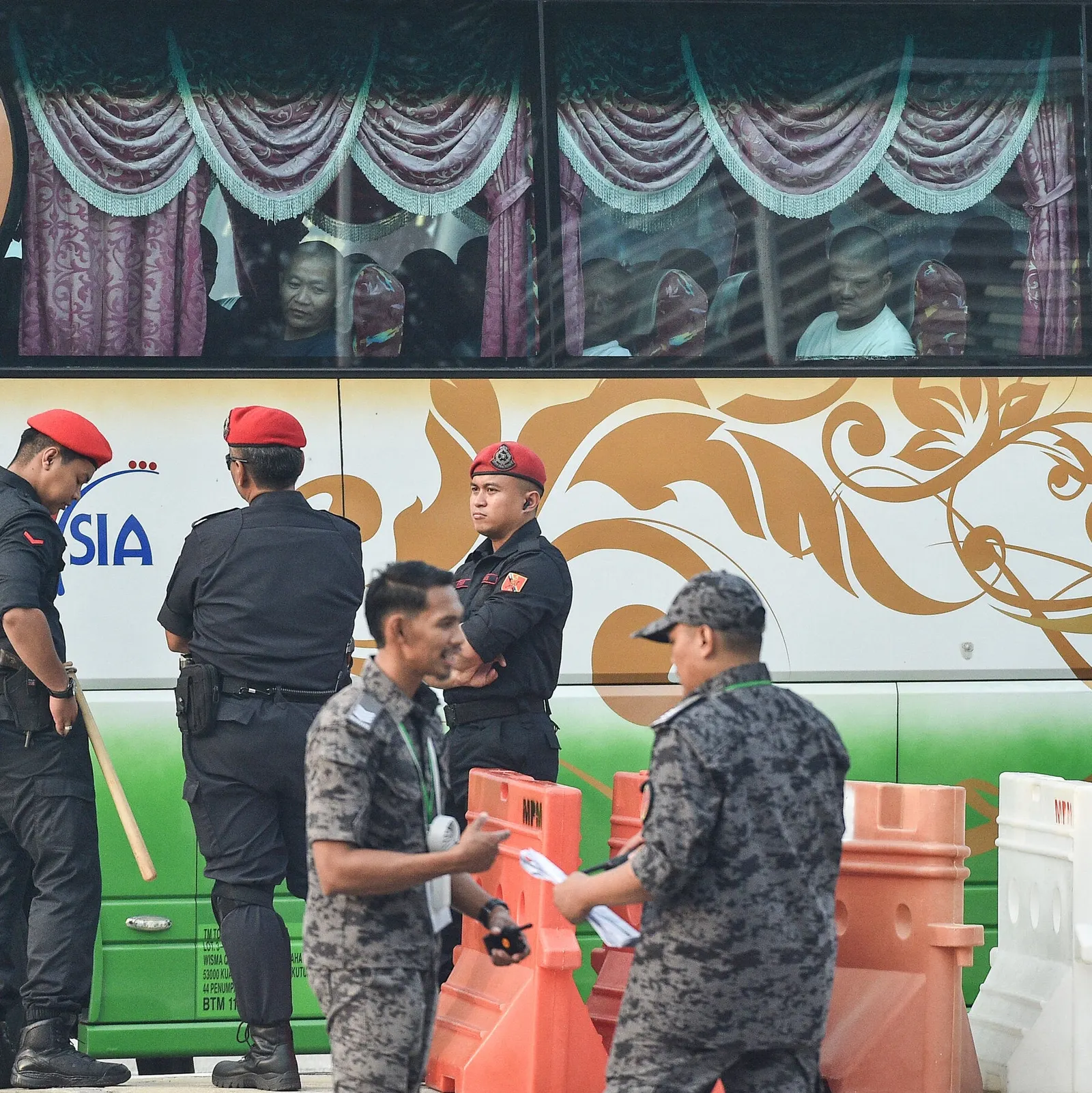
Malaysian officials reported that the initial returnees included 1,370 males, 79 females, 20 male children and seven female children, ranging in age from eight to 60. Under heavy security, they traveled by bus to a stadium in Manjung, Perak state, then boarded a pair of Myanmar naval combat vessels and a medical ship anchored at the adjacent Lumut naval base. Malaysia's Home Ministry said 10,388 Myanmar nationals held at immigration detention depots had undergone identity verification as of August 15, and that further repatriations would proceed once verification and coordination were finalised.74
The operation forms the first phase of an agreement, announced by Prime Minister Anwar Ibrahim in August, under which Myanmar's military government agreed to receive up to 5,000 people from Malaysia. Malaysia describes the process as strictly voluntary, saying returnees signed documents stating they wished to go back. The Home Ministry said the move "sends a clear signal that the government is serious about addressing irregular migration."1784
Voluntary or forced
Rights advocates dispute Malaysia's characterisation of the returns. Mahi Ramakrishnan said: "This isn't repatriation, and it's certainly not something people are choosing to do." What's really happening is Myanmar citizens are being forced out to a nation they escaped from." She added that Malaysia offers refugees and asylum seekers few protections. It remains unclear how many of those in the first batch were Rohingya, according to reporting on the operation.34
Han Win Aung, who heads Myanmar's Asean Affairs Department, stated that the deal concerns Myanmar citizens broadly rather than the Rohingya specifically, pointing out that similar returns took place in 2021 and 2022 when Myanmar took back over 1,100 people from Malaysia.74
Conditions in Myanmar
Myanmar's military seized power from the elected government in February 2021, and the armed forces have since fought on multiple fronts against armed opposition groups. Within Rakhine state, the Arakan Army—not the military government—now holds sway over most of the area, and there are reports of Rohingya houses being destroyed and belongings seized there. Advocates say the Myanmar military has forcibly recruited more than 3,000 Rohingya since 2024, and that both the military and the Arakan Army have committed abuses against Rohingya communities.132
A military campaign in 2017 left close to 10,000 Rohingya dead and leveled entire villages, an episode that numerous rights organizations have characterized as genocide. Nay San Lwin said the genocide "has never stopped." Pacifist Farooq warned that for those sent back, "It'll be a death sentence. Regardless of whether the junta takes them in, these Rohingya refugees could end up at the battlefront or behind bars." Mark Farmaner said handing refugees to the Myanmar military while it pursues policies that drive Rohingya to flee "is not a solution to this crisis."32
International reaction
UNHCR said it was not involved in the Malaysia-Myanmar repatriation agreement and had no role in the operation. More than 160 civil society organisations wrote to Anwar Ibrahim urging a halt to the deportations, stating that "Malaysia's engagement with the junta must not come at the expense of its reputation and integrity," and that "cosying up to genocidaires while criminalising their survivors is not only illogical, but also immoral." Amnesty International and Asylum Access Malaysia, which five years earlier had challenged the deportation of 1,200 Myanmar nationals in Malaysian courts, again urged the government to halt the current repatriations and called for the restoration of UNHCR access to detention centres to screen vulnerable refugees.1238
Joanne Chua of Amnesty International said: "Five years later, conditions in Myanmar have deteriorated significantly, yet Malaysia has taken the decision to enter into an agreement with Myanmar's junta government to deport thousands back to where there is significant risk of harm and persecution." Joshua Ericsson said Malaysia "cannot champion accountability at the United Nations while making deals with Min Aung Hlaing to facilitate dangerous returns to Myanmar," adding that international law must apply consistently. Chua also questioned Malaysia's refugee registration system, saying protection "begins only when no one has to fear being sent back to danger."8
Diplomacy and numbers
Anwar Ibrahim indicated he intends to ask Myanmar's top general, Min Aung Hlaing, to visit Malaysia so they can address the topic of sending back migrants and refugees. "I am inviting him to say that we can be friends and trade, we can accept Myanmar, but Myanmar must accept them back," he said, adding, "To me, that's better diplomacy than just shouting angrily at Myanmar." Separately, Foreign Minister Mohamad Hasan told the United Nations that international law "cannot be optional," a statement rights groups say sits uneasily alongside the deportation agreement.438
Having never signed the 1951 Refugee Convention, Malaysia lacks any official recognition of refugee status and instead classifies refugees as undocumented migrants. UNHCR reported that Malaysia hosts 193,824 refugees from Myanmar, and separate figures put the number of refugees and asylum seekers registered with UNHCR in the country at about 215,600, including roughly 126,000 Rohingya. Around two-thirds of Myanmar refugees in Malaysia are Rohingya. Rohingya in Malaysia cannot access formal education or the healthcare system, according to advocates, and face additional risks including online targeting and public hostility, with banners reading messages such as "Drive out Rohingya" reported in the public sphere.7413
Why it matters
The case tests how far governments can go in returning people to an active conflict zone while calling the process voluntary, a question with direct relevance for European asylum and deportation policy debates. It also highlights the limits of UN oversight when a host state is not bound by the Refugee Convention and a destination government is a military regime accused of persecution.21
Videos
Related stories
Version history
- version 1 ·