World · Myanmar
ICJ judgment on Myanmar Rohingya genocide allegations due November 19
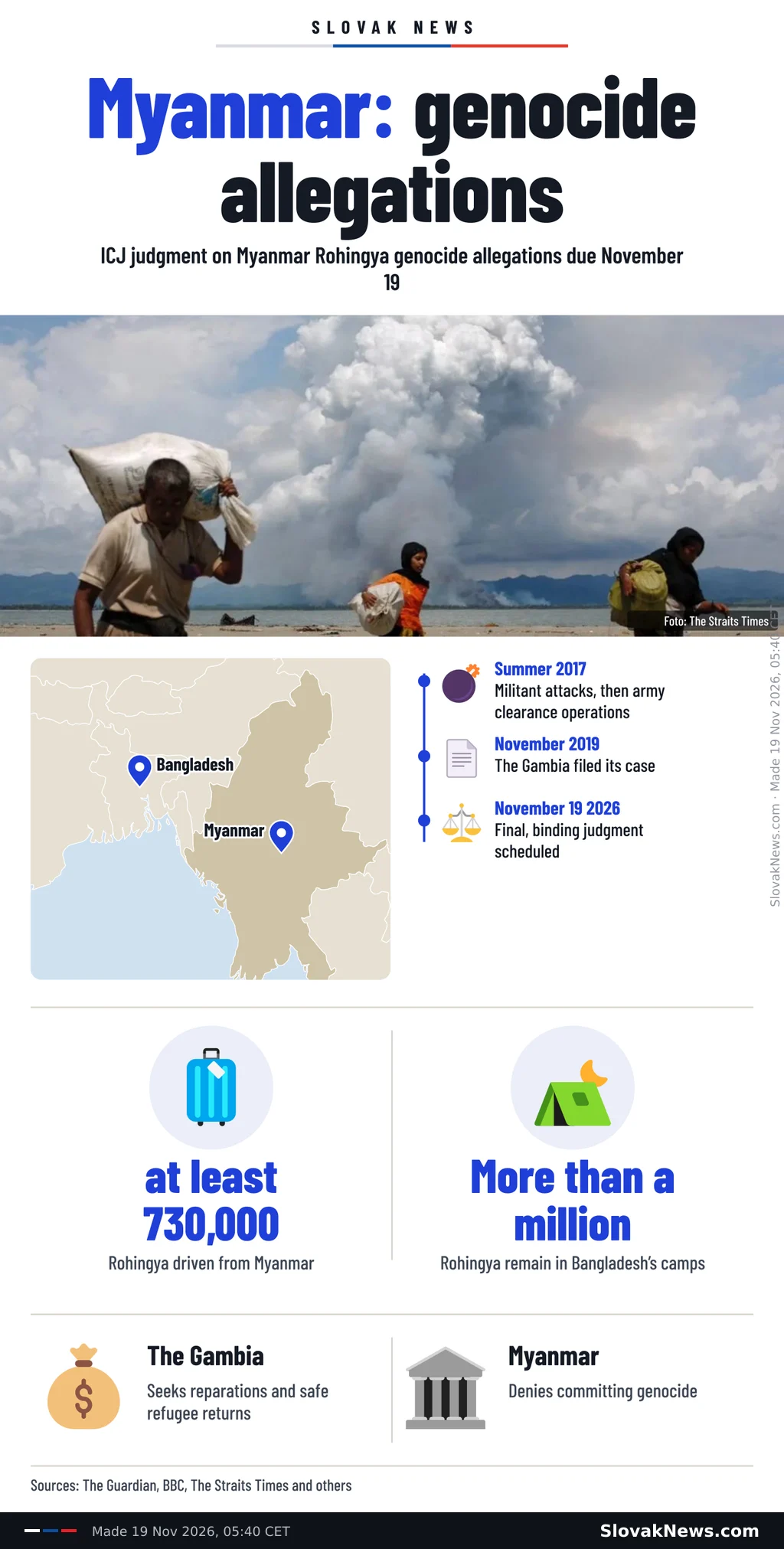
The judgment reading is scheduled to begin at 10am in The Hague. The Gambia seeks reparations and the safe return of refugees; Myanmar denies genocide.
Listen to the story
Short version
The ICJ’s Myanmar genocide judgment is due November 19, with reading scheduled for 10am in The Hague. Myanmar denies The Gambia’s allegations.
- Judges will assess genocide allegations and Myanmar’s treaty obligations.
- The Gambia seeks reparations and safe refugee returns.
- More than a million Rohingya remain in Bangladesh’s camps.
- The court’s rulings are final, but enforcement options are limited.
Infographic
What's new
- The Straits Times reports that the judgment reading will begin at 10am, or 5pm Singapore time, and could last up to 90 minutes.
- Judges will assess whether genocide occurred and whether conduct attributed to Myanmar’s military or other state organs breached its treaty obligations, The Straits Times reports.
- The Gambia has asked for reparations and measures ensuring Rohingya refugees can return safely, according to The Straits Times.
On November 19, 2026, the International Court of Justice is scheduled to rule on The Gambia’s genocide case against Myanmar. The reading is scheduled to begin at 10am in The Hague, or 5pm Singapore time, and last up to 90 minutes, according to The Straits Times. Myanmar denies committing genocide against the Rohingya.431
Infographic
Allegations and Myanmar’s response
The Gambia alleges that Myanmar’s repression of the Rohingya violated the 1948 UN Genocide Convention, The Guardian reports. Myanmar denies committing genocide and says its actions were directed against an uprising by insurgents. Those opposing accounts lie at the centre of the case awaiting judgment.1
According to The Straits Times, the judges will decide whether genocide took place and whether actions attributed to the armed forces or other official bodies in Myanmar violated the country’s obligations under the Genocide Convention. The Gambia has asked for reparations and measures ensuring refugees can return safely.3
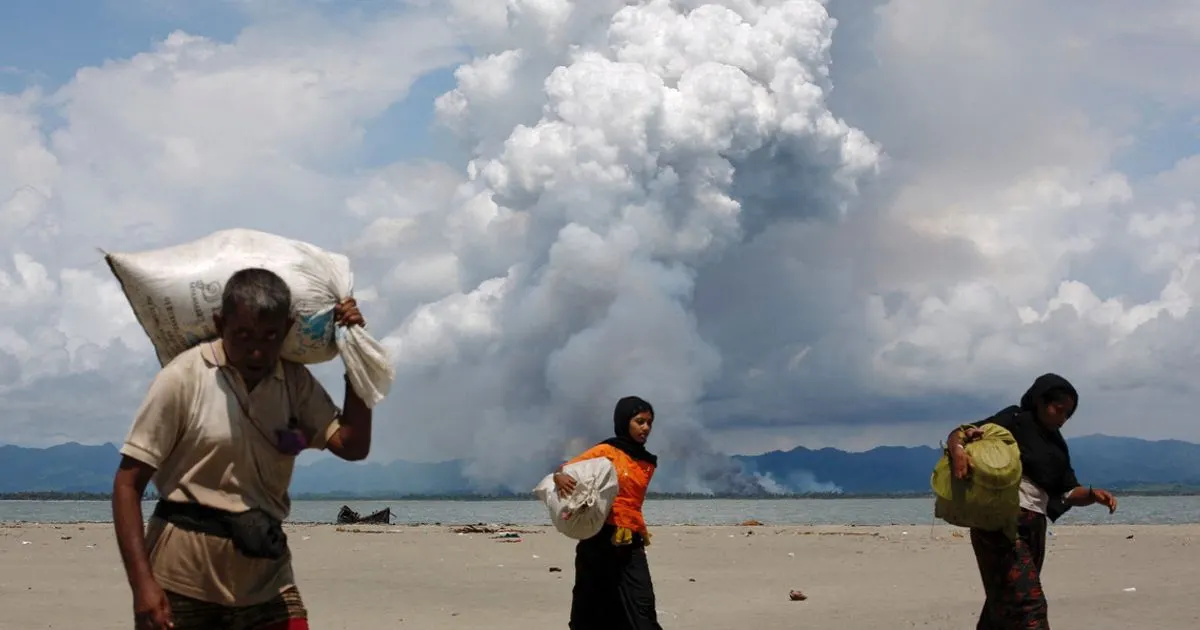
According to The Guardian’s account, a Rohingya militant group carried out guerrilla attacks in the summer of 2017, after which Myanmar’s army launched clearance operations. The military campaign drove hundreds of thousands of Rohingya across the border into Bangladesh.1
The Straits Times puts the number driven from Myanmar by the 2017 offensive at at least 730,000. It reports survivor accounts of killings, mass rape and villages being burned, and says a UN fact-finding mission concluded that the campaign included genocidal acts. The BBC reports that Myanmar rejected a 2018 UN report calling for senior military figures to be investigated for genocide.32
The displacement remains extensive. According to The Guardian, Bangladesh continues to host over one million Rohingya, compared with an estimated population of under 600,000 in Myanmar. The case therefore concerns a population divided between those still in the country and those who fled.1
The BBC reports that more than a million Rohingya remain in camps in Bangladesh and are barred from employment. It also reports that the Arakan Army insurgent force controls most of Rakhine State.2
Survivors heard by the court
Anadolu Agency reports that the court held merits hearings in January. The Guardian says the judges also heard directly from Rohingya survivors during private sessions that month, with witnesses travelling from camps in Bangladesh to give their accounts.15
The Guardian describes accounts from refugees from Tula Toli alleging systematic shootings of civilians and the drowning of children during the 2017 violence. It also reports that satellite imagery subsequently showed the village had been destroyed. These accounts form part of the allegations surrounding the military campaign.1
Yanghee Lee, who previously investigated human rights in Myanmar for the UN, told The Guardian: “The ICJ ruling will be historic for Rohingya survivors and their families around the world”. Antonia Mulvey, whose organisation Legal Action Worldwide represents hundreds of survivors, described herself as “cautiously optimistic”.1
State responsibility and enforcement
The BBC and the South China Morning Post report that no international court has previously found a state directly responsible for committing genocide. The ruling could have significance for state responsibility under the Genocide Convention, according to the South China Morning Post.245
The legal dispute includes the question of intent. The Straits Times explains that establishing genocide requires proof of a specific intent to destroy a protected group. The BBC reports that Aung San Suu Kyi and the legal representatives for Myanmar maintained that proof of war crimes alone was insufficient to demonstrate an intent to commit genocide. A military-appointed legal team took over Myanmar’s defence after the 2021 coup.32
A binding judgment would not give the court its own enforcement capacity: The Guardian reports that it lacks the means to enforce its decisions. The South China Morning Post highlights possible implications for pressure through the UN Security Council and for related litigation, including South Africa’s genocide case against Israel over Gaza.14
Why it matters
The case concerns state responsibility under the Genocide Convention. The South China Morning Post says the judgment could affect pressure through the UN Security Council and other litigation, including South Africa’s case against Israel over Gaza.4
Videos
Related stories
Version history
- version 2 · New reporting adds the scheduled judgment-reading time, The Gambia’s requests for reparations and safe returns, and further detail on displacement, evidence and Myanmar’s defence; source references are updated to the current dossier.
- version 1 ·