US midterm polls close in stages as congressional control is contested
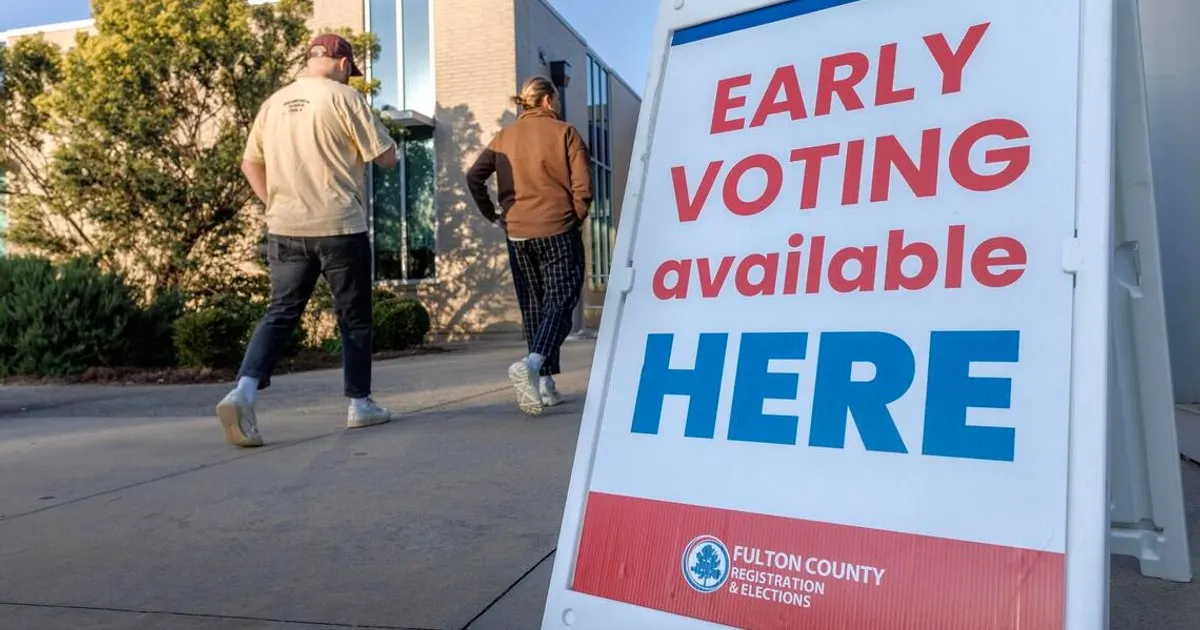
The Guardian’s election guide lists closing times from 6pm ET in most of Indiana and Kentucky to midnight ET for most polling places in Alaska and Hawaii.
Listen to the story
Short version
The Guardian reports staggered poll closures as Americans vote for congressional control on November 3. The Daily Beast highlights uncertainty around polling forecasts.
- Guardian: most Indiana and Kentucky polls close at 6pm ET.
- Guardian: North Carolina, Ohio and West Virginia close at 7.30pm ET.
- Guardian: most Alaska and Hawaii polling places close by midnight ET.
- Daily Beast: Kornacki cautions that polls may miss Republican voters.

What's new
- Americans are voting on November 3, according to The Guardian.
- More than 56 million early ballots have been cast, The Guardian reports.
- NBC analyst Steve Kornacki has cautioned about polling that may miss Republican voters, The Daily Beast reports.
Americans are voting across the United States on November 3, 2026, in midterm elections that will determine control of the House and Senate, according to The Guardian. Its election guide puts the first major polling-place closures at 6pm Eastern time in most of Indiana and Kentucky, with voting elsewhere continuing through the evening.1
When voting ends
The Guardian reports that some polling places in Indiana and Kentucky remain open until 7pm ET. Georgia also closes at 7pm, alongside most of Florida. North Carolina, Ohio and West Virginia follow at 7.30pm. The schedule uses Eastern time throughout.1
The next group comprises 19 states and the District of Columbia at 8pm ET, according to the guide. Arkansas follows half an hour later. At 9pm, voting ends in another 10 states, as well as at the polling locations still open in North Dakota, South Dakota and Texas.1
Almost all polling places in Idaho, Montana, Nevada and Utah close at 10pm ET, The Guardian says. California follows at 11pm, together with most of Oregon and all of Washington. Most polling places in Alaska and Hawaii close by midnight ET.1
Control of Congress
The election cycle covers all 435 House seats, 35 Senate seats and 36 contests for governor, The Guardian reports. Democrats are trying to regain both congressional chambers, while Republicans are seeking to preserve their majority in each. More than 56 million Americans had already voted early, according to the newspaper.1
Democrats need four Senate gains to reach a 51-seat majority and at least 218 seats to take the House, according to The Guardian. Its assessment is that a Democratic victory in either chamber would restrict President Donald Trump’s ability to pursue his domestic agenda. A smaller Republican majority could also complicate the passage of legislation.1
Among the Senate contests described by The Guardian, Angie Nixon is challenging Ashley Moody in Florida, while Jon Ossoff faces Mike Collins in Georgia. North Carolina’s open seat is being contested by Roy Cooper and Michael Whatley. The newspaper also identifies the Michigan contest between Abdul El-Sayed and Mike Rogers as one expected to be close.1
Polling and its limits
The Daily Beast reports that NBC News chief data analyst Steve Kornacki put the Democratic lead on the generic ballot at nine points. But he cautioned that polling had previously failed to capture Republican and pro-Trump voters. The report also said pollsters were getting more responses from Democrats than from Republicans.2
The forecasts described by The Daily Beast were not uniform. Various polls pointed towards Democrats recovering the House while treating the Senate as a toss-up. Data analyst Nate Silver said failure to regain the House would be a “major surprise”, while the FLIPR model assigned Democrats an 80 percent chance of securing enough Senate gains for control.2
Why it matters
For European readers following the US presidency, the immediate issue is Trump’s ability to pass his domestic programme. The Guardian assesses that Democratic control of either chamber would constrain that agenda, while narrower Republican margins could make legislating harder even if the party retains control.1
Videos
Related stories

Version history
- version 1 ·