NASA Names Four-Astronaut Crew for SpaceX Crew-14 to ISS
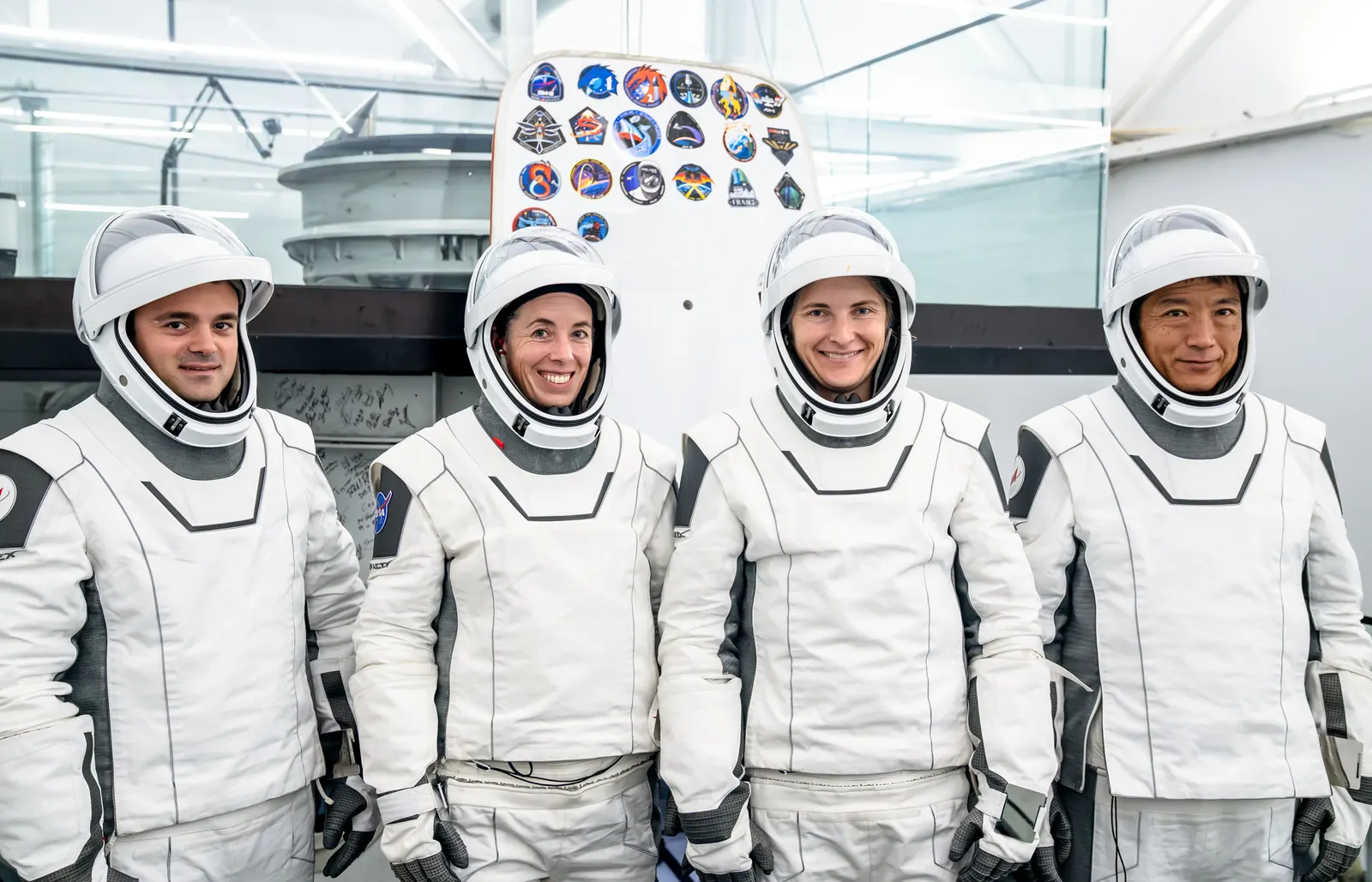
NASA has picked Kayla Barron, Chris Birch, Makoto Suwa and Arutyun Kiviryan for the Crew-14 mission, targeting a liftoff toward the space station sometime after spring 2027 begins.
NASA named the four astronauts for SpaceX Crew-14, commanded by Kayla Barron, targeting a spring 2027 ISS launch.
- Kayla Barron will command Crew-14, her second spaceflight
- Chris Birch, Makoto Suwa and Arutyun Kiviryan complete the crew
- Launch targeted no earlier than spring 2027
- Mission will join ISS Expedition 75/76 after docking
- SpaceX holds a $946 million NASA contract for more crew flights
What's new
- NASA confirmed the four Crew-14 astronauts, led by commander Kayla Barron
- Mission set for no earlier than spring 2027, joining ISS Expedition 75/76
- SpaceX disclosed that NASA awarded it $946 million to cover three additional crewed missions
- Crew-13's earlier launch was scrubbed after an oxidizer leak was found
NASA revealed the four astronauts chosen for the Crew-14 flight aboard SpaceX's vehicle to the orbiting laboratory, naming veteran flier Kayla Barron as commander of the mission, which is targeted to lift off no sooner than spring 2027.167
The crew
Barron, a U.S. Navy commander who joined NASA's astronaut corps in 2017, is preparing for her second trip to orbit. Her academic background includes an undergraduate systems-engineering degree from the U.S. Naval Academy, plus a graduate degree in nuclear engineering earned at Cambridge, and she completed three deployments aboard the submarine USS Maine. On her debut mission, Crew-3 in 2021, she logged 177 days in orbit spanning Expeditions 66 and 67, performed two spacewalks, and directed robotics operations for a third.1547
Chris Birch, who joined the astronaut corps in 2021, will make his debut flight serving as Crew-14's pilot. Birch earned a PhD in biological engineering at MIT along with math and biochemistry degrees from the University of Arizona, and was placed on the Olympic Long Team ahead of the 2020 Tokyo Games after competing as a track cyclist for the U.S. National Team, according to NASA.154
Makoto Suwa, who became a JAXA astronaut candidate in 2023 and earned certification once he finished basic training in 2024, is set for his first mission as a specialist. He earned a PhD in geosciences at Princeton and worked for roughly ten years at the World Bank Group prior to becoming an astronaut.1543
Arutyun Kiviryan, a Roscosmos cosmonaut who joined the Gagarin Cosmonaut Training Center's ranks in 2021, is likewise flying as a mission specialist for the first time. He finished his studies at Saint Petersburg's Suvorov Military School in 2010, then earned a rocket-engineering degree from Baltic State Technical University in 2015, and has worked as a test cosmonaut since 2023.1543
Mission and program
Crew-14 marks the fourteenth rotation carried out through NASA's commercial partnership with SpaceX under the Low Earth Orbit Program. It brings together four crew members from NASA, JAXA and Roscosmos for a long-duration science expedition that will join the station's Expedition 75/76 after docking.1534
NASA said: "The crew will conduct scientific investigations and technology demonstrations to help prepare humans for future exploration missions to the Moon and Mars and to benefit people on Earth."1
The station has hosted an unbroken human presence for over a quarter-century. Tech Times noted that the outpost traces its origins to a 1998 agreement signed by 15 governments.1542
Contract and spacecraft
According to Tech Times and TeslaNorth, SpaceX secured a $946 million NASA contract covering three additional crew flights. Tech Times reported the cumulative value of SpaceX's crew contract with NASA at $5.92 billion.32
Per Tech Times, Crew Dragon remains the sole vehicle NASA currently uses to ferry astronauts to the ISS, since Boeing's Starliner, after a problem-plagued crewed test in June 2024, has carried no NASA crew since then and isn't expected to fly astronauts again until at least 2027.2
NASA Administrator Jared Isaacman described the roughly three-week repair of a Dragon propulsion-system issue as "a very reasonable turnaround time," according to Tech Times.2
According to Tech Times, Crew-13 was supposed to lift off on September 12 but was called off once engineers detected an oxidizer leak within Dragon's propulsion system, an issue that needed roughly three weeks to fix.2
Tech Times also detailed Dragon's technical profile: a typical mission takes 24 to 28 hours from crew boarding to docking, the capsule is rated to remain at the station for up to 210 days, and eight SuperDraco engines, with combustion chambers 3D-printed in Inconel using direct metal laser sintering, provide abort capability. The outlet said Dragon has completed 13 crew rotations without loss of crew, and cited Falcon 9 boosters reaching 20 or more flights and a fairing half reaching a 40-flight reuse record; TeslaNorth separately reported a SpaceX nose cone reaching the same 40-flight milestone.23
Outlook
Tech Times reported that NASA intends to bring the ISS down in the early 2030s, phasing out operations through 2030, and that a bilateral cross-flight arrangement between NASA and Roscosmos was signed in July 2022. In March 2026, the Artemis II mission carried four astronauts around the Moon, part of the broader exploration program that Crew-14's research is intended to support.2
Why it matters
For European readers, the mission underlines how dependent current ISS access has become on a single U.S. commercial provider, according to Tech Times, at a time when Boeing's competing Starliner remains grounded for crewed flights. It also illustrates continued multinational cooperation aboard the station, involving NASA, JAXA and Roscosmos, as the ISS approaches the final years before its planned deorbit.2
Related stories
Version history
- version 1 ·