Technology · United States of America
SpaceX's Starship Reaches Orbit for the First Time Despite Engine Failure
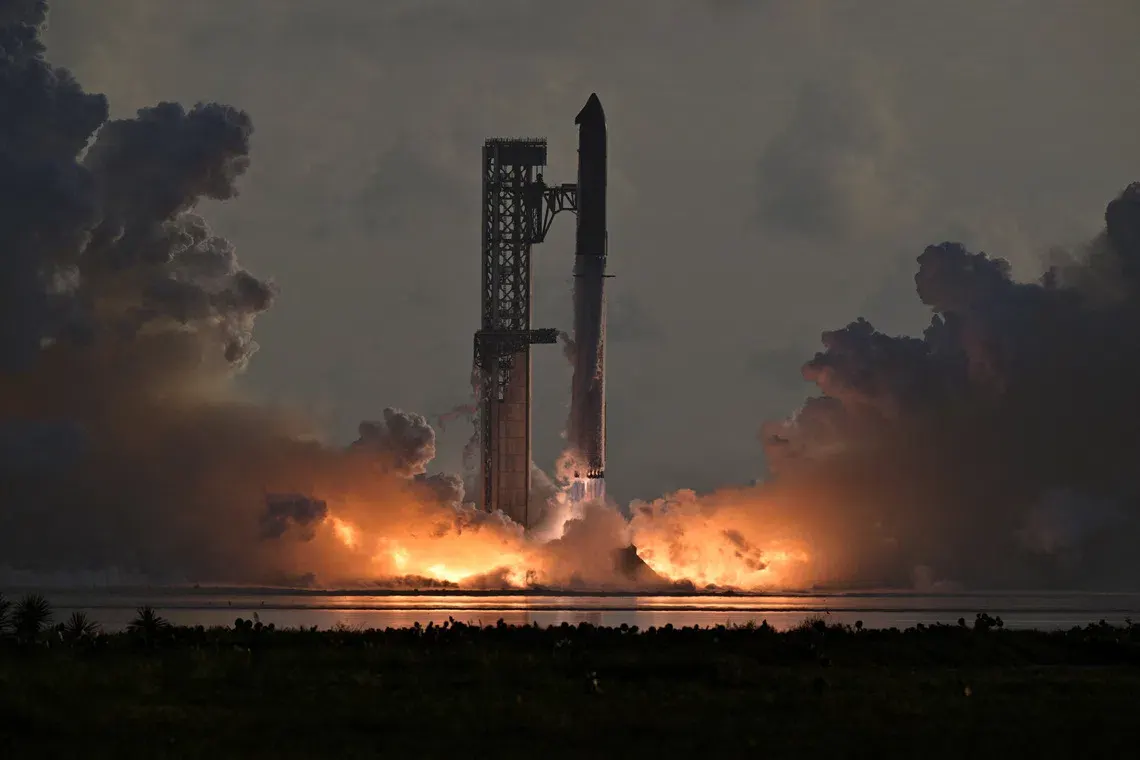
Flight 14 lifted off from Starbase, Texas, and reached Earth orbit after one of its six Raptor engines shut down during ascent; mission managers cut the planned 10-hour flight to about three hours.
SpaceX's Starship reached Earth orbit for the first time on September 28 despite an engine failure during ascent, though the planned 10-hour flight was cut to about three hours.
- It marked the first time Starship reached orbit, on the vehicle's 14th flight.
- One of six Raptor engines shut down during ascent.
- Mission controllers decided to proceed toward orbit anyway.
- Flight duration cut from planned 10 hours to about 3 hours.
- Super Heavy booster landed in Gulf of Mexico as planned.
What's new
- According to The Guardian, BBC and TechCrunch, the vehicle's 14th test flight marked the first time Starship made it into Earth orbit.
- One of the vehicle's six Raptor engines shut down during ascent; SpaceX's mission team decided about 22 minutes into the flight it was safe to press on toward orbit, according to NPR affiliates kacu.org and waer.org.
- Cheers broke out at SpaceX as mission narrator Daniel Hewitt declared, "Starship is in orbit," The Guardian reported.
- Mission managers cut the planned six-orbit, nearly ten-hour flight to about three hours, according to kacu.org and waer.org.
- The Super Heavy booster landed in the Gulf of Mexico as planned, and Starship deployed Starlink satellites in orbit.
On September 28, 2026, Starship completed its 14th test flight by lifting off from Starbase in South Texas and successfully reaching Earth orbit for the first time, overcoming the shutdown of one of its six Raptor engines during ascent, according to The Guardian, BBC and TechCrunch.157
Mission profile
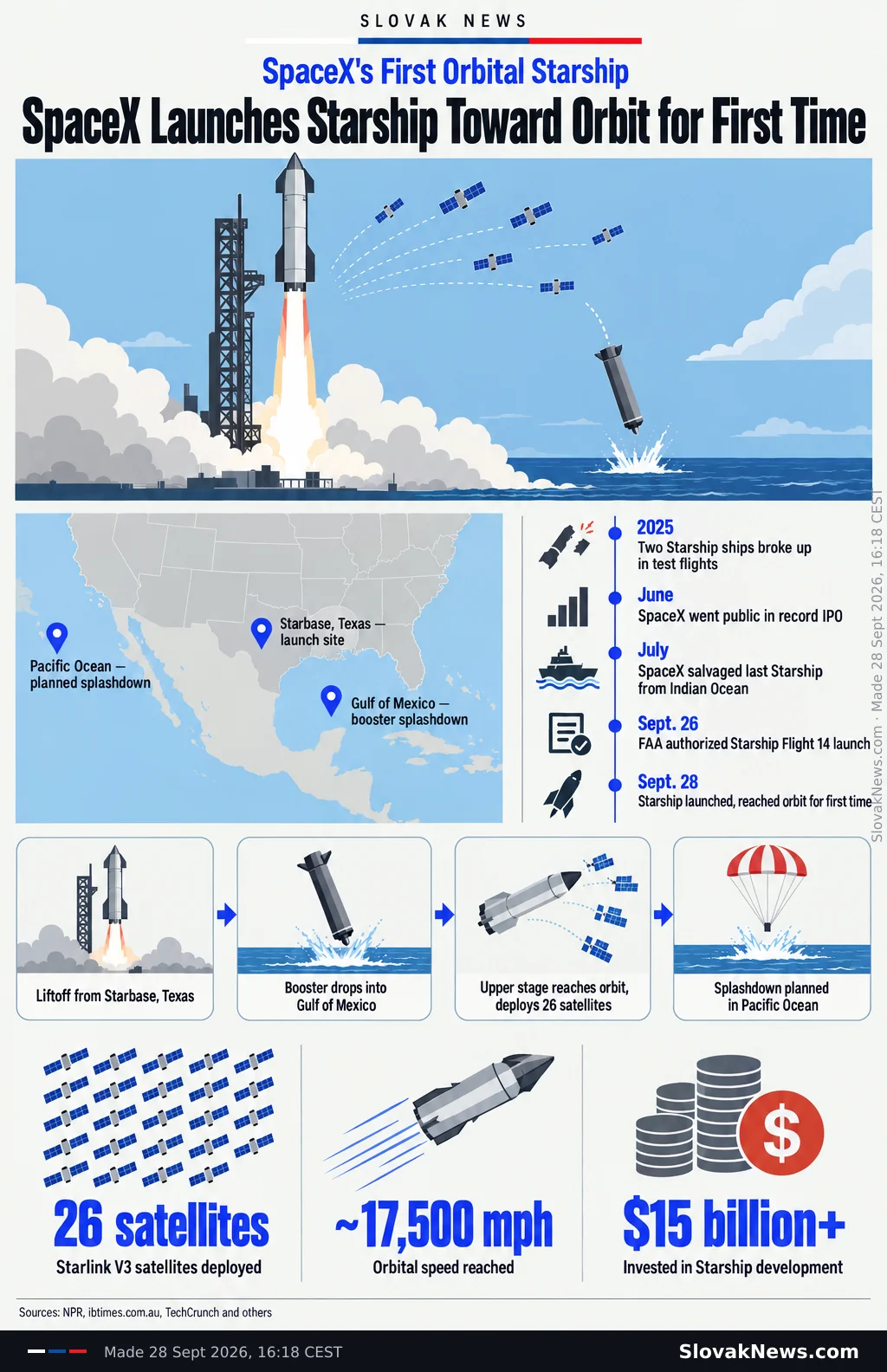
The 14th full-scale test, known as Flight 14, aimed to send Starship's upper stage around Earth six times at an altitude of about 170 miles over nearly ten hours, according to NPR, TechCrunch and The Straits Times. The plan called for release of 26 third-generation Starlink satellites, three of which carried cameras intended to record data on the performance of Starship's heat shield, NPR reported.134
NPR reported that Starship reached orbital speeds of about 17,500 miles per hour during the flight. Powered by 33 engines, the Super Heavy booster was set to drop into the Gulf of Mexico just minutes after launch, while the upper stage was scheduled to land in the Pacific Ocean off Chile once its orbits were finished, according to Phys.org and wfmz.com.18
Mission managers subsequently cut the planned six-orbit, nearly ten-hour flight to about three hours, according to kacu.org and waer.org, affiliates of NPR. The Super Heavy booster landed in the Gulf of Mexico as planned, and Starship deployed its Starlink satellites while in orbit, foxsanantonio.com reported.11129
Engine loss reported
Starship reached Earth orbit for the first time, according to The Guardian, BBC and TechCrunch, after one of its six Raptor engines shut down during ascent. Mission controllers assessed the problem and decided about 22 minutes into the flight that it was safe to continue toward orbit, according to NPR affiliates kacu.org and waer.org. Cheers and applause broke out among SpaceX staff when the vehicle achieved orbit, The Guardian reported, quoting mission narrator Daniel Hewitt: "Starship is in orbit."15711
University of Leicester astrophysics professor Martin Barstow called the achievement "an important milestone for SpaceX, with Starship successfully reaching orbit, and at the first attempt," adding that it "marks the beginning of the transition from the testing and development phase to becoming a working vehicle able to deliver the large payloads needed to return to the moon" and that "having this large launch capability will also be transformational for the whole space industry," according to The Guardian.1
Development and safety record
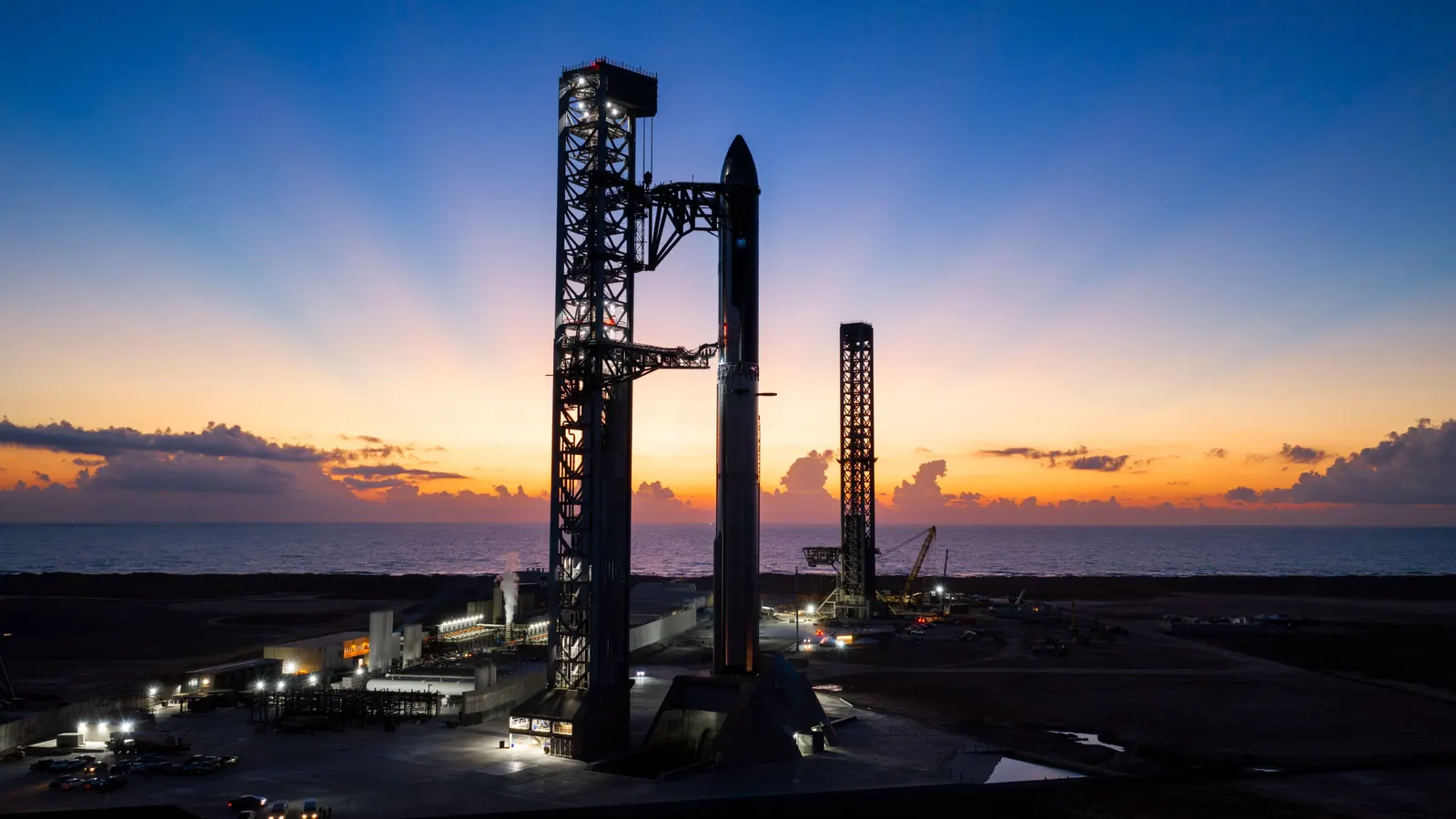
Starship, at 407 feet tall, is designed to be fully reusable and is described by Phys.org and wfmz.com as the biggest and most powerful rocket ever built. Earlier test flights went no farther than the Indian Ocean and often ended in crashes, according to the same reports.682
Musk said the company was proceeding cautiously about the risk of debris: "our popularity would diminish very rapidly. He explained that this level of caution stems from concern that any mishap could quickly hurt the company's reputation, according to Phys.org.6
Wider ambitions
The mission is linked to NASA's Artemis program, which has selected Starship as the human landing system intended to carry astronauts to the lunar surface; Artemis III is slated to launch late next year, according to NPR. SpaceX also plans to open a third Starship launch site in Louisiana in 2029 and is completing a second site at Kennedy Space Center in Florida, according to NPR and wfmz.com.18
In a filing cited by NPR, SpaceX said: "Any failure or delay in the development of Starship at scale or in achieving the required launch cadence, reusability and capabilities thereafter would delay or limit our ability to execute our growth strategy."41
Why it matters
SpaceX already operates around 11,000 active satellites. Astrophysicist Martin Barstow of the University of Leicester said the flight "marks the beginning of the transition from the testing and development phase to becoming a working vehicle able to deliver the large payloads needed to return to the moon," adding that the launch capability would be "transformational for the whole space industry," The Guardian reported.141
Videos
Related stories


Version history
- version 2 · Starship successfully reached Earth orbit for the first time despite an engine failure, though the flight was cut short from a planned 10 hours to about three.
- version 1 ·