Science & Tech · United States of America, Canada, Russian Federation
SpaceX Launches Crew-13 to International Space Station from Florida
Four astronauts from NASA, Canada and Russia lifted off aboard a Dragon capsule on October 1, in what NASA says is the fastest launch-to-docking in the station's history.
On October 1, 2026, SpaceX sent NASA's Crew-13 flight toward the International Space Station, achieving what NASA describes as the quickest U.S. launch-to-docking in the station's history.
- Four astronauts from NASA, Canada and Russia launched from Cape Canaveral
- Flight to ISS set to take about 7 hours 50 minutes
- Mission delayed from mid-September due to technical issues
- Crew will research Parkinson's disease, heart disease and plant growth
- Crew-12 due back on Earth October 5
What's new
- Falcon 9 and Dragon capsule carrying Crew-13 launched from Cape Canaveral on October 1, 2026
- Flight set for about 7 hours 50 minutes, the fastest U.S. launch-to-docking in ISS history
- Crew includes NASA's Jessica Watkins and Luke Delaney, Canada's Joshua Kutryk and Russia's Sergey Teteryatnikov
- Mission follows delays from an originally planned mid-September launch
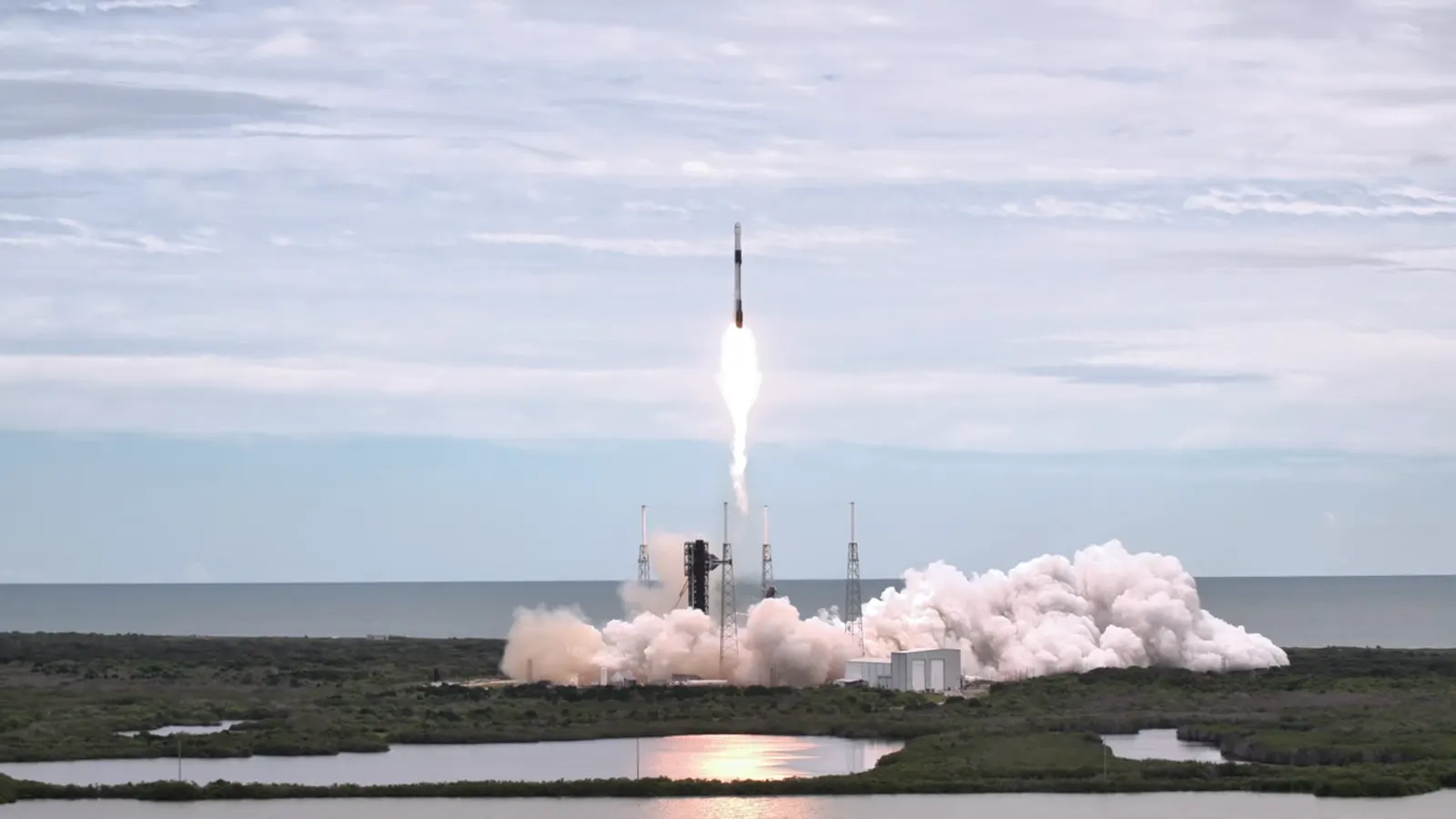
On October 1, 2026, a SpaceX Falcon 9 rocket carried four astronauts into flight from Florida's Cape Canaveral Space Force Station, marking the start of NASA's Crew-13 mission to the International Space Station.1346
Launch and crew
The Dragon capsule, named Grace, separated from the Falcon 9 rocket's second stage and reached orbit shortly after liftoff, while the booster returned to a landing zone at Cape Canaveral. All nine engines on the rocket's first stage fired at liftoff, and the spacecraft passed through the period of maximum aerodynamic pressure known as Max Q during ascent.45
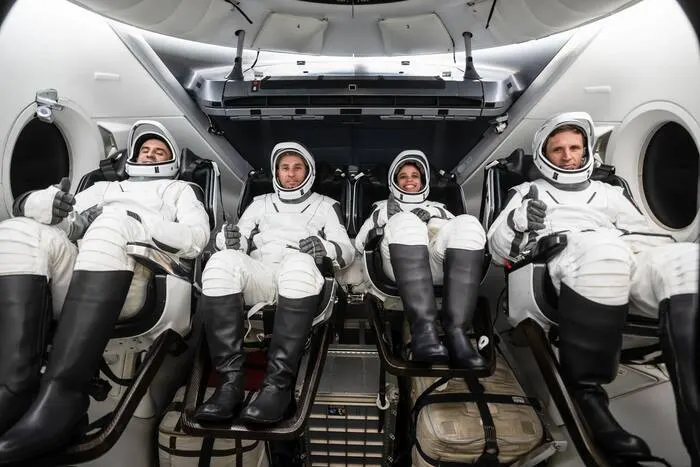
Mission commander Jessica Watkins and fellow NASA astronaut Luke Delaney make up part of the crew, joined by Joshua Kutryk representing Canada's space agency and Sergey Teteryatnikov of Russia's Roscosmos. For Delaney, Kutryk and Teteryatnikov this is a first spaceflight, while Watkins is flying for a second time. According to NASASpaceFlight.com, Delaney is 47 and a former test pilot and fighter pilot, a detail disputed by The Straits Times.2567
According to NASA, reaching the station will take roughly 7 hours and 50 minutes, with the astronauts spending nearly eight hours maneuvering in orbit before linking up with the Harmony module's port that faces away from Earth. NASA characterized this timing as the quickest a U.S. spacecraft in ISS history.34
Research and delays
Once aboard, the crew will carry out microgravity research on human stem cell-derived tissues, including work related to Parkinson's disease, continue studies of blood-flow abnormalities in microgravity, and test an autonomous plant growth system for future crop production. NASA said the crew will also conduct experiments supporting future missions to the Moon and Mars.1346
The launch had originally been planned for mid-September. According to one account, it was delayed in August due to mechanical issues, while another report attributed a September delay to replacement of a valve in the Dragon spacecraft's propulsion system; a further account cited an oxidizer leak detected during processing.136
NASA administrator Jared Isaacman said, "Crew-13 is another demonstration of America's unmatched capability in human spaceflight and the strength of our commercial partnerships," adding that the crew would "carry forward important work aboard the International Space Station while helping us build the experience and capabilities needed for ambitious missions to the Moon and beyond." NASA's Lori Glaze said the launch cadence "demonstrates the essential role the International Space Station plays in sustaining our presence in Earth's orbit."4
Family and symbolism
Per the BBC, Kutryk's wife is due to give birth to their third child about two months after the mission begins, which would make them only the fourth pair in spaceflight history to welcome a baby while one partner remained in orbit. Before launch, Kutryk said, "I don't really believe it yet. It does feel weird, though," before later speaking directly to his loved ones: "To my family, Heather, Peter and Anna, I miss you. And to everyone else, I appreciate your encouragement. Crew-13 is ready to get to work."35
Kutryk also carries a family heirloom watch on the mission, saying, "I need a watch to tell time, but also because it's been a family heirloom." Watkins said the crew wanted to honour the resilience of earlier astronauts, referencing the 1970 Apollo 13 mission, in which an explosion occurred 55 hours into the flight: "We really wanted to honour their legacy, honour their resilience and their grit, and bring a little bit of that with us."156
Context
Operating under NASA's Commercial Crew Program, this flight marks SpaceX's 13th operational crewed mission and 14th overall for the agency, counting a 2020 demonstration flight that carried two astronauts. Roughly the size of a football field and often called the largest structure ever built by humans in space, the station has hosted a continuous human presence since November 2000, and NASA plans to keep it running until 2030.125
When the rocket lifted off, the station was circling Earth at roughly 17,500 miles per hour and an altitude near 263 miles, passing straight over Kennedy Space Center some 97 seconds into the flight. The outgoing Crew-12, who arrived in February for a mission lasting more than seven months, is due to return to Earth on October 5, after a brief handover period, NASA's Lori Glaze said.46
Why it matters
The mission underscores the continuing reliance of international space partners, including Canada and Russia, on commercial U.S. crew transport to sustain a permanent human presence in orbit. Research carried out during the mission, including work toward Parkinson's disease treatment, is intended to feed into future human exploration of the Moon and Mars.134
Videos
Related stories
same actors
Version history
- version 1 ·