Science & Tech · United States of America
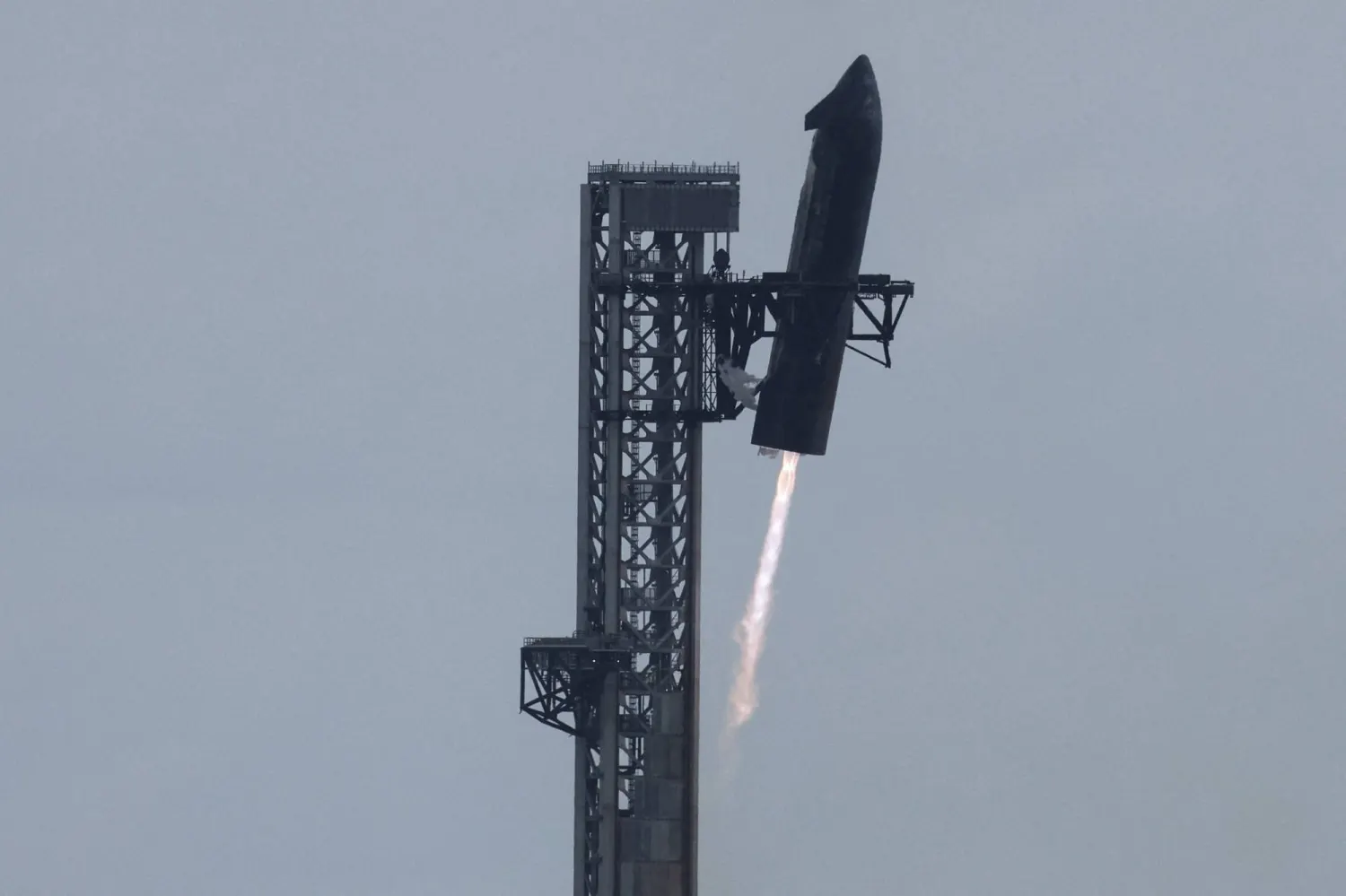
SpaceX catches Starship on its first successful return to Texas
Starship returned from orbit to a mechanical-arm catch at Starbase on Nov 14. The BBC reports that its booster’s planned catch was aborted and it burst into flames above the sea after being diverted.
Listen to the story
Short version
SpaceX caught Starship after its orbital return, but lost the booster. NPR also reports plans to retire Falcon 9, adding context to the push for reuse.
- Starship completed 14 Earth orbits and deployed 26 Starlink satellites.
- The BBC places the catch at 21:27 GMT on Nov 14.
- Engineers are investigating the booster recovery failure, according to NPR.
- NPR reports NASA has Falcon 9 launches through 2028; station crews remain until 2030.
- Experts cited by The New York Times say rapid reuse remains unproven.
What's new
- NPR reports that SpaceX plans to retire Falcon 9, its smaller workhorse rocket.
- According to NPR, NASA has enough Falcon 9 launches through 2028, while crews are expected to remain on the International Space Station until 2030.
- NPR links SpaceX’s ambitions for large-scale satellite deployment and orbital data centers to achieving rapid Starship reuse, which experts say remains unproven.
SpaceX caught Starship after its return from orbit at Starbase in South Texas on Nov 14, 2026, but did not achieve its planned recovery of both stages. New reporting from the BBC says Super Heavy’s catch was aborted a few minutes after launch and the booster was diverted to the ocean, where it burst into flames just above the water.24
An orbital flight ends at the tower
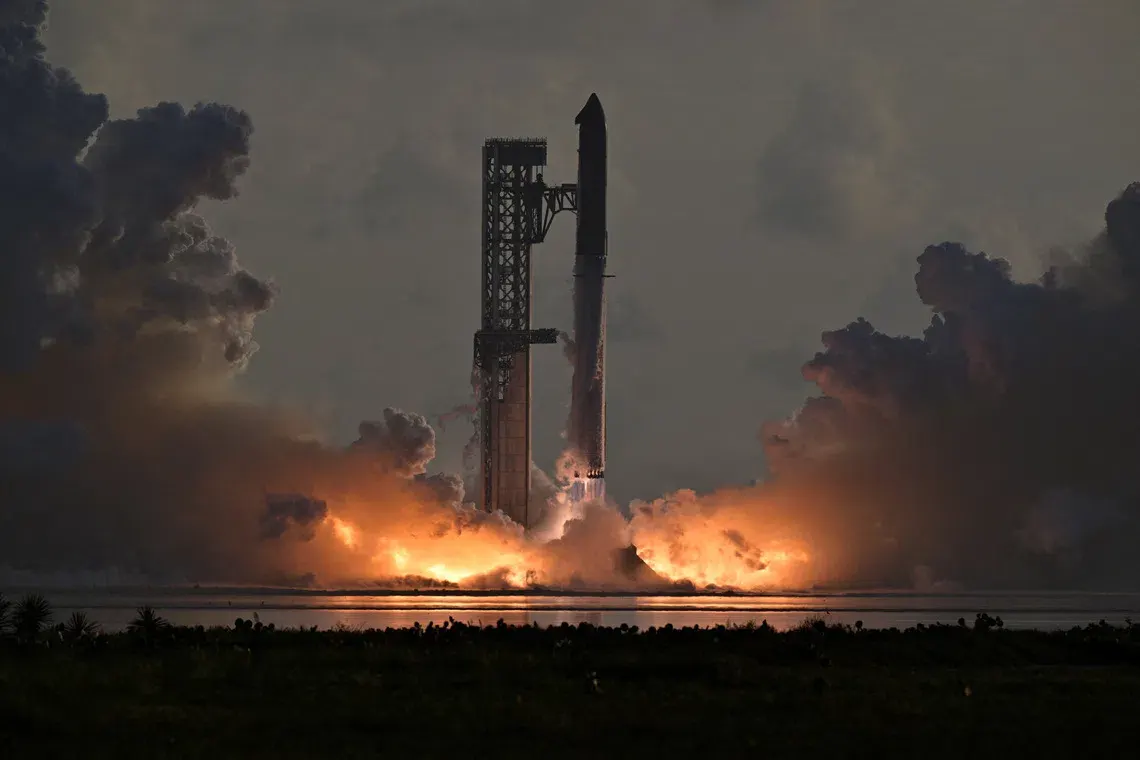
Super Heavy launched Starship from Starbase on Nov 13, according to The Straits Times. The spacecraft subsequently deployed 26 Starlink satellites. The newspaper reported that the upper stage remained in orbit for more than 22 hours before returning, making 14 circuits of Earth on what it described as Starship’s longest orbital flight.123
The return began with a brief firing of one engine to take Starship out of orbit. It then descended through the atmosphere and approached Starbase. According to The Straits Times, the spacecraft restarted three engines and turned upright before two arms on the tower closed around it as it hovered.23
The Japan Times identifies the returning spacecraft as Starship 42 and reports that it descended between the mechanical arms above Launch Pad 2 after re-entering the atmosphere. The BBC places the successful catch at about 15:27 local time, or 21:27 GMT, on Nov 14, a few minutes behind schedule.45
NPR reported that this was the 15th full-scale Starship flight since 2023 and its second journey into orbit. SpaceX had previously caught the Super Heavy booster on three test flights, but this mission brought back the upper-stage spacecraft instead. The company has yet to recover both stages during one mission, The Straits Times reported.123
Booster recovery fails
The BBC reports that Super Heavy’s planned catch was aborted a few minutes after launch on Nov 13. The booster was diverted to the ocean and burst into flames just above the water, the broadcaster said. Reports give different accounts of the failure: NPR said the guidance system detected that the booster was in the wrong position, prompting it to divert and destroy itself, whereas The New York Times reported a guidance-and-navigation control issue before the booster carried out a mock touchdown above Gulf waters.124
SpaceX spokesperson Kate Tice said the booster’s engines stopped firing too early during descent, NPR reported. The outlet said engineers were still investigating the recovery failure. The successful return of the upper stage therefore did not fulfil SpaceX’s plan to recover both rocket components at the launch site.123
Recovery and reuse
SpaceX officials described the catch as demonstrating Starship’s full reusability, according to NPR. That assessment comes with qualifications: experts cited by The New York Times said rapid reuse of the spacecraft’s engines and heat shield remained unproven. The Straits Times reported that the heat shield was not yet fully reusable.123
The spacecraft also has a planned role in NASA’s Artemis programme. According to The New York Times, Artemis III is expected to include a docking between Orion and Starship. The newspaper also reported that SpaceX plans a demonstration early next year in which two Starships would transfer liquid methane and liquid oxygen between them.2
NPR also reports that SpaceX plans to retire Falcon 9, its smaller workhorse rocket. According to the outlet, NASA has enough Falcon 9 launches through 2028, but crews are expected to remain on the International Space Station until 2030. SpaceX president Gwynne Shotwell suggested Boeing could fly its capsule for NASA, although NPR reports that the capsule still has technical problems and is not ready to carry people.1
The stakes also extend to SpaceX’s commercial plans. NPR reports that the company needs Starship to become rapidly reusable to pursue deployments of thousands of Starlink satellites and potential orbital data centers.1
Why it matters
Starship’s recovery matters both for NASA’s Artemis programme and for SpaceX’s commercial launch ambitions. NPR reports that SpaceX plans to retire Falcon 9 and needs rapidly reusable Starships to pursue thousands of Starlink satellites and orbital data centers. Experts cited by The New York Times say the catch alone does not establish rapid reuse.12
Videos
Related stories
same actors

Version history
- version 3 · This update adds NPR’s reporting on Falcon 9’s planned retirement, NASA’s station transport timeline and the commercial ambitions dependent on rapid Starship reuse.
- version 2 · This update adds the BBC’s account of the aborted booster catch and fire above the sea, the spacecraft catch time, and The Japan Times’ identification of Starship 42 and Launch Pad 2.
- version 1 ·