SpaceX Launches Classified USSF-385 Mission, Lands Booster
A Falcon 9 rocket carried the classified USSF-385 payload for the U.S. Space Force from Vandenberg Space Force Base on Saturday, with the first stage landing on a drone ship in the Pacific.
Listen to the story
Short version
SpaceX launched the classified USSF-385 mission for the U.S. Space Force from California and landed the Falcon 9 booster on a drone ship in the Pacific.
- Launched Sept. 25, 2026 from Vandenberg Space Force Base
- Booster touched down on drone ship Of Course I Still Love You in the Pacific
- Payload, activities and destination remain classified
- Third classified Space Force launch from Vandenberg in 16 days
- SpaceX cut its webcast after the booster's landing
What's new
- A Falcon 9 rocket departed Vandenberg Space Force Base carrying the classified USSF-385 payload
- The booster touched down on the Pacific-based drone ship Of Course I Still Love You
- SpaceX cut its webcast shortly after the landing, at the customer's request
- The flight was the third classified Space Force launch from Vandenberg in 16 days
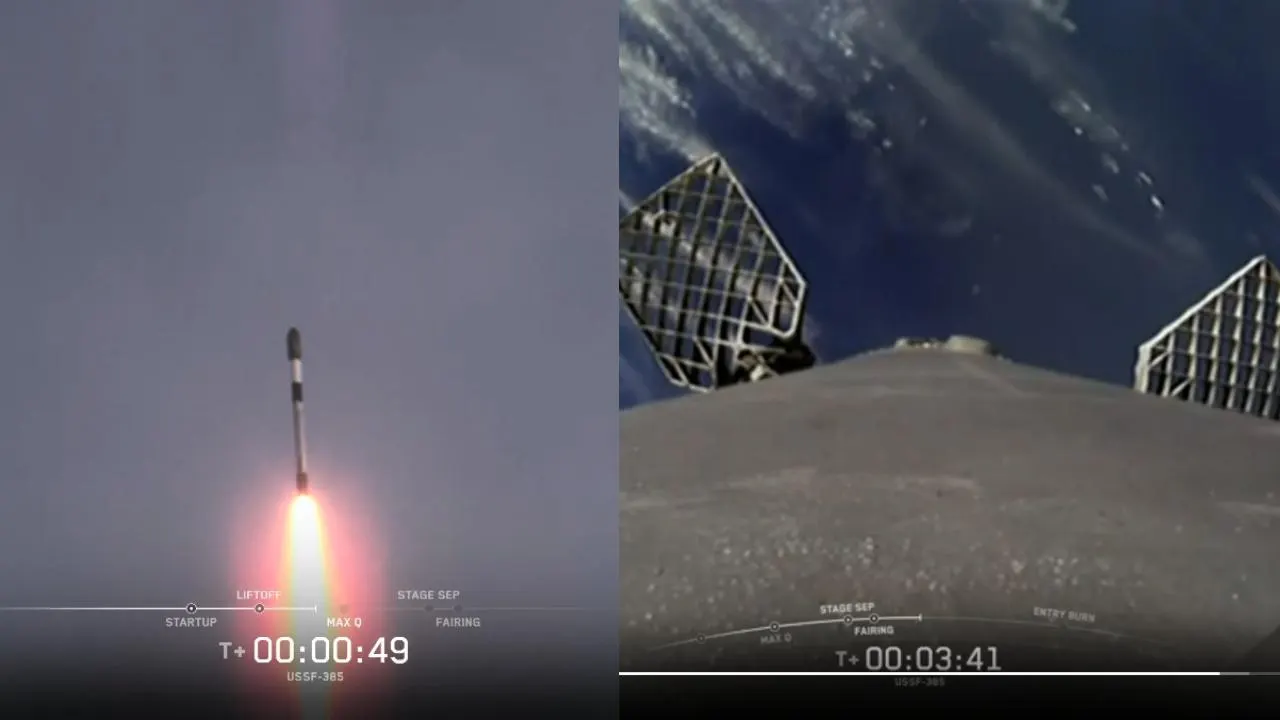
SpaceX launched the classified USSF-385 mission for the U.S. Space Force, sending a Falcon 9 skyward from its Vandenberg site in California on Saturday, Sept. 25, 2026, and recovered the rocket's first stage on a drone ship in the Pacific Ocean.2346
Launch in fog
The Falcon 9 lifted off from Space Launch Complex 4-East at Vandenberg at 7:00:54 a.m. PDT amid dense fog, according to Spaceflight Now, before heading on a southerly trajectory.24
Ahead of the flight, SpaceX cautioned that people living in three nearby counties — Santa Barbara, San Luis Obispo and Ventura — might hear one or more sonic booms as the launch unfolded.563
Booster recovery
About eight and a half minutes after liftoff, the first stage descended back to Earth as planned and settled onto the Pacific Ocean-based drone ship Of Course I Still Love You.1456
The landing marked the booster's tenth launch and recovery. Space.com and Spaceflight Now identified the booster as Booster 1100; sources differed on whether its previous flights included NROL-105 or NROL-95 alongside eight Starlink missions.1243
Secrecy over payload
SpaceX withheld footage of the rocket's payload and upper stage, explaining that the customer had requested this. The payloads, their activities and the exact destination of USSF-385 remain classified.2456
Shortly after the booster's landing, SpaceX cut off its launch webcast, a practice the company has followed on other national security missions.156
Part of a wider pattern
USSF-385 was the third classified Space Force mission SpaceX has flown from Vandenberg in 16 days, following USSF-153 on Sept. 10 and USSF-259 on Sept. 16, which appeared to carry 17 satellites to a different orbit.1524
Spaceflight Now reported that the mission likely represents the third in a sequence of flights delivering satellites built on SpaceX's Starshield platform, a government-oriented variant of the Starlink satellite.24
According to Space.com, the launch was SpaceX's third national security flight of the month and came amid a heavy 2026 cadence in which Falcon 9 had flown 108 times, three-quarters of those missions dedicated to building out the Starlink constellation, which the outlet said had grown to over 11,000 satellites orbiting Earth at low altitude; SpaceX has also flown two Falcon Heavy and two Starship missions this year, with a third Starship flight, an attempt to reach orbit, scheduled for Monday, Sept. 28.1
Why it matters
The launch adds to a run of classified U.S. military satellite deployments from California, underscoring the pace at which SpaceX is building out government space infrastructure alongside its commercial Starlink network.21
Videos
Related stories
Version history
- version 1 ·