Science & Tech · United States of America
NASA’s Swift observatory expected to re-enter atmosphere after failed orbit-raising mission
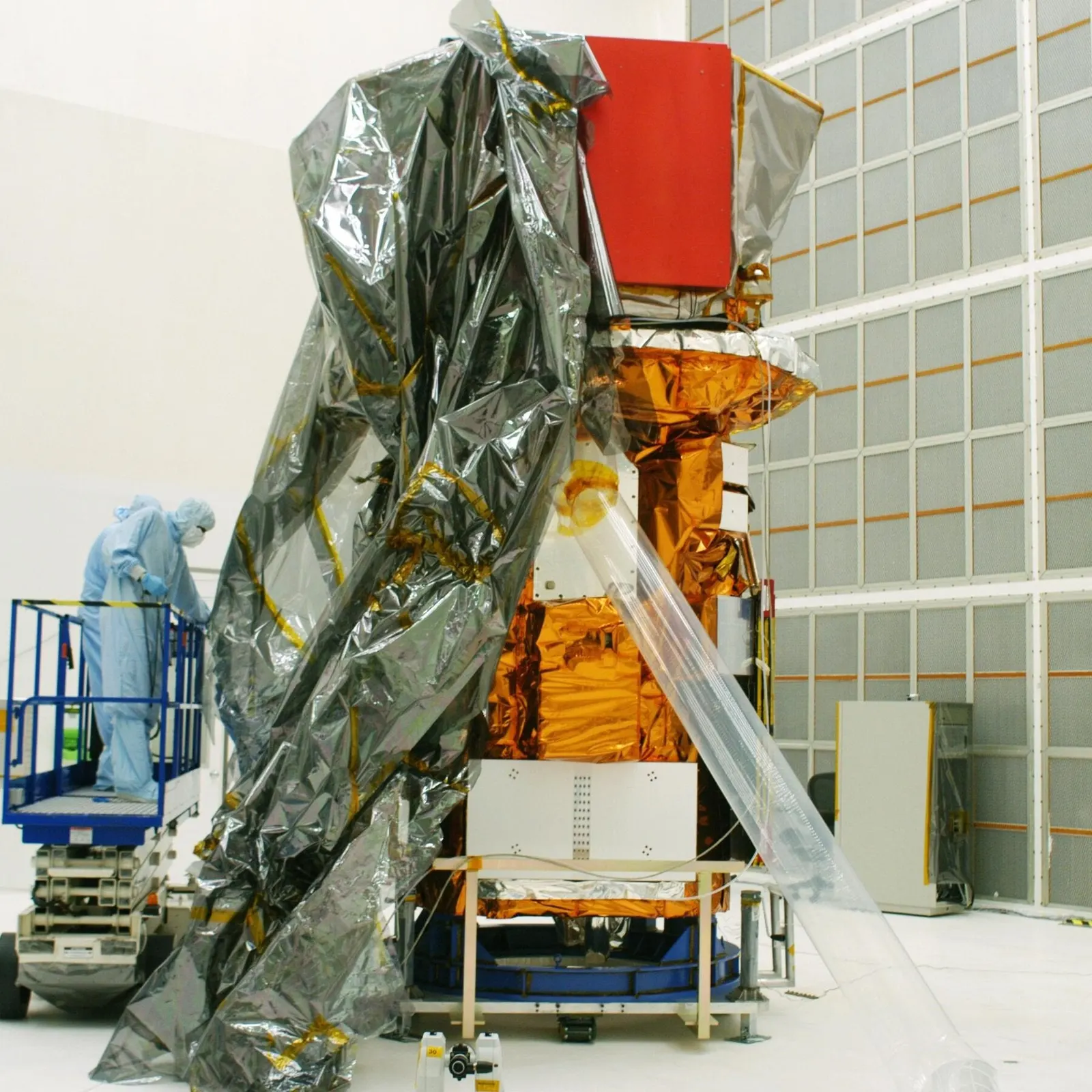
The observatory, launched in 2004 to study gamma-ray bursts, is expected to return to Earth’s atmosphere on November 4. NASA says some components could survive, with an estimated one-in-2,100 chance of injury to someone on the ground.
Swift is expected to re-enter Earth’s atmosphere on November 4 after an unsuccessful rescue attempt. NASA expects most of it to burn up.
- Swift launched in 2004 to study gamma-ray bursts.
- NASA says some spacecraft components could survive re-entry.
- NASA estimates a one-in-2,100 chance of someone being injured.
- Re-entry timing and debris locations remain unconfirmed.
What's new
- Re-entry forecasts reported on November 4 pointed to a later arrival than an earlier Space Force estimate.
- According to NASA, atmospheric re-entry will destroy the bulk of Swift, although certain parts are likely to remain intact.
- An attempt to move the observatory into a higher orbit was abandoned after its rescue spacecraft began spinning, The Straits Times reported.
NASA’s Neil Gehrels Swift Observatory is expected to re-enter Earth’s atmosphere on November 4, 2026, following an unsuccessful effort to lift it into a higher orbit, according to reports in The Guardian and The Straits Times. Most of the spacecraft is expected to burn up, although NASA says some components could reach the ground.12
Forecasts shift as re-entry approaches
The Guardian reported on November 3 that the US Space Force forecast atmospheric entry at about 3.30am ET on November 4. The Straits Times subsequently cited an Aerospace Corporation forecast of 5.19am EST, with a margin of two hours on either side.12
In its November 4 report, The Straits Times also quoted astrophysicist Jonathan McDowell citing revised Space Force data that put the most likely re-entry at around 7.45am. NASA and the Space Force were continuing to monitor the spacecraft and revise their predictions, The Guardian reported.12
NASA estimated the chance that falling debris could injure someone on Earth at approximately one in 2,100, according to The Guardian and The New York Times. That estimate concerns harm to anyone on the ground, rather than an identified landing location.13
The agency said the timing would determine where surviving pieces might fall. “Re-entry locations of any surviving components can vary from hemisphere to hemisphere and depend on when it re-enters,” NASA said, according to The Guardian. The Straits Times reported that surviving fragments were unlikely to threaten populated areas.12
An unsuccessful attempt to extend operations
Swift has no propulsion system of its own, according to The Straits Times. The Guardian reported that the observatory could no longer steer or make observations and had been instructed to stop operations ahead of its uncontrolled return. Its estimated altitude before operations ended was 171 miles.12
NASA and Katalyst launched the Link spacecraft in July to meet Swift, attach to it and move it into a higher orbit, The Straits Times reported. Link began spinning uncontrollably after reaching space, and mission managers abandoned the effort by mid-August, according to the newspaper.2
The Straits Times reported that Katalyst designed, built and tested Link over nine months under a US$30 million NASA contract. The Guardian described the attempted rescue as unsuccessful because the contractor did not rendezvous with the observatory.12
Observations beyond the planned mission
Launched in 2004 to investigate cosmic gamma-ray bursts, Swift operated far beyond its planned two-year mission. The Guardian reported that its three telescopes detected and tracked more than 2,000 of these bursts during its working life.12
Its observations also included a black hole tearing apart a star in July, according to The Guardian. The newspaper said the event briefly produced luminosity equivalent to roughly 10 billion suns and was brighter in ultraviolet light than its host galaxy.1
Why it matters
For readers in Europe, the reports provide no confirmed location for falling debris: NASA says that depends on the timing of re-entry. Its approximately one-in-2,100 estimate concerns the chance of someone being harmed anywhere on Earth, not a Europe-specific risk.13
Videos
Related stories
Version history
- version 1 ·