World · Poland, Russian Federation
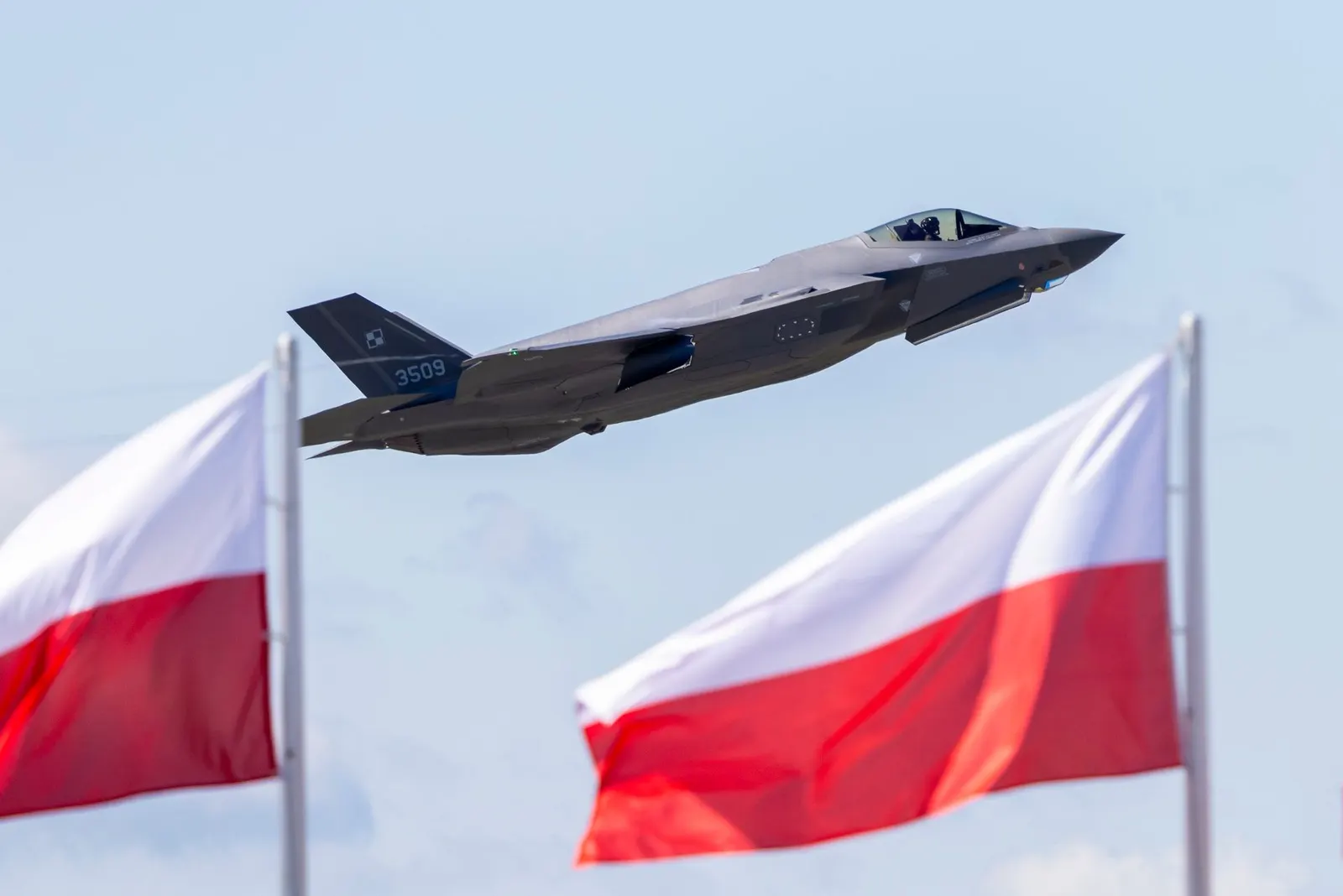
Poland Drops Visual ID Rule For Alleged Russian Air Targets
Poland's Ministry of National Defense is replacing the peacetime requirement to visually confirm aerial targets with radar-based identification, citing daily risks of drone and missile incursions from Russia.
Poland will let its military shoot down suspected Russian aerial threats using radar data alone, dropping the requirement to visually confirm targets first.
- Visual identification rule replaced with radar-based positive identification
- Change follows a Russian helicopter's 42-second airspace incursion near Braniewo
- Officials cite daily risk of drone incursions from Russia
- Other incidents cited: July Kh-101 missile, ~20 drones in one night
- Tusk warns Russia may stage strikes on NATO states as accidents
What's new
- Poland to allow shoot-downs based on radar data ("positive identification") instead of visual confirmation
- Change announced by Deputy Defense Minister Cezary Tomczyk on Sept 28-29, 2026
- Follows a Russian Mi-8 helicopter's 42-second incursion into Polish airspace near Braniewo
- Comes after Russian drone attacks on Ukraine prompted Polish jets to scramble and two airports to halt operations
On September 28, Poland's Ministry of National Defense said it would swap out the peacetime rule requiring visual confirmation of targets in favor of radar-based "positive identification" when deciding whether to shoot down aircraft or projectiles coming from Russian territory, Deputy Defense Minister Cezary Tomczyk announced, pointing to the ongoing daily threat of drone incursions.14
A faster identification standard
The existing peacetime rules require Polish pilots to lay eyes on a target within Polish airspace before they are permitted to fire. The new procedure will instead rely on positive identification drawn from radar readings and other data fed into the system, according to Tomczyk.143
Tomczyk said the shift does not mean less identification but a different way of carrying it out. "not less identification, but a different way of conducting it: faster and based on data from multiple sources," he said. Positive identification will involve assessing speed, altitude, trajectory, flight parameters and the absence of an identification-friend-or-foe (IFF) signal, according to Notes from Poland.2
Officials said such radar-only engagement authority had previously been reserved for wartime or martial law. "Up until now, we have not resorted to such capabilities, because, as a rule, they are reserved for wartime or martial law," Tomczyk said, adding that the threat level now requires the change because Poland faces daily risk of drones entering its territory.41
Grosswald Signal reported that authority to open fire will belong to either the pilot or the operational commander, with factors such as radar tracking data, violation of a no-fly zone, and intelligence shared by Ukraine serving as grounds for engagement. The outlet reported that the change will be introduced gradually and that identification in peacetime remains "absolutely necessary," in Tomczyk's words.3
Recent incursions
The Kyiv Independent and Notes from Poland reported that the announcement came after a Russian Mi-8 helicopter, departing from Kaliningrad, breached Polish airspace north of Braniewo, traveling roughly 300 meters inside Polish territory and staying there for 42 seconds.12
Other reported incidents cited by Notes from Poland include a Russian Kh-101 cruise missile that entered Polish airspace in July and landed in a field, and around 20 Russian drones that crossed Poland's eastern borders on a single night the previous year. Grosswald Signal reported that an F-16 was scrambled after the July Kh-101 incident but no order to fire was given, and that the decision that day went through Poland's national command.23
Russian drone attacks on Ukraine also prompted the Polish military to scramble fighter jets and temporarily halt operations at Lublin and Rzeszow-Jasionka airports, according to the Kyiv Independent. Notes from Poland reported that a Russian drone struck a passenger train running between Kyiv and Warsaw.12
Political response
Prime Minister Donald Tusk stated that Russia is preparing to launch drones and missiles against NATO's eastern flank while disguising these attacks as accidents. Notes from Poland reported that Poland has also expanded its network of warning sirens along the border with Ukraine, begun marking bomb shelters more clearly, and that the country has 85,000 shelters nationwide.2
Deputy Defense Minister Magdalena Sobkowiak-Czarnecka proposed building a Patriot missile plant in Poland rather than Ukraine, saying it would sit on "safe territory," while adding, "We'll see if that happens." Poland's Patriot batteries were purchased from the United States, according to Grosswald Signal.3
According to the Institute for the Study of War, NATO members are having difficulty devising effective countermeasures when Russian drones approach or cross into alliance airspace, since there is frequently too little time to identify the danger.6
Why it matters
The policy shift signals that Poland, a NATO member bordering Kaliningrad and Ukraine, now treats drone and missile incursions from Russia as a near-daily security risk rather than an exceptional event. Faster engagement authority could reduce reaction time against threats but also raises the stakes of misidentifying civil or allied aircraft, a risk the peacetime visual-confirmation rule was designed to limit.23
Related stories
background

background

Version history
- version 1 ·