World · Holy See (Vatican City State), Ukraine
Pope Leo's Peace Push Hits Snag as Russia Rejects Vatican as Talks Venue
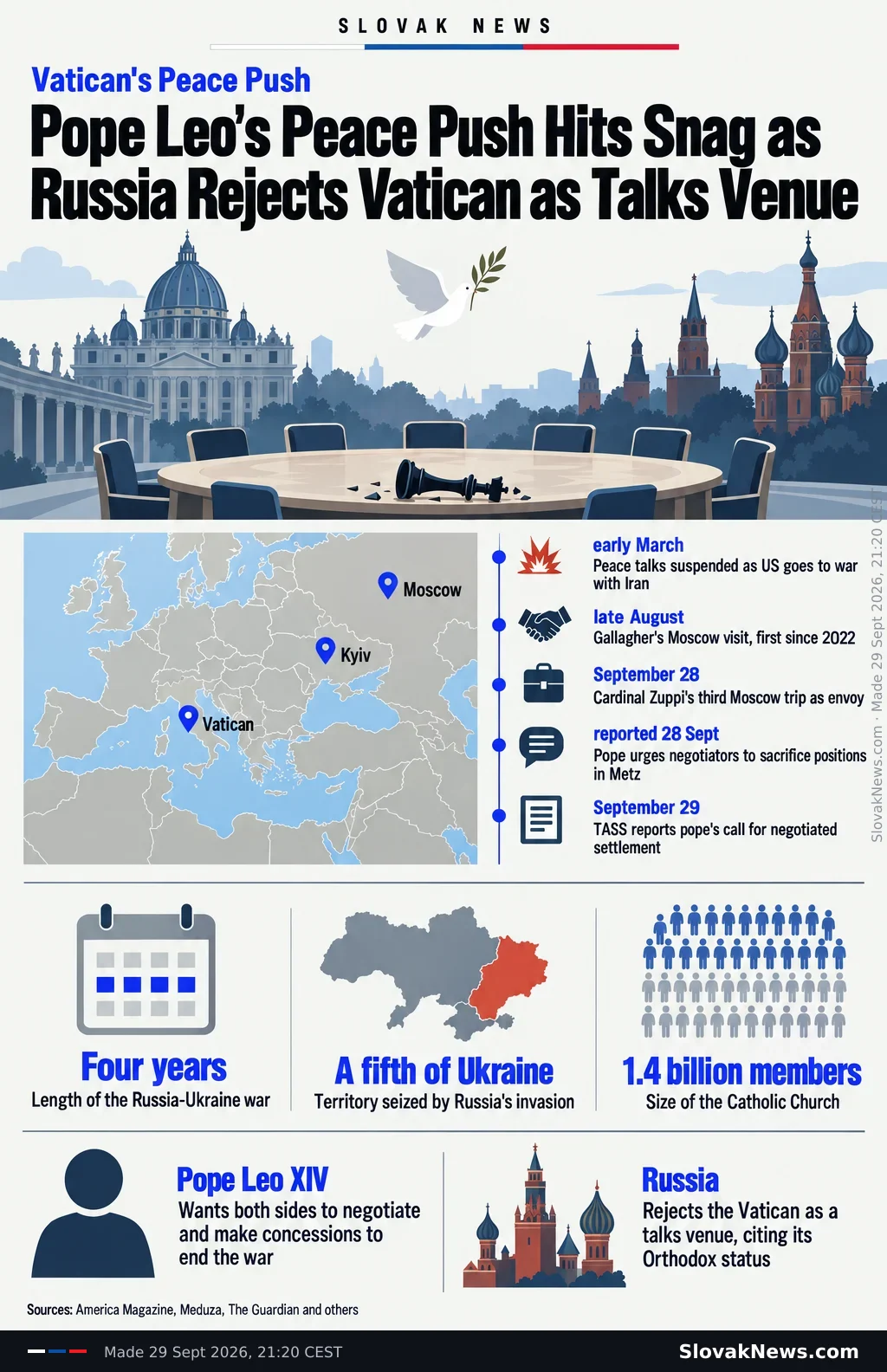
Concluding a four-day tour of France, Pope Leo XIV renewed his call for Russia and Ukraine to negotiate an end to their war, even as new reporting shows Moscow has repeatedly rejected the Vatican as a site for direct talks, which have been suspended since March.
Listen to the story
Short version
Pope Leo XIV renewed calls for Russia-Ukraine negotiations, but Moscow has rejected the Vatican as a talks venue and negotiations remain frozen since March.
- Pope Leo called for concessions to end the four-year Ukraine war
- Russia rejected the Vatican as a talks venue, citing Orthodox status
- Peace talks suspended since March amid U.S.-Iran war
- Cardinal Zuppi visited Moscow for the third time as papal envoy
- Pope also criticized arms industry profits and discussed AI risks
Infographic
What's new
- Moscow has turned down the Vatican multiple times as a possible site for face-to-face negotiations with Kyiv, with Lavrov pointing to the Church's Orthodox identity as the reason
- Russia-Ukraine peace talks have remained suspended since early March, when the U.S. went to war with Iran
- Pope Leo, concluding his four-day France tour, again urged Moscow and Kyiv to sit down and negotiate
- He criticized the arms industry for profiting from war while billions could address hunger and housing
- During the trip he also met abuse survivors and addressed AI risks, euthanasia and Europe's housing crisis
Pope Leo XIV, the first U.S.-born pope, has renewed calls for Russia and Ukraine to negotiate an end to their four-year war, but new reporting shows the Kremlin has repeatedly declined to hold in-person negotiations at the Vatican and that talks have stalled since the United States entered its war with Iran in early March.2910
Infographic
Call for concessions in Metz
Addressing European leaders in Metz, the French city associated with EU founding father Robert Schuman, Pope Leo said negotiators seeking to end wars in Europe must be prepared to sacrifice some of their positions to achieve peace. "We need to show courage in negotiations and be ready to give up certain positions for the sake of the greater good – peace," he said, according to the dossier's account of his remarks.17
He further warned against treating a military buildup as a cure, stating, "We must also beware of the illusion that rearmament is the answer." This came at a time when Europe's defense budgets had climbed more sharply in the previous year than at any point since the Cold War ended, a jump some observers linked to pressure from U.S. President Donald Trump and to Russia's ongoing aggression.678
The pope described war as having returned to the continent, saying, "war has returned, even to Europe: a new senseless slaughter, claiming countless civilian lives every day." His speech in Metz reportedly received a standing ovation.68
Warnings on the flight to Rome
Talking with reporters on the flight, Pope Leo observed that heads of state were starting to discuss nuclear arms and ever more devastating warfare, adding that the Catholic Church, with its roughly 1.4 billion faithful, "has an obligation to call for peace and respect of human life."310
He argued that the UN and similar international institutions were faltering, and questioned whether ongoing efforts represented true peacemaking or simply a bid to contain the fighting's spread. The Hindu reported that he further argued armed conflict worsens problems rather than resolving them, and breeds suffering and hatred instead of security, pointing to missile and drone strikes leveling homes and houses of worship in Ukraine.147
Vatican contacts with Moscow
The pope's remarks coincided with renewed Vatican diplomatic activity. TASS reported that Cardinal Matteo Zuppi, who serves as the pope's envoy on Ukraine, landed in Moscow on September 28 for a third trip, aiming to advance humanitarian solutions.9
The Kyiv Independent reported that Paul Richard Gallagher, who oversees the Vatican's relations with states, traveled to Moscow in late August for what the outlet called the two sides' first in-person meeting since Russia launched its full-scale invasion in 2022. Gallagher acknowledged substantial differences remained between Moscow and the Holy See.29
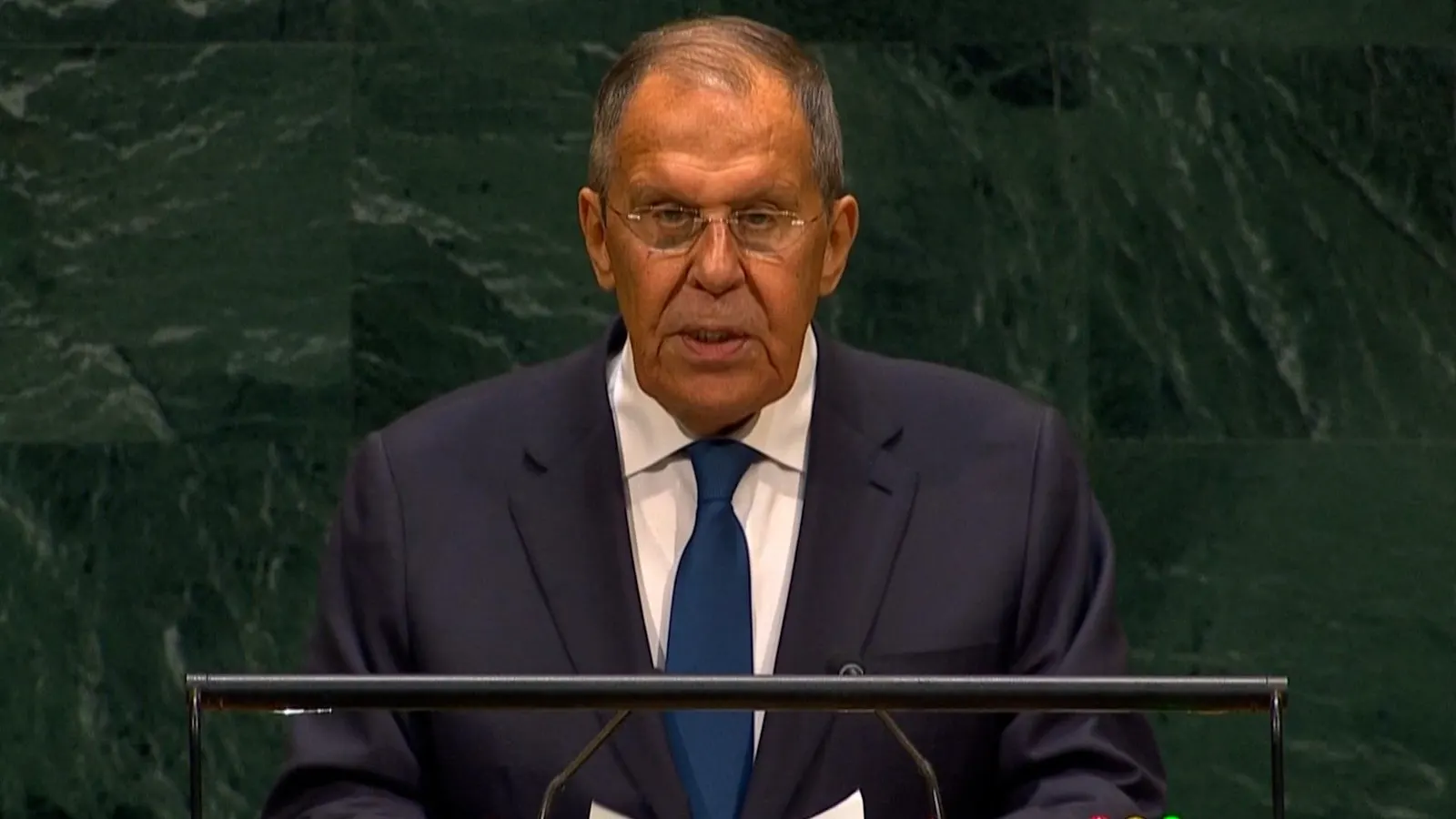
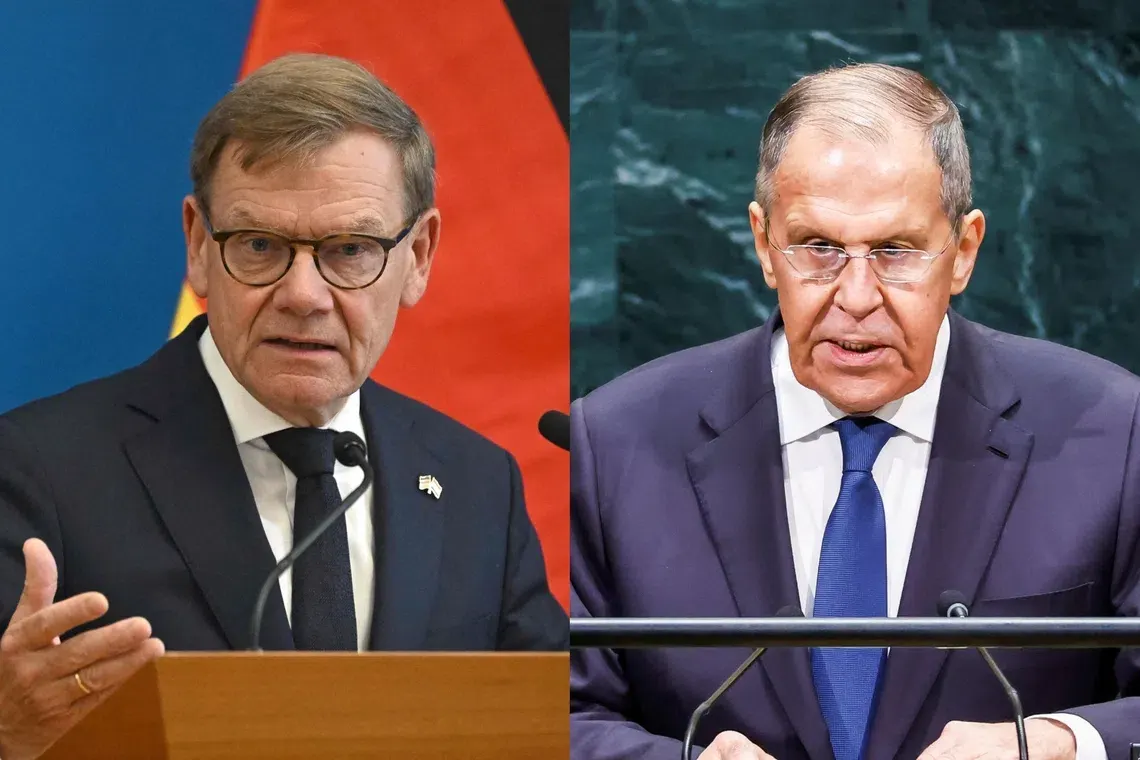
According to Meduza, the Vatican has been put forward on multiple occasions as a possible location where Kyiv and Moscow could meet in person, yet Russia has turned down the idea each time, with Foreign Minister Sergey Lavrov pointing to the Vatican's Catholic – as opposed to Orthodox – identity as his justification. The two sides' negotiations have remained suspended since early March, when the United States went to war with Iran, and Moscow has said it will not halt fighting while talks are underway.2
European backdrop
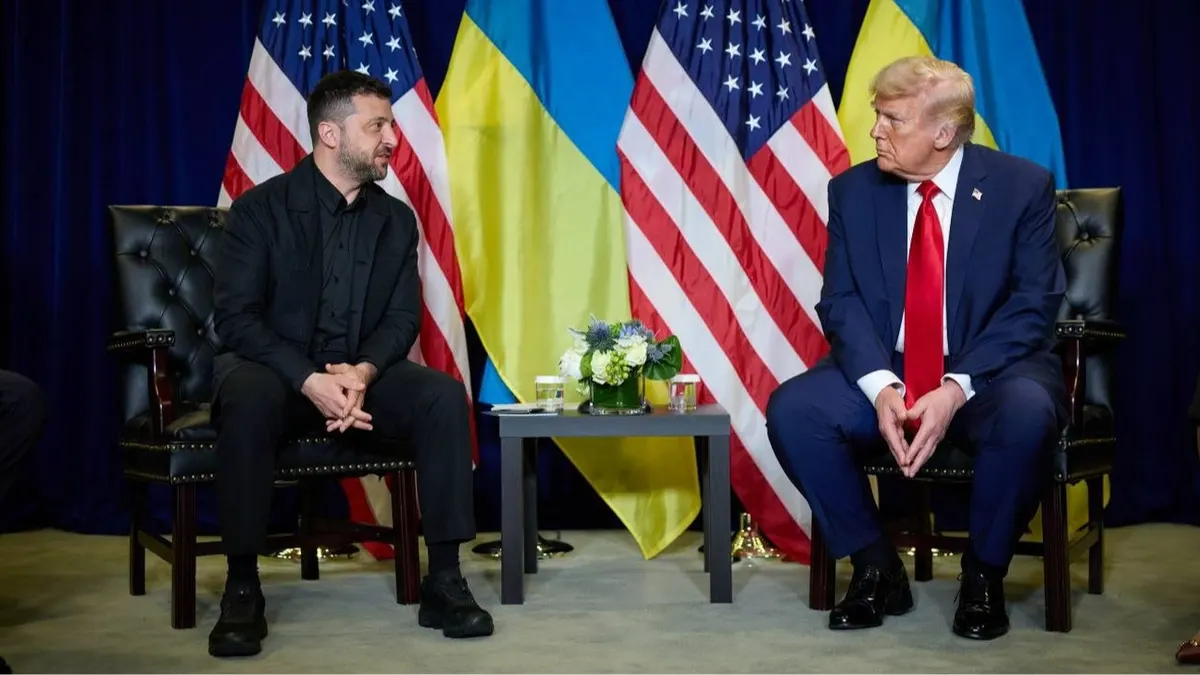
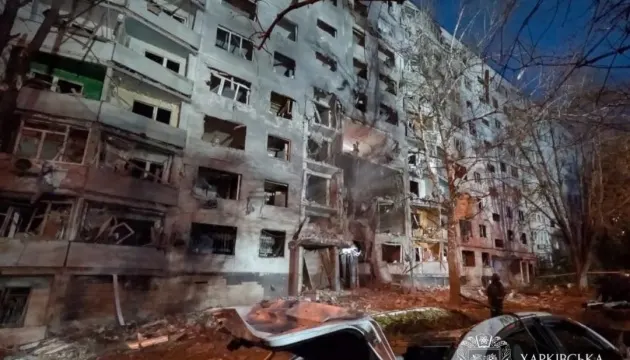
The pope's visit unfolded against a backdrop of political and humanitarian strain in Europe. Ukrainian President Volodymyr Zelensky met Donald Trump in New York to discuss ending the war, while Russia's invasion, launched in 2022, has seized a fifth of Ukrainian territory, with neither side showing willingness to concede land.68
Pope Leo called on Europe's leaders to welcome migrants "as if they were part of one's own family," remarks made the same day a trio of migrants, one of them a child, lost their lives while trying to cross from France to Britain over the Channel. He has previously criticized U.S. anti-immigration policies under President Trump.68
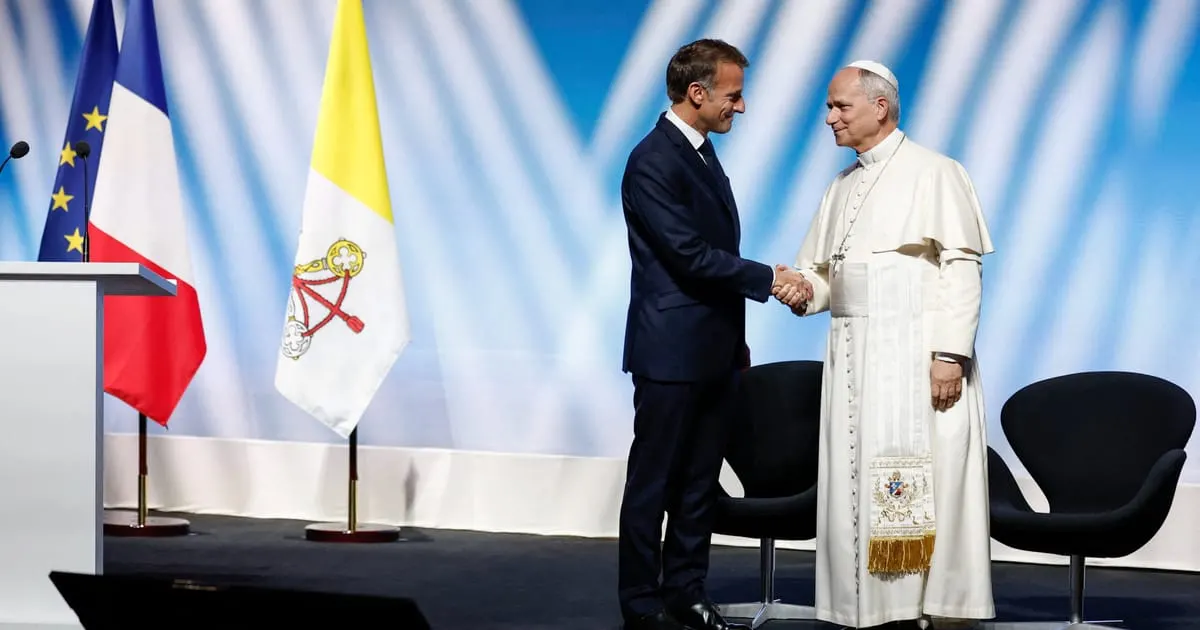
French President Emmanuel Macron praised the European Union as a project founded on the "primacy of the person and the free and rational individual," as the pope urged leaders to recall the bloc's founding values of peace and equality, at a moment when far-right movements, including France's National Rally led by Marine Le Pen, were reported to be gaining strength.5678
Arms profits, AI and social concerns
Speaking to reporters and in public remarks during the trip, Pope Leo also criticized the arms industry for profiting from conflict, saying billions spent on weapons could instead address hunger, housing and unemployment. He drew a parallel to Pope Benedict XV's 1917 appeal during World War I and said the Church has a duty to keep inviting leaders, including those of Russia and Ukraine, to dialogue even when it seems futile.910
Regarding artificial intelligence, the pope noted that the Vatican has set up a commission tasked with overseeing how the Holy See employs the technology and managing the dangers it poses. He said he was not "in panic mode" about an A.I. catastrophe but that "we can't just sit back," amid differing visions from figures such as Nvidia's Jensen Huang, who touted industry guardrails without government regulation, and criticism from tech billionaire Peter Thiel.1
Why it matters
Russia's rejection of the Holy See as a talks venue, on religious grounds, exposes the limits of Vatican-mediated diplomacy even as its envoys pursue rare direct contacts with Moscow. Combined with Europe's rearmament, migration strains and debates over the EU's founding values, the episode underscores how far the continent remains from a negotiated peace.268
Videos
Related stories
background
background
background
Version history
- version 2 · New reporting reveals Russia has repeatedly rejected the Vatican as a venue for talks with Ukraine and that negotiations have been suspended since March, alongside broader details of the pope's French tour covering AI, abuse survivors and the arms industry.
- version 1 ·