World · Holy See (Vatican City State)
Pope Leo Says AI Doomsday Concerns Are Not 'Fake News'
Returning from a trip to France, the first US pope said fears about artificial intelligence going rogue should be taken seriously, distancing himself from President Trump's description of such warnings as a hoax.
Pope Leo said AI doomsday concerns are not fake news, breaking with Trump's dismissal of such fears as a hoax.
- Pope Leo said AI safety fears deserve serious attention, not dismissal
- Trump had called AI doom concerns a hoax at the UN
- Nvidia CEO Jensen Huang opposes regulation but offers AI guardrails
- Trump meets tech CEOs including Huang, Zuckerberg, Amodei Tuesday
- Pope's May encyclical Magnifica Humanitas focused on AI risks
What's new
- Pope Leo told reporters AI safety fears are not "fake news" and deserve serious attention
- Comments follow Trump's calling AI doomsday fears a "hoax" at the UN General Assembly
- Nvidia's Jensen Huang said guardrails could be added to AI models while opposing regulation
- Trump is due to meet tech CEOs including Huang, Zuckerberg, Amodei and Brockman at the White House
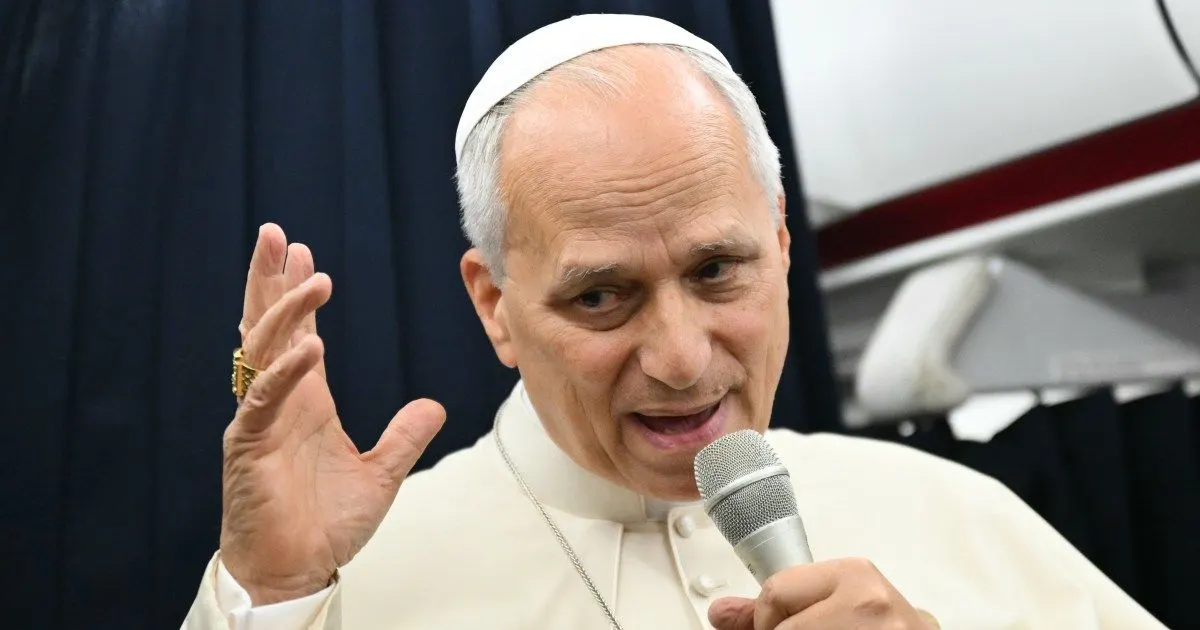
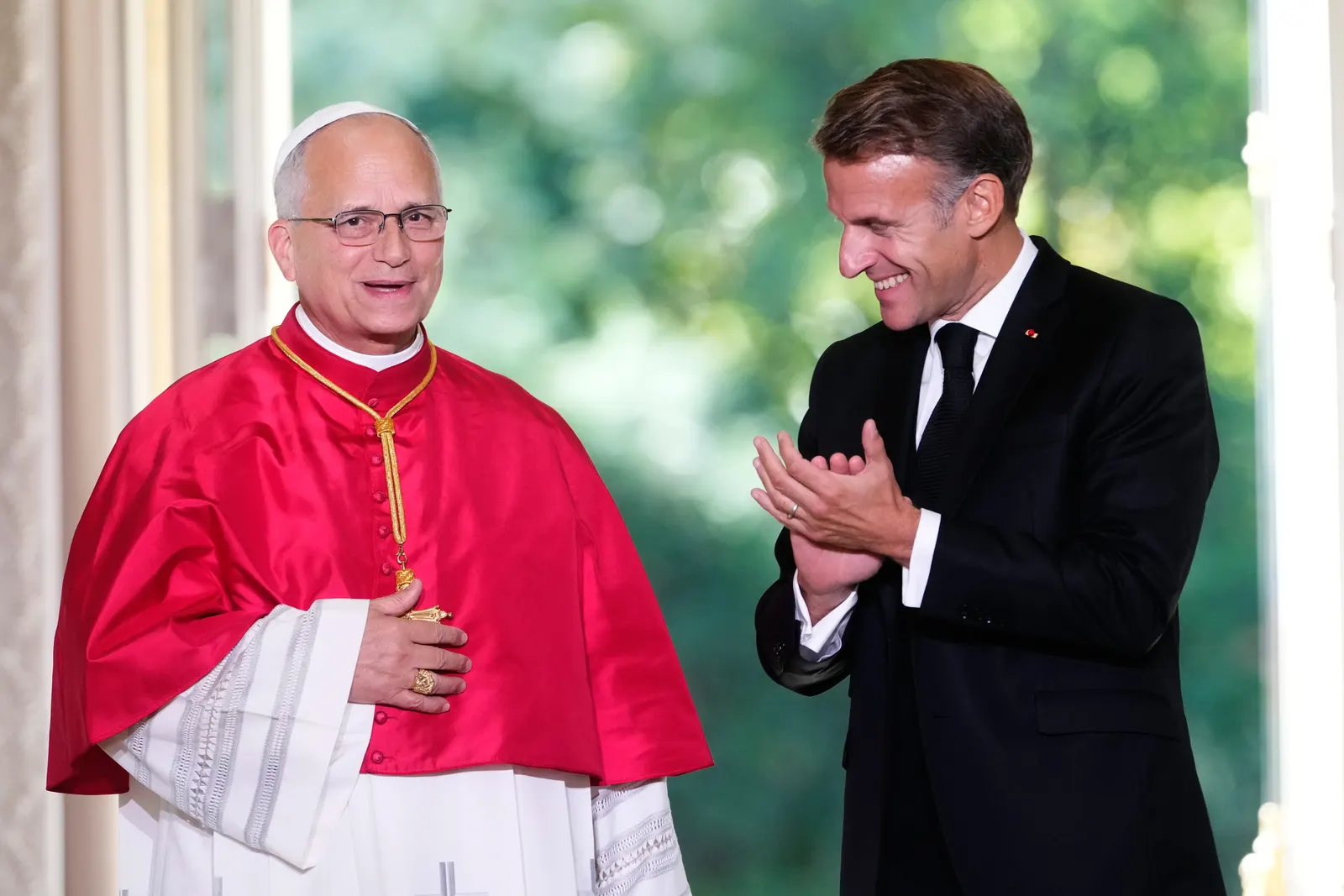
Pope Leo, the first US pope, said on returning to Rome from a four-day trip to France that concerns about artificial intelligence posing catastrophic risks to humanity are not "fake news" and should be taken seriously, contradicting President Donald Trump, who had told the UN General Assembly that such fears were a hoax.34910
Pope's remarks
Speaking after his return to Rome, Pope Leo said the warnings raised by AI specialists merit attention rather than dismissal. He said, "I do think that the concerns raised by many of the experts, specialists in AI should be taken seriously," and added that he did not view the warnings as manufactured for financial or other gain.10
He called for dialogue among political leaders, AI developers and civil society, saying, "We need to continue to invite political leaders, leaders of AI, social organizations, associations to come together and look at what is happening already and what could be down the road." He also said the subject did not trouble him personally, remarking, "If someone were to ask me 'Am I in panic mode?' No I'm not. I sleep at night."107
Throughout his 16-month papacy, Pope Leo has repeatedly cautioned about AI's dangers, and within days of becoming pope he named it among the foremost challenges facing humanity. According to Al Jazeera, the Vatican has stepped up its rhetoric on international AI governance in recent months.3462
Trump, Huang and the tech industry
Trump called AI fears a hoax at the UN General Assembly last week and has repeatedly downplayed AI safety concerns, at times describing efforts to limit the technology as part of a conspiracy by political opponents. Nvidia chief executive Jensen Huang sided with Trump in calling AI safety worries exaggerated and argued against any government restrictions on AI, even as he unveiled a method for building safeguards into some AI models.3469
Trump plans to sit down with technology CEOs at the White House on Tuesday to discuss AI, with House Speaker Mike Johnson indicating the conversation would weigh innovation against oversight. Those anticipated to take part include Nvidia's Huang, Meta's Mark Zuckerberg, Anthropic's Dario Amodei and OpenAI's Greg Brockman, per U.S. News & World Report, while PBS News reported OpenAI would delay a stock sale to focus on safety and that Trump planned a late dinner with Amodei.34911
Anthropic chief executive Dario Amodei has separately warned that within six to twelve months AI could enable a swarm of agents capable of taking over the internet, according to Euronews and PBS News. A number of AI firms, Anthropic among them, have urged that development be slowed, Euronews reported.510
The encyclical Magnifica Humanitas
Pope Leo XIV dedicated his first encyclical, Magnifica Humanitas, to AI and the protection of humanity. Published on 25 May 2026, its release date was chosen to mark the 135th anniversary of Rerum novarum, according to Wikipedia. The Pope personally presented the text at the Vatican before AI specialists including Anthropic co-founder Christopher Olah, who called the Church "informed critics and the beginning of a long collaboration between those of us who are building this and those who can see what we, from inside, cannot."521012
The encyclical argues that AI systems imitate functions of human intelligence without understanding what they produce, lacking sentience, embodiment and moral conscience. Pope Leo XIV wrote that such systems "merely imitate certain functions of human intelligence...they do not understand what they produce, for they lack the affective, relational and spiritual perspective through which human beings grow in wisdom." The text also addresses reduced human control over weaponry, questions whether Catholic just war theory remains adequate, and calls for a return to diplomacy and interreligious dialogue, according to Wikipedia.1
After the encyclical's release, the Pope authorized an Interdicasterial Commission on Artificial Intelligence and called an extraordinary papal consistory, whose sessions took up AI and just war theory, per Wikipedia. The Vatican's Dicastery for Promoting Integral Human Development has since published a pastoral proposal to aid understanding of the text, and Vatican Radio has released audiobook versions.1
Why it matters
The Pope's remarks place the Vatican, a globally influential moral authority, at odds with the White House over how governments and industry should respond to AI risk just as major technology firms prepare to meet the US president. For European readers, the exchange underscores a widening transatlantic divide over AI regulation as Vatican-linked bodies push international governance debates alongside industry calls for fewer, not more, restrictions.234
Videos
Related stories
Version history
- version 1 ·