Culture · Bulgaria, Greece
Remains identified as Czar Samuel return to Bulgaria from Greece
The medieval ruler’s remains were carried from Thessaloniki to Sofia under a reciprocal cultural agreement. Bulgaria will return 48 items taken from Greek religious sites during World War I.
Greece has transferred remains identified as Czar Samuel’s to Bulgaria under a reciprocal cultural agreement. Bulgaria is to send Greece 48 objects removed from religious institutions during the First World War.
- The handover began at a museum in Thessaloniki.
- A military aircraft carried the remains to Sofia.
- State ceremonies included fighter escorts and 21 artillery salutes.
- The remains were placed in Sofia’s Church of St Sophia.
- Greece will receive 48 objects under the agreement.
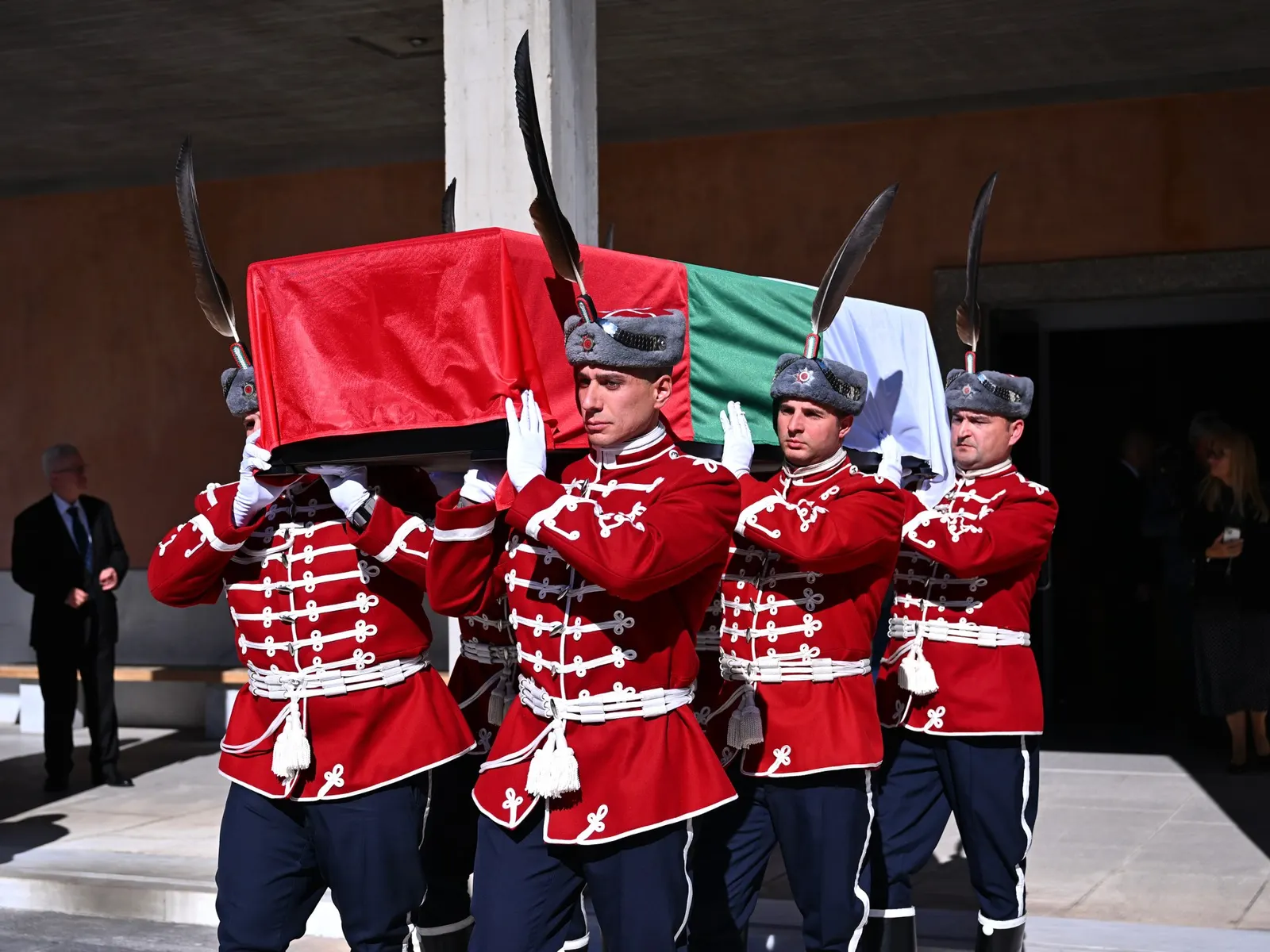
What's new
- Greece handed the remains to Bulgaria at a ceremony in Thessaloniki.
- A military aircraft carried them to Sofia under fighter escort.
- A state ceremony and procession ended at the Church of St Sophia.
- The agreement also provides for 48 objects to be transferred to Greece.
Remains identified as those of the medieval Bulgarian ruler Czar Samuel were transferred by Greece to Bulgaria on October 3, 2026, in ceremonies in Thessaloniki and Sofia. A Spartan military aircraft carried them to the Bulgarian capital, where they were received with state honours before being taken in procession to the Church of St Sophia.134
A state return
The formal transfer was held at the Museum of Byzantine Civilization in Thessaloniki, which had housed the remains. Greek Prime Minister Kyriakos Mitsotakis and Rumen Radev attended the ceremony before the coffin was flown to Sofia aboard the Bulgarian military transport aircraft.14
After entering Bulgarian airspace, the aircraft was met by two pairs of MiG-29 and F-16 fighters and flew over Prince Alexander I Square. Bulgarian military personnel then escorted the remains into central Sofia, where politicians and members of the public gathered for a ceremony that included the national anthem and 21 artillery salutes.34
A procession carried the remains to the sixth-century Church of St Sophia for a memorial service. They were placed in a marble sarcophagus assembled in the southern part of the church’s transept, and the public was allowed to pay respects.245
Thousands gathered in a public square for the arrival, according to Al Jazeera. Radev told the ceremony: “Today, we Europeans are learning to read history with a desire to belong not only to our homeland, but also to the culture that unites us across the entire European continent.”3
A reciprocal cultural agreement
The transfer followed a memorandum signed in Athens on September 29 by the Greek and Bulgarian culture ministers, Lina Mendoni and Evtim Miloshev. The agreement covers reciprocal transfers of historically significant remains and cultural objects between the two countries.46
Under the accord, Bulgaria is to transfer 48 objects removed from religious institutions in northern Greece in 1917. According to Deutsche Welle and Al Jazeera, Bulgarian soldiers looted the items from churches and monasteries during World War I. Some Greek academics and religious leaders criticised Bulgaria’s contribution as inadequate, according to Deutsche Welle and the Guardian.1236
The Greek Culture Ministry said its transfer also included material from four sarcophagi associated with the remains found at the Saint Achillios basilica. The Bulgarian News Agency reported that remains believed to be those of Gavrail Radomir and other members of the royal family would also be transferred.46
Mitsotakis linked the agreement to Greece’s effort to secure the return of the Parthenon Marbles from Britain. Those 2,500-year-old sculptures were taken from the Acropolis and are held by the British Museum. He said cultural heirlooms “cannot be treated as the spoils of war”.123
Samuel’s historical legacy
Samuel fought the Byzantine empire while expanding his kingdom, but his forces were ultimately defeated and he died shortly afterwards in 1014. Deutsche Welle reported that his army was defeated at the Battle of Kleidion that year. Accounts in the dossier differ over the precise dates assigned to his rule and over how long ago the remains were discovered.1234
The Greek Culture Ministry said archaeologist Nikolaos Moutsopoulos found the remains in 1965 at the Saint Achillios basilica. The location is described by the Bulgarian News Agency as being on an island in Lake Prespa. That account identifies the remains as Samuel’s, although the dossier does not set out the scientific basis for the identification.46
Samuel also figures in historical narratives in North Macedonia, where he is claimed as a ruler, according to Deutsche Welle and Al Jazeera. In 2022, a joint commission advised describing him as the leader of a polity that most modern historians identify as the Bulgarian Empire. Analyst Dimitar Bechev said: “Samuel occupies an important place in the historical narrative both in Bulgaria and in North Macedonia”.13
Why it matters
The agreement addresses disputed cultural property between two European neighbours through reciprocal transfers rather than leaving the objects in their existing locations. Mitsotakis also presented the handover as support for Greece’s wider campaign to have the Parthenon Marbles returned from the British Museum.23
Videos
Version history
- version 1 ·