World · Russian Federation, Ukraine
Russia Launches Largest Attack on Ukraine's Energy Grid Since Spring
Seven people were killed and emergency power cuts imposed in Kyiv after Russia's heaviest combined strike on Ukraine's energy infrastructure in months, officials said.
Listen to the story
Short version
Russia hit Ukraine's energy grid in its largest combined attack since spring, killing seven and cutting power in Kyiv.
- Largest combined energy strike since end of last heating season
- Seven killed, including a child, across several regions
- Kyiv imposed emergency power cuts, halting trams and trolleybuses
- Trypilska power station, Kyiv's top supplier, was targeted
- Attack fits a years-long pattern of strikes on Ukraine's grid
Infographic
What's new
- Largest combined strike on Ukraine's energy system since the end of last heating season
- Seven people killed, including a child, in strikes across multiple regions
- Kyiv imposed emergency power cuts for the first time since spring
- Russia's defence ministry confirmed it targeted the Trypilska power station, Kyiv's largest electricity supplier
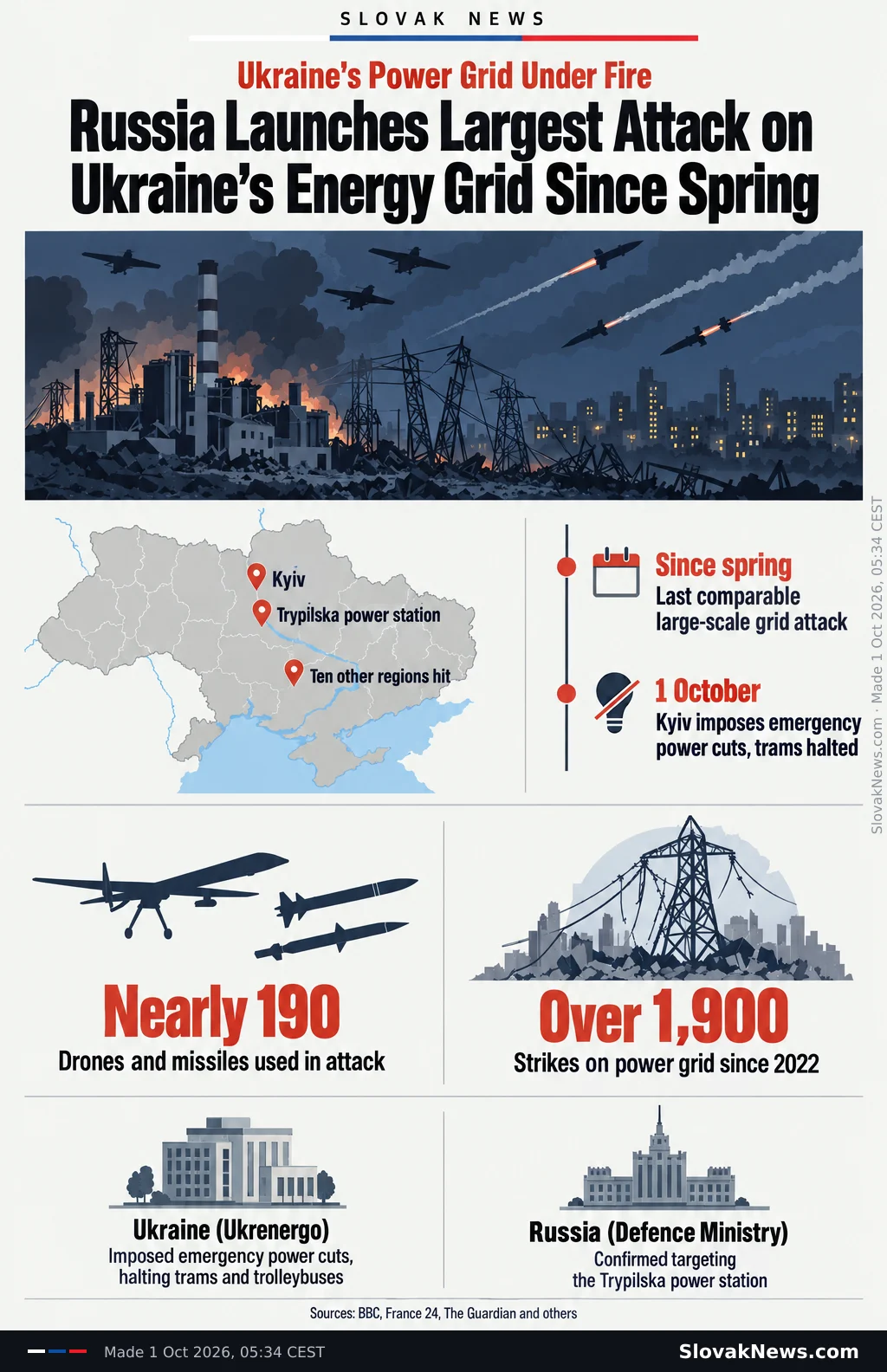
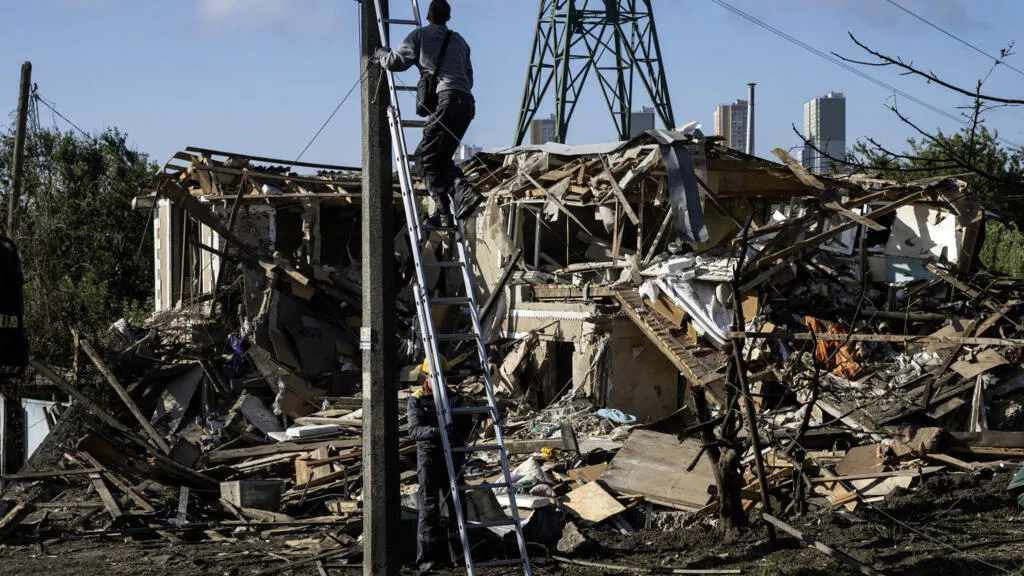
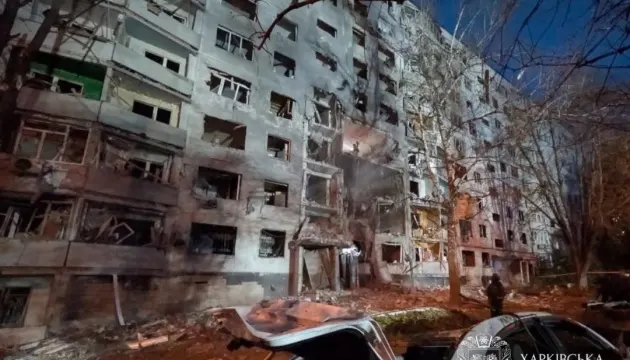
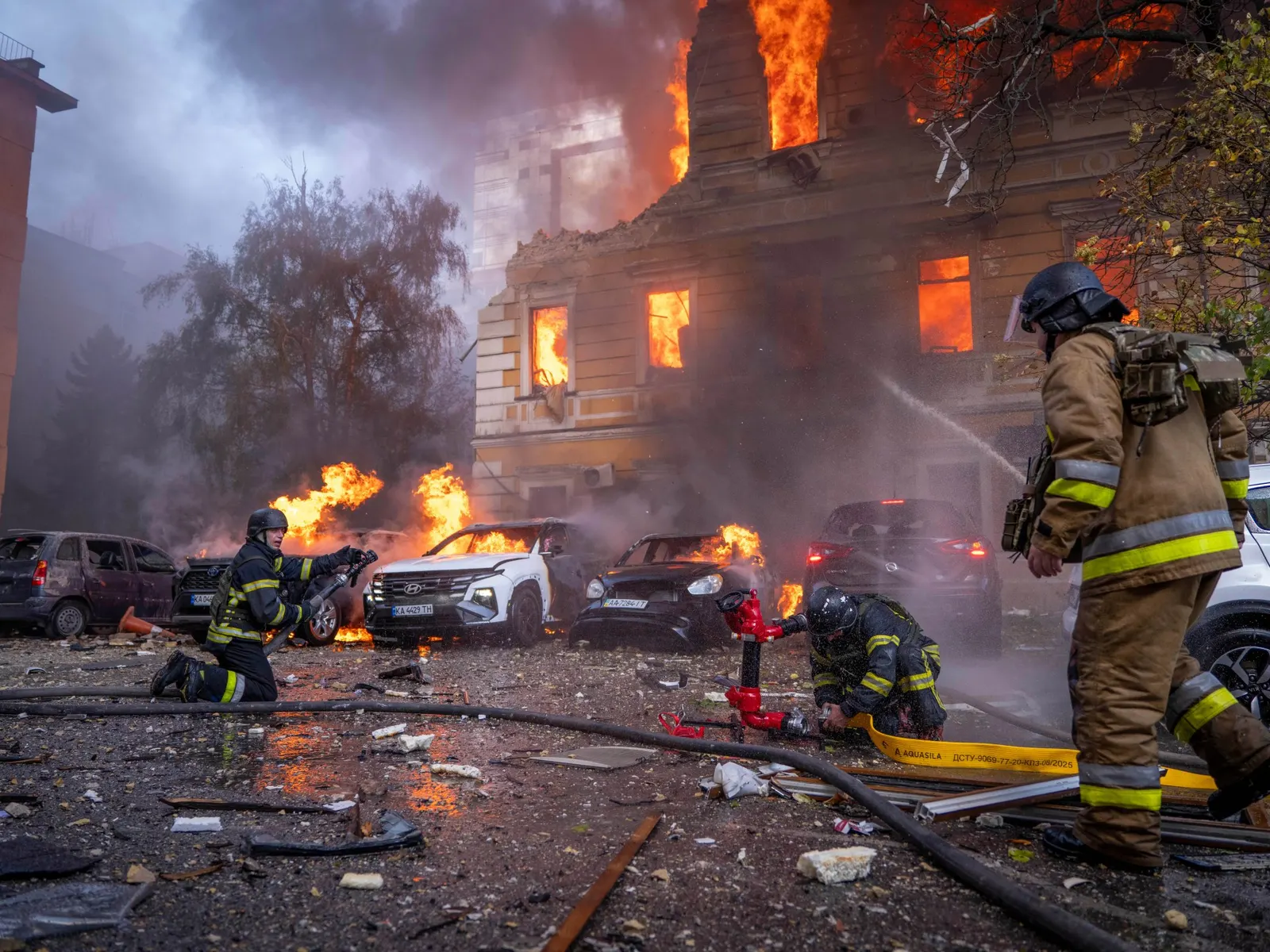
On Wednesday, Russia carried out its biggest combined assault on Ukraine's power system since last season's heating period ended, hitting Kyiv and ten additional regions with close to 190 drones and missiles; the strikes killed seven people, including a child, and prompted the capital to impose emergency power cuts for the first time since spring.1235
Infographic
Strikes across eleven regions
Officials characterized the nighttime assault as the most severe combined strike on energy facilities in several months. Nearly 190 drones and missiles were used, with critical infrastructure attacked directly in five regions and further damage reported in five more. Russia's defence ministry confirmed it had targeted the Trypilska power station, which officials describe as the largest supplier of electricity to Kyiv.3265
Seven people were killed in the strikes, including a child, according to regional officials. Kyiv Mayor Vitaliy Klitschko said: "Three people were killed in total in the capital, including a Ukrainian utility company worker who was killed at a warehouse building." Sumy region governor Oleh Hryhorov said two people died there, adding that "a school was also hit there in a separate strike." Mykolaiv's acting governor, Heorhiy Reshetilov, reported one death in his region. The BBC reported a different overall toll of six people killed and 33 injured nationwide, a figure not repeated by other outlets in the dossier.3261
Power cuts and intercepted drones
Ukraine's grid operator, Ukrenergo, imposed emergency power cuts in Kyiv for the first time since spring, halting tram and trolleybus services in the capital and triggering a 12-hour air-raid alert. Residents were advised to avoid using high-power appliances between 10:00 and 16:00 local time. The energy company DTEK said it had restored electricity to 8,000 homes following the attacks.57
Ukraine's air force said it downed five missiles and 155 drones, while separate reporting said more than 380 drones were intercepted overnight nationwide. Debris from intercepted munitions was found at a Western embassy in Kyiv, and drone strikes are reported to have killed around a dozen people in the capital over the preceding week. Ukraine's human rights ombudsman, Dmytro Lubinets, said the civil-defence system had "completely failed," amid what officials described as a critical shortage of urban shelters.5726
A long campaign against the grid
Al Jazeera reported that Russia has conducted over 1,900 strikes against Ukraine's power system since launching its full-scale invasion, with the grid now able to cover just 60 percent of the country's electricity needs as of late January. Ukraine's top commander, Oleksandr Syrskii, stated: "At the moment, the enemy produces daily 404 'Shaheds' of different kinds. And the plans are to increase that. The enemy plans to boost production significantly, up to 1,000 drones a day." The same source indicates aerial and drone assaults against Ukraine climbed from roughly 6,000 in 2023 to nearly 16,000 in 2024, exceeding 29,000 in 2025.4
Officials respond
Serhiy Koretskyi, Ukraine's prime minister, remarked: "Russia has escalated to massive strikes on energy infrastructure. He noted that since summer, almost no day has passed without an attack on Ukraine's energy infrastructure. He added that an assault combining this many strikes hasn't occurred since last season's heating period concluded. President Volodymyr Zelensky said energy infrastructure in Kyiv and the surrounding area was the main target, and described operations in the east as "a serious operation, important in many ways for our defence overall and in Donbas in particular." Foreign Minister Andrii Sybiha said Moscow was "increasing the pressure on Ukrainian civilians as winter approaches, trying once again to turn cold, darkness, and disruption of normal life into weapons," and separately called the strikes a "deliberate distraction from its grinding battlefield offensive in eastern Ukraine."2653
The Guardian reported, citing analyst Denys Sienik, that Russia is rapidly expanding a satellite network known as Rassvet, intended to begin operations in 2027. Sienik said: "If these entities are not sanctioned, it will actually make this program possible for Russia and that will be a gamechanger." The same briefing noted remarks from Pope Leo on nuclear weapons and wars "becoming ever more destructive." These claims come from a single source in the dossier.3
Why it matters
Russia's intensified targeting of Ukraine's power system as winter approaches raises the prospect of prolonged blackouts affecting millions of civilians, with Ukrainian officials framing the strikes as an attempt to weaponise cold and darkness. For Europe, sustained attacks on Ukraine's energy grid and broader territorial pressure keep questions of continued support, sanctions and energy security on the agenda as the war approaches its fifth year.24
Videos
Related stories
same actors
same actors
Version history
- version 1 ·