Slovakia · Ukraine
Slovak President Warns Arms Buildup Risks Escalating European Tensions
Peter Pellegrini urged renewed diplomacy over Ukraine during a commemoration at Dukla on 3 October. He also warned that discussion of a possible NATO-Russia conflict was becoming more open. [s1,s2,s3,s4]
Peter Pellegrini warned that increased armament could intensify tensions and urged renewed diplomacy over Ukraine. He also expressed concern about more open discussion of a NATO-Russia conflict.
- Pellegrini spoke at the Carpathian-Dukla Operation commemoration.
- He said armament and provocations deepen tensions.
- He urged Europe to renew diplomatic efforts over Ukraine.
- Weapons should remain a last resort, he said.
- He warned NATO-Russia conflict talk was becoming more open.
What's new
- Pellegrini warned that additional armament and provocations would deepen tensions. [s1,s2,s3,s4]
- He said Europe had abandoned diplomatic efforts over Ukraine too quickly. [s1,s2,s3,s4]
- He urged governments to treat weapons as a last resort after negotiations fail. [s1,s2,s3,s4]
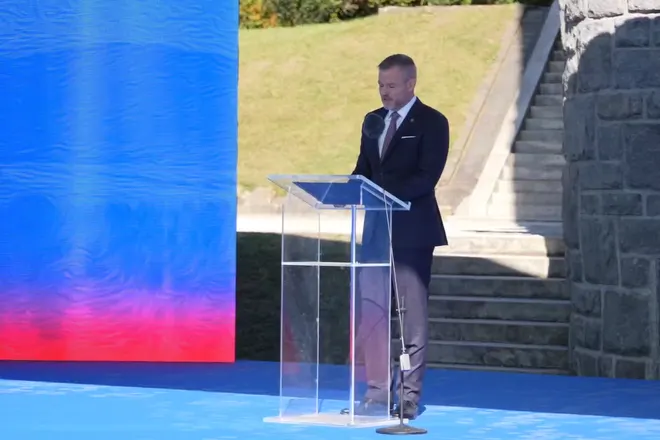
Slovak President Peter Pellegrini warned at the 82nd-anniversary commemoration of the Carpathian-Dukla Operation on 3 October that increasing armament and provocations would escalate tensions rather than ease them, while calling for renewed diplomatic efforts to address the war in Ukraine.1234
Warning over escalation
Pellegrini said public debate about a possible conflict between the North Atlantic Treaty Organization and Russia was becoming more explicit, while diplomatic language was growing harsher. He said the atmosphere was beginning to resemble conditions that preceded major global conflicts in the past. His remarks linked the current security debate with the wartime suffering remembered at Dukla.1234
The president said smaller countries logically depend on collective security arrangements for protection from a potential external aggressor. At the same time, he argued that weapons should remain a final option, to be considered only after diplomacy has completely failed and every attempt at negotiation has been exhausted.1234
Pellegrini said Europe had withdrawn too quickly from efforts to find a diplomatic resolution to the war in Ukraine. In his account, further armament, continued fighting and additional deaths had come to dominate the international response. He said the pursuit of peace was necessary for survival and urged Europe to continue seeking a peaceful solution.1234
Ukraine and the failure to secure a truce
Pellegrini said tens of thousands of young men on each side were dying every month in the war in Ukraine. That figure was presented as the president’s assessment in all four reports. He also said the two hostile states east of Slovakia had been unable to agree even on a ceasefire or truce that could create the conditions for diplomatic negotiations.1234
The president framed his appeal through the commemoration of the Carpathian-Dukla Operation, whose 82nd anniversary was being marked. At the Dukla Valley of Death, he discussed the heroism and deaths of soldiers and said their sacrifices had been made in the hope that their children and later generations would not experience the horrors of war.1234
Commemoration and present-day divisions
Richard Raši also spoke at Dukla, according to Aktuality.sk. He said differences of opinion should not lead to the denigration of Slovakia or its symbols, and argued that commemorative anniversaries had meaning only when considered in relation to the present.4
Pellegrini’s address combined remembrance of the soldiers who died at Dukla with a warning against allowing wartime suffering to be repeated in Slovakia. He presented diplomatic engagement, a ceasefire and negotiations as necessary steps before any resort to weapons.1234
Why it matters
The remarks address choices facing Europe over the war in Ukraine, including the balance between military preparations and attempts to restart negotiations. They also reflect concern that increasingly open discussion of a NATO-Russia conflict and harsher diplomatic language could accompany a further rise in tensions.1234
Related stories
Version history
- version 1 ·