World · South Africa
South Africa Activists March Over Ekurhuleni Femicide Killings
Residents and shack-dwellers' movement Abahlali baseMjondolo marched on a Kempton Park police station after a twelfth woman was killed or found dead in Ekurhuleni since July, prompting a Cabinet response and a presidential directive.
Activists in Ekurhuleni, South Africa, marched on police demanding action after a twelfth woman was killed or found dead since July, prompting a government response.
- Twelfth woman killed or found dead in Ekurhuleni since July
- Activists marched to Kempton Park police station with demands
- Group gave police seven days to account for murders
- Cabinet and President Ramaphosa ordered swifter investigations, four suspects held
- Police have not confirmed all killings are linked or by one perpetrator
What's new
- Twelfth woman killed or found dead in Ekurhuleni since July, activists say
- Residents and Abahlali baseMjondolo marched to Kempton Park police station with a memorandum
- An organisation gave Kempton police seven days to account for the murders
- Cabinet met in Pretoria and called for swift arrests and prosecutions; Ramaphosa ordered investigators to accelerate work
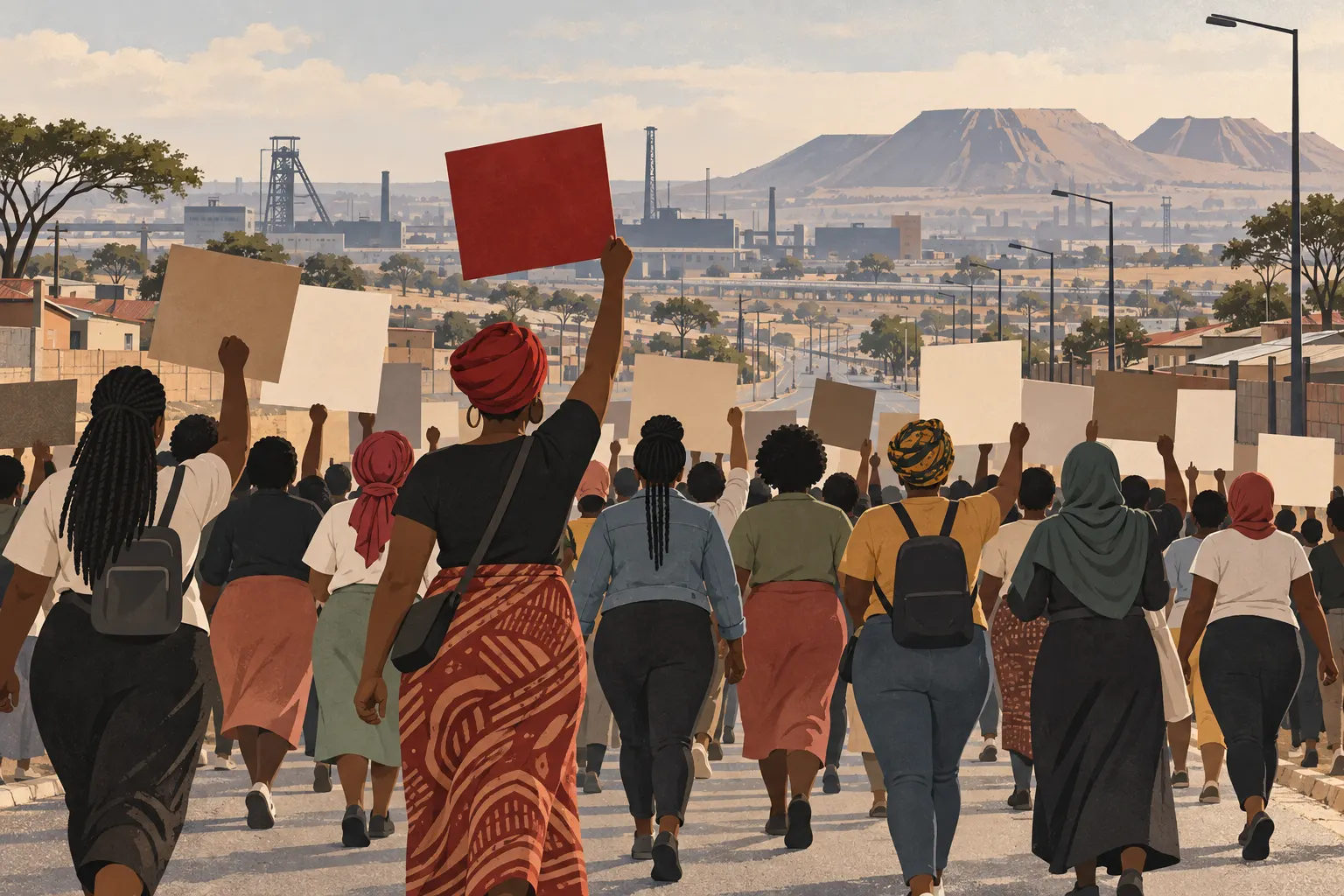
On 30 September 2026, residents of Ekurhuleni, east of Johannesburg, together with the shack-dwellers' movement Abahlali baseMjondolo, walked to the Kempton Park police station and handed over a memorandum calling for police accountability, after a twelfth woman was killed or found dead in the municipality since July.3456
Killings in Ekurhuleni
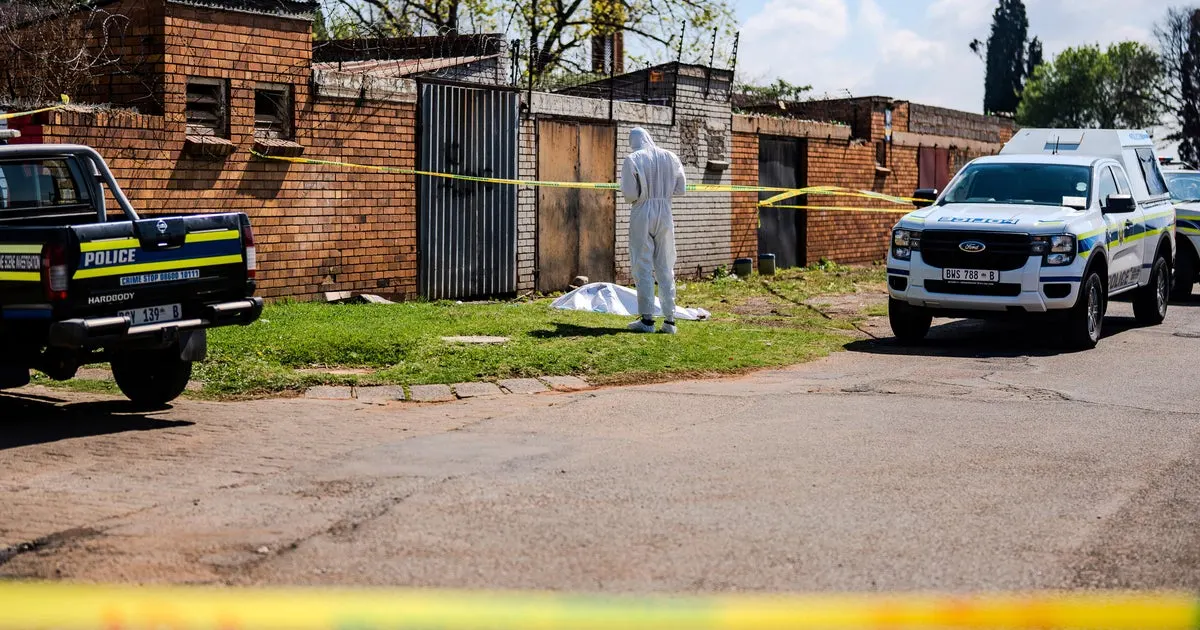
The deaths date back to July. Victims identified by Daily Maverick include Busisiwe Mahlangu, found near the R21 highway, and Elizabeth Moselakgomo, 38, reported missing on 9 September after going for a run and found partially clad in Rhodesfield on 14 September. Her partner was arrested in the Mahlangu case.2
Reported totals differ across sources. BBC said the bodies of 12 women were found in the area east of Johannesburg over two months. IOL and AllAfrica reported that a twelfth woman had been killed in Ekurhuleni since July, a tally disputed by Daily Maverick's reporting on individually identified cases. A government briefing referred to 13 bodies recovered since July. Police have not found evidence establishing that the killings were carried out by a single perpetrator, and were cautioned against drawing serial-killer conclusions even after a SAPS task team noted similarities between some cases.1352
The most recent reported cases include a 23-year-old woman shot in Tembisa early on a Monday morning on her way to work, which police are investigating as murder and robbery, and Boitumelo Gift Mashita, 23, fatally shot on Mapungubwe Street in Teanong, Midrand, whose estranged husband was found dead shortly afterwards.34
March on Kempton Park
Abahlali baseMjondolo, together with SERI (the Socio-Economic Rights Institute of South Africa) and Cry of the Xcluded, went to the Kempton Park police station to submit a memorandum calling for a properly resourced, women-led task team. The movement stated its position plainly: "We are not here to fight the police. We are here to fight crime with the police." Activists also pointed out that more officers turned out for the march than are usually seen patrolling their own neighbourhoods.346
Lungile Vilakazi said victims are repeatedly failed by the system: "Victims are sent from pillar to post, protection orders are not enforced, dockets disappear and no feedback is given to families." She added that "police response time in shared settlements is extremely low, women who report are not protected," and concluded that "the police in Ekurhuleni are failing in their duty." Separately, an organisation gave Kempton police seven days to account for the murders.7
Policing gaps
Residents in Tembisa said visible policing remains limited despite earlier promises, with response times sometimes stretching to the next day; gunfire is so frequent it is informally called the national anthem. SERI director Nomzamo Zondo argued that insufficient police presence in townships and informal settlements contributes directly to the high levels of violence there, a sentiment shared by march participants, including one Soweto resident who described living in fear for her own safety.56
According to IOL, gender-based violence complaints are frequently dismissed as unimportant when filed, women who come forward receive insufficient protection, and police take too long to respond in informal settlements. In a separate development, a senior SAPS officer currently in service was arrested on allegations of grooming and rape; under the law, the officer is presumed innocent unless proven otherwise.3
Government response
Cabinet, meeting in Pretoria, called for swift arrests and prosecution of femicide perpetrators. Minister in the Presidency Khumbudzo Ntshavheni said "the rise in incidents of gender-based violence, in particular femicide - the intentional killing of a woman by a person close to them - must galvanise a societal response," adding that "the murder of women intentionally by their loved ones or people close to them cannot be tolerated by any society or community," and urging that "men and women take a stand against violence against women."8
President Cyril Ramaphosa directed a multidisciplinary investigation team to accelerate its work and is set to address the nation on steps to confront gender-based violence and femicide. Four suspects continue to be held in detention following the refusal of bail, while investigators are following up on multiple other people of interest. The Ekurhuleni mayor had earlier promised increased surveillance in the municipality.81
Wider context
BBC figures show South Africa logged 5,427 homicides from April to June this year, among them 569 women killed and 1,052 women who survived attempted murder — statistics that place the nation among those with the worst gender-based violence rates globally. Daily Maverick noted that South Africa's rate of femicide by intimate partners stands at five times the worldwide figure, citing researcher Rachel Jewkes, who said: "The vast majority of men who kill, kill with impunity. Absent any expectation of consequences, she asked, what reason would these men have to stop?"12
IOL noted it has been eight years since women marched on 1 August 2018, after which government introduced legislation and adopted a National Strategic Plan on gender-based violence and femicide; a five-year assessment recorded 65 of 191 indicators achieved, 104 in progress and 22 not achieved. A TimesLIVE editorial situated the Ekurhuleni killings within a broader wave of recent deadly violence — a house-party shooting in KwaMakhutha that left 11 dead, a tavern attack in Wedela that killed at least 18, and a shooting at a Lwandle entertainment spot that claimed 10 lives — and referenced the South African Council of Churches' appeal for a national mourning day. Reverend Mzwandile Molo said, "When people decide that murder is the answer to whatever we are not happy about, and it is normalised with impunity, we are witnessing a debasement of our moral fibre and the brutalisation of our common humanity."34
Why it matters
South Africa's femicide rate is described as five times the global average, making the Ekurhuleni killings a stark marker of a wider pattern of violence against women. For European readers, the case illustrates how gaps in policing, prosecution and state protection can allow such violence to persist even amid legislation and strategic plans intended to address it.23
Related stories
Version history
- version 1 ·