World · Spain
Spain’s transport minister resigns after rail collision kills 69
Óscar Puente has also withdrawn from the coming general election. His departure follows the October 28 collision near Urda, Spain’s second fatal high-speed rail collision this year.
Spain’s transport minister resigned after the October 28 collision near Urda killed 69 people. The government has announced safety changes and financial assistance.
- Puente also withdrew from the November 29 election.
- A Renfe service struck a stationary Iryo train.
- Two Australians were among those killed.
- ABC Australia reported that all victims had been identified.
What's new
- Puente announced his resignation and withdrew from the November 29 election.
- ABC Australia reported that the search for further fatalities had ended.
- All 69 victims had been identified, with 59 returned to their families, according to ABC Australia.
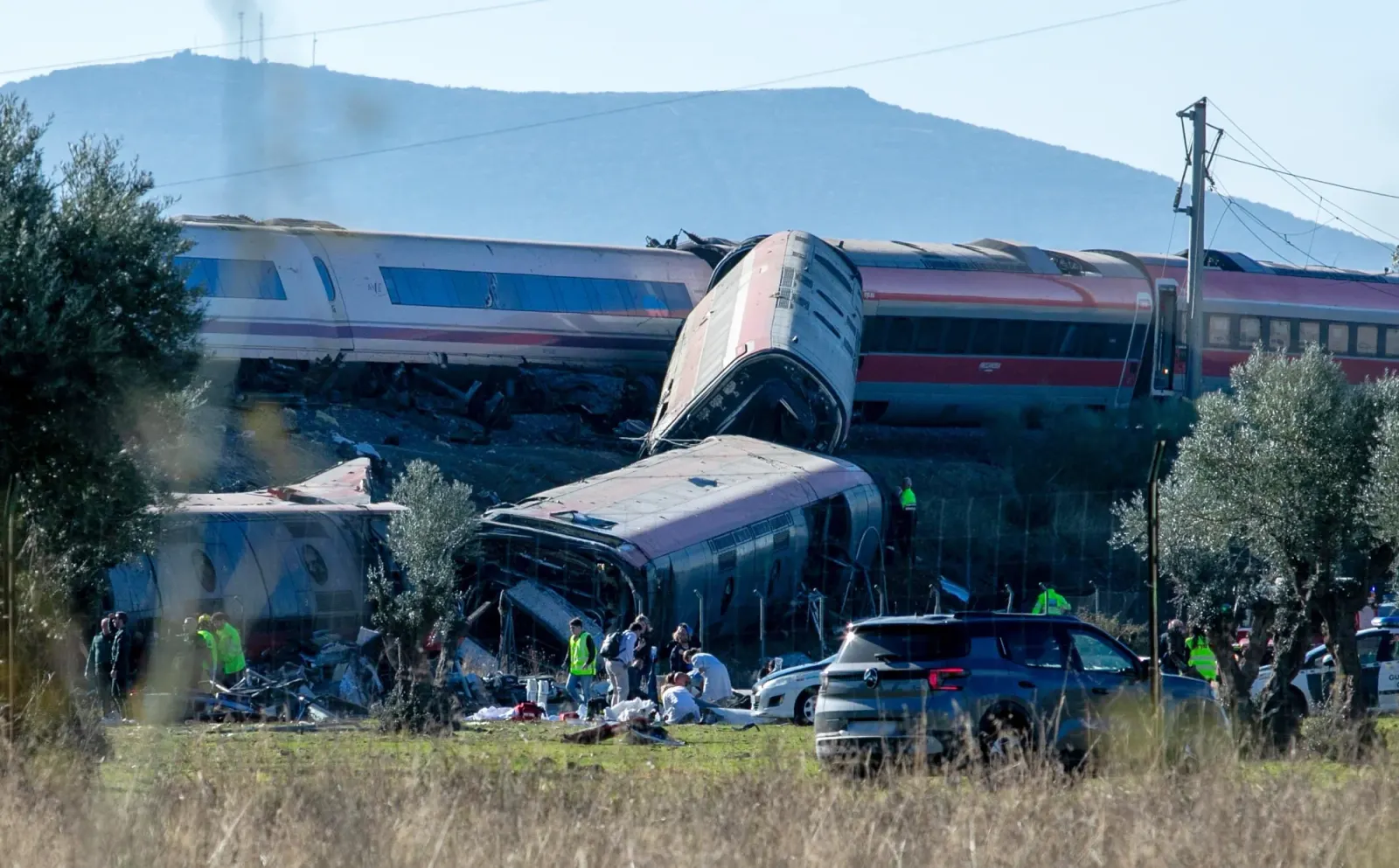
Spain’s transport minister, Óscar Puente, announced his resignation on November 3, six days after a high-speed rail collision near Urda, south of Madrid, killed 69 people. He also withdrew from the country’s forthcoming general election.123
Departure before the election
Puente had decided to leave office immediately after the crash but postponed announcing that decision, according to the Associated Press. His withdrawal from the November 29 election comes after the country’s second fatal high-speed train collision this year.23
According to ABC Australia, Puente said that two accidents of comparable severity within less than a year meant he could no longer remain transport minister. The earlier collision, in Andalusia in January, killed 46 people and remains under investigation, the broadcaster reported.2
Collision and identification
The October 28 crash occurred when a Renfe service struck an Iryo train that was stationary near Urda. ABC Australia reported that a communications system essential to safety on the Madrid–Seville line had gone down before the collision.12
Controllers in Madrid authorised the Renfe train to continue despite the stationary train ahead, according to ABC Australia. The Guardian also reported that a control centre permitted the service to resume after a safety-system failure. The dossier contains conflicting information about whether that failure stopped every train along the affected stretch.12
By November 4, the search for additional fatalities had ended, with the provisional death toll remaining at 69, ABC Australia reported. All those killed had been identified, and the remains of 59 had been returned to their families.2
Two Australians were among the 15 foreign nationals killed. The families were receiving consular assistance, according to Australia’s foreign affairs and trade department. Penny Wong, Australia’s foreign affairs minister, also expressed sympathy to the Spanish public and Spain’s foreign minister, José Manuel Albares.12
Safety measures and financial support
The Guardian reported that Puente announced automatic-alert software, an artificial intelligence agent to monitor the system and a requirement for confirmation by a second operator. He also outlined changes to control-centre working conditions and monitoring of operators’ fatigue.1
The government will seek a faster introduction of the European Rail Traffic Management System, according to ABC Australia. Puente also announced €30 million in assistance for the families of people killed and injured, The Guardian reported.12
The Guardian reported criticism of Puente’s handling of the disaster from the rightwing opposition and unions. It also reported critics’ contention that maintenance spending had failed to match passenger growth since rail liberalisation in 2021. The Semaf union has criticised deteriorating working conditions and reliance on degraded systems.1
Why it matters
The crash has led to proposals to alter Spain’s rail-control and safety systems; ABC Australia says only China has a larger high-speed network. The government’s planned acceleration of a European traffic-management system gives the response a wider European dimension.2
Videos
Related stories
consequence
Version history
- version 1 ·