Business · United States of America
Treasury says more than 60 million children enrolled in Trump Accounts
The US Treasury says it has created accounts for most eligible children. Families must still claim them before receiving contributions, including a potential $1,000 government deposit.
Treasury says more than 60 million US children now have Trump Accounts awaiting claims. Families must complete additional steps before receiving government or private contributions.
- More than 60 million children were automatically enrolled, Treasury says.
- Enrollment alone does not secure the $1,000 government deposit.
- Parents or guardians must verify their identity and claim accounts.
- The Dells committed $6.25 billion for additional $250 contributions.
- Proposed rules allow donated stocks with a five-year holding period.
What's new
- Treasury says automatic enrollment covered more than 60 million children. [s1]
- Families must claim accounts before contributions can be received. [s1]
- Proposed rules permit donations of individual stocks to the accounts. [s1]
- Michael and Susan Dell committed $6.25 billion for additional payments. [s1]
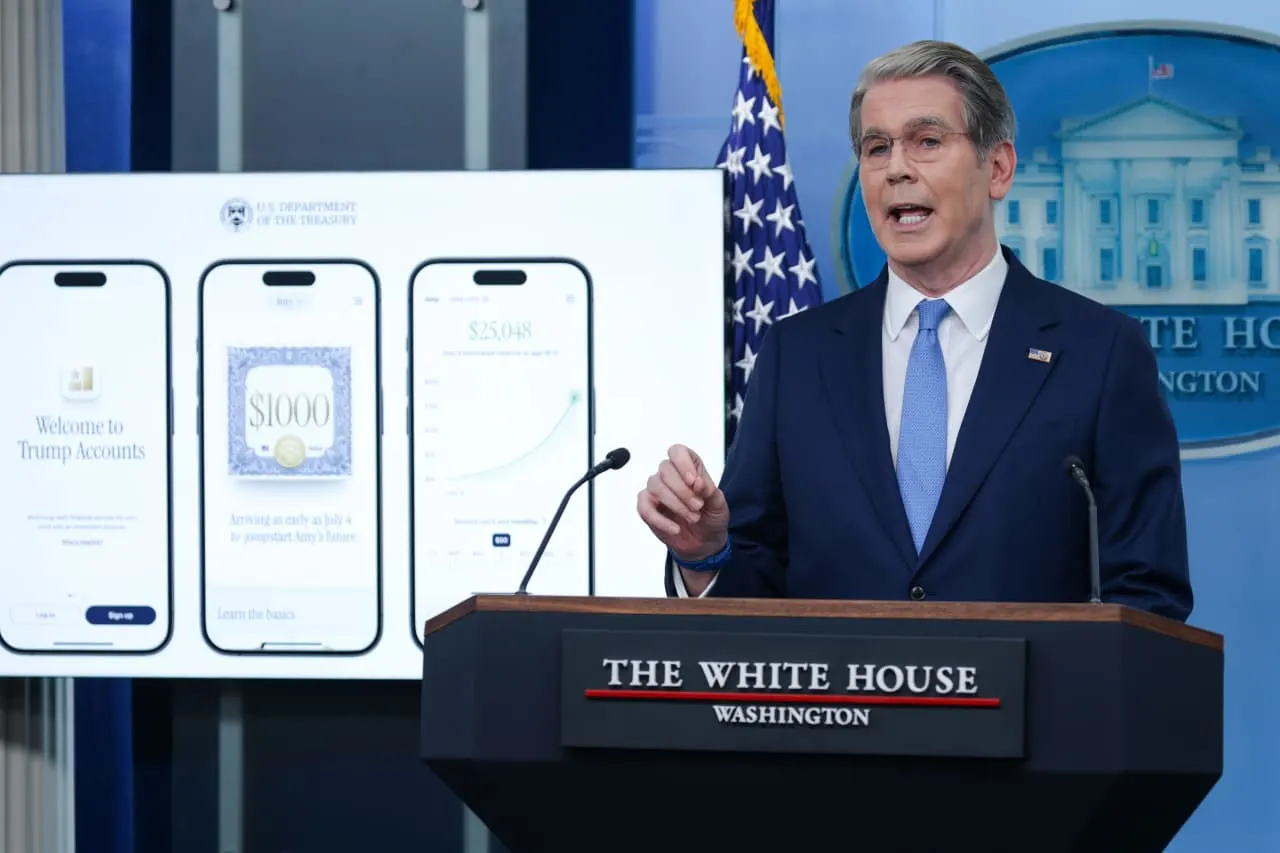
The US Treasury said on Oct 1 that it had completed the automatic enrollment of more than 60 million American children under 18 in Trump Accounts, investment accounts available to children in the United States who have Social Security numbers. The department said families must still claim the accounts before receiving government or private contributions.1
Enrollment does not release the money
The enrollment figure marks a sharp increase from mid-September, when Treasury Secretary Scott Bessent said about 7 million to 8 million children had signed up. CNBC reported that only 5% of families living on low and moderate incomes had opened an account before automatic enrollment.1
Automatic creation of an account does not by itself secure the one-time $1,000 Treasury contribution, CNBC reported. That payment is available under the pilot programme to eligible children born from 2025 through 2028. A parent or guardian must download the programme’s app, confirm their identity and relationship to the child, check the account information and accept the terms before claiming it.1
About 14.4 million children born during the programme’s 2025-to-2028 eligibility period are projected to qualify for the government seed money, according to CNBC. CNBC estimated that roughly one-fifth of qualifying infants could miss the deposit if their accounts go unclaimed. Families living on low and moderate incomes could consequently miss about $2.88 billion in federal contributions over the pilot period.1
Private contributions and stock donations
According to CNBC, Michael and Susan Dell pledged $6.25 billion to make extra $250 payments to children who qualify. The eligibility conditions for those private payments were not detailed in the dossier. As with the Treasury payment, families must claim a child’s account before contributions can be received.1
Temporary regulations proposed by Treasury also allow donors to place individual stocks into Trump Accounts. Under the proposed rules, those donated shares generally cannot be sold for five years. Ben Henry-Moreland of Kitces.com, a certified financial planner, said automatic account creation alone would not deliver the Treasury pilot payment to eligible children.1
Participation remains the central issue
The programme officially launched on July 4 and is open, according to CNBC, to US children under 18 who have Social Security numbers. Madeline Brown, a senior policy associate at the Urban Institute, described the rulemaking as establishing automatic accounts for children who meet those conditions. Timothy Flacke, chief executive of the nonprofit Commonwealth, said automatic enrollment combined with federal and private financing had opened a window for broader participation.1
The reported risk of unclaimed money follows participation gaps in another federal programme. CNBC reported that nearly one in five eligible taxpayers missed the earned income tax credit, which is intended to support families on low and moderate incomes. Among people who claimed the credit for 2024 tax returns, the average amount was $2,916, according to figures cited from the Internal Revenue Service.1
Separately, The New York Times reported that the Trump administration may have enrolled more than 60 million children, including one child, in the accounts, also known as 530A savings accounts. Its framing emphasised that families may find children already enrolled, while CNBC focused on Treasury’s announcement and the steps needed to claim the accounts and obtain contributions.12
Why it matters
For European readers, the programme provides an example of the United States using automatically created child investment accounts alongside public and private funding. The distinction between enrollment and claiming the account is important: according to CNBC, families that do not complete the claim process will not receive the available contributions.12
Videos
Related stories

same actors
Version history
- version 1 ·