Business · United Kingdom
UK Chancellor Healey Pledges Fiscal Discipline Before October Budget
John Healey used his first Labour conference speech as chancellor to stress fiscal discipline, unveiling apprenticeship funding and shipyard contracts while borrowing costs climbed to a two-decade high.
UK Chancellor John Healey pledged fiscal discipline at Labour's conference ahead of an October budget, as borrowing costs hit a two-decade high.
- Healey stressed fiscal discipline as the basis for the October budget
- Announced £100m apprenticeship service, £6bn shipyard contracts, Rolls-Royce investment
- UK borrowing costs rose to highest levels in almost two decades
- Fiscal headroom has roughly halved since Healey took office
- Welfare reform seen as likely internal Labour flashpoint
What's new
- Healey told Labour's Liverpool conference that fiscal discipline will underpin next month's budget
- Announced £100m Local Apprenticeships Service, £6bn shipyard contracts and restored Union Learning Fund
- UK borrowing costs rose to their highest in almost two decades, squeezing fiscal headroom
- Conservative shadow chancellor Andrew Griffith criticised Labour's welfare and tax stance
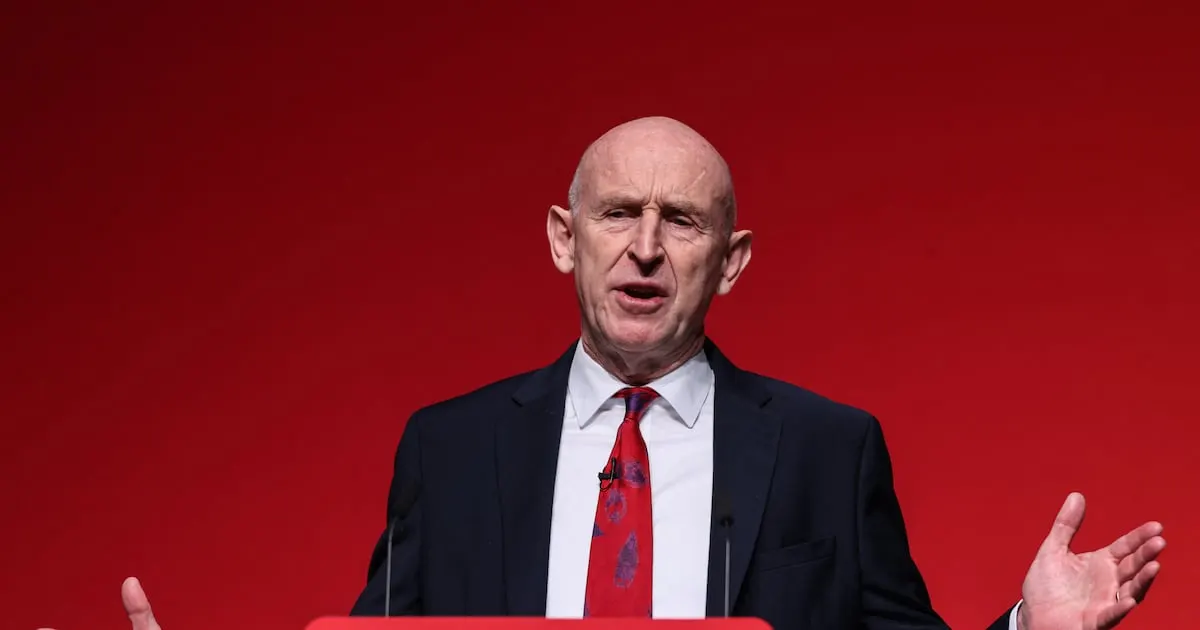
John Healey, the UK Chancellor of the Exchequer, told Labour's annual conference in Liverpool on 28 September 2026 that fiscal discipline would form the basis of every government promise, previewing an October budget shaped by rising borrowing costs and a pledge to restore optimism without abandoning fiscal rules.1234
Fiscal rules as foundation
Healey said his first duty as chancellor was fiscal discipline, arguing it underwrites every government commitment on growth, jobs, national security and public services. He said the government must stick to the rule that everyday spending has to be covered by revenue by 2030.256
He said, "There is nothing progressive about losing control, because it's always working people who pay for it." Healey also said the prime minister and he were "in lockstep" on meeting the fiscal rules, and described his approach as building "from generation jeopardy to generation hope".452
Youth jobs and welfare
Healey framed cutting welfare spending as more than an economic necessity, calling it a moral duty, and said that offering young people paid work with training was preferable to giving them benefit payments, according to the BBC. He said roughly 12.5% of Britons between 16 and 24 were neither working nor studying, putting the number at one million young people, a figure that other reporting disputed.12
He announced a £100m Local Apprenticeships Service, funded from Department for Work and Pensions savings and led by mayors, due to roll out across England from March 2027. He also announced the restoration of the Union Learning Fund, established in 1998 and abolished by the Conservatives, according to the BBC. Alan Milburn's review of youth worklessness is expected in the coming weeks.1
Alongside the welfare measures, Healey pointed to £6bn of contracts for British shipyards and an additional £300m investment in British factories announced by Rolls-Royce.61
Borrowing costs and shrinking headroom
The government's cost of borrowing has climbed to its steepest point in nearly 20 years, a strain Healey and colleagues attributed to a worldwide sell-off in bonds, according to the Guardian. Healey took over a fiscal cushion of about £23.6bn from Rachel Reeves, but the Irish Times reported that higher borrowing costs have eaten away roughly half of that margin, with UK two-year gilt yields climbing five basis points on Monday to reach 4.91%, a shift blamed on rising oil and gas prices.24
Scottish Financial News separately reported the fiscal headroom now stands at an estimated £10bn-£15bn, down from a £23.6bn Office for Budget Responsibility estimate in March 2026, and said Healey remains constrained by his commitment to existing fiscal rules and Labour's manifesto tax pledges, with further tax rises seen as likely and capital gains tax cited as a possible lever. Economists cited by the Guardian warned Healey could be forced to raise taxes or cut spending, and they expect energy prices to drive household bills higher once the new year begins.52
Political reaction
Conservative shadow chancellor Andrew Griffith responded by criticising Labour's welfare and tax positions, according to the BBC. Healey, for his part, accused Reform of a reckless approach to public finances that prioritises billionaire donors, according to the Guardian, and described Reform leader Nigel Farage as "Liz Truss with a Bitcoin account".124
Left Foot Forward reported that welfare reform is likely to become a major internal battleground for Labour, noting that the party had already faced a backbench rebellion over disability benefit cuts. Prime Minister Andy Burnham used the conference to unveil a new equity loan scheme for first-time buyers, sending shares in housebuilders such as Barratt Redrow and Taylor Wimpey up 13-15%, and pledged to overhaul Britain's social care system, suggesting a free service at the point of use that could be paid for through new taxes introduced after the next election.8456
Why it matters
Rising UK borrowing costs and the tension between Labour's growth pledges and its fiscal rules will be watched closely across European bond markets, given the global bond sell-off cited as a driver.25
Videos
Related stories


Version history
- version 1 ·