World · Germany, Ukraine, Russian Federation
Ukrainian former officer faces German Nord Stream trial
Serhii Kuznetsov has gone on trial in Hamburg over allegations that he organised the 2022 Nord Stream sabotage. He denies the charges, while Ukraine denies involvement.
Listen to the story
Short version
A Ukrainian former officer has become the first suspect to face trial over the 2022 Nord Stream pipeline blasts.
- Kuznetsov denies organising the alleged sabotage.
- Three of four pipelines were ruptured in September 2022.
- German prosecutors allege links to Ukrainian military personnel.
- Kyiv denies involvement in the explosions.
- The Hamburg trial may continue into February.
What's new
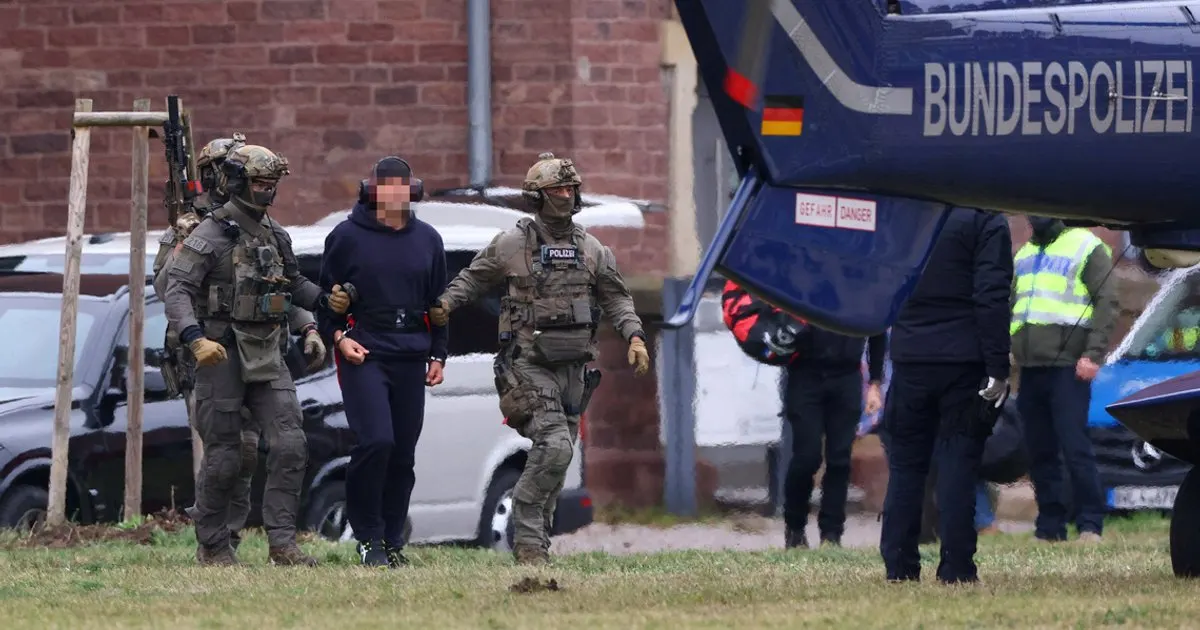
- Serhii Kuznetsov has become the first suspect tried over the blasts.
- The case opened in Hamburg after Kuznetsov’s transfer from Italy.
- Croatia has approved extradition of another suspect, Volodymyr Zhuravlov.
- The Hamburg trial is expected to continue into February.
Serhii Kuznetsov, a Ukrainian former military officer, went on trial in Hamburg on 13 October accused of organising the operation that destroyed three Nord Stream gas pipelines in the Baltic Sea in September 2022. German prosecutors allege he led a team linked to Ukrainian military personnel; Kuznetsov denies the charges.12
Prosecution case
German prosecutors say Kuznetsov was an active Ukrainian army officer in 2022 who oversaw a mission involving trained underwater operatives, a vessel skipper and an expert in explosives. They say he worked with military members on behalf of unidentified Ukrainian state entities, with the alleged purpose of cutting a major source of Russian foreign revenue during the war. Prosecutors say the alleged conduct would constitute a war crime.12
According to the prosecution account, the group travelled from Rostock by rented yacht, the Andromeda, to waters near Bornholm. Five men and a woman were reportedly aboard. The authorities allege the team placed specialised military-grade explosives equipped with timers on the pipelines, which lie beneath the Baltic Sea. Prosecutors say Kuznetsov travelled into Germany through Poland using a forged Ukrainian passport.2
The 2022 explosions
Explosions on 26 September 2022 ruptured three of the four concrete-coated steel Nord Stream pipelines off Bornholm. The blasts occurred about 17 hours apart and released methane into the atmosphere, according to the account of the events. Gazprom constructed the network with capacity to send as much as 110 billion cubic metres of gas annually to Germany; Nord Stream 1 had formerly provided half of the country’s gas imports.2
The damage came after Russia had stopped Nord Stream 1 gas deliveries to Germany weeks earlier, according to the BBC. Nord Stream 2 had never entered service, and Berlin had frozen the multibillion-dollar project shortly before Russia’s invasion. Ukrainian lawmaker Oleksandr Merezhko said Ukraine had no confirmation of the German account and described it as only one possible explanation.1
Other suspects and political response
Kuznetsov was arrested near Rimini, Italy, in August 2025 after checking into a hotel under a German European arrest warrant, then transferred to Germany following extradition litigation. He is the first person to stand trial in connection with the blasts, according to the BBC. The proceedings are expected to run into February.12
A second Ukrainian suspect, Volodymyr Zhuravlov, has challenged Germany’s extradition request. A Polish court ordered his release in October 2025, with a judge saying a Ukrainian armed mission would have been “justified, rational and just”. Croatia has separately approved the extradition of Vladimir Z., whom prosecutors believe was among the divers, although it remains unclear when he could be transferred or whether his case would join the Hamburg proceedings.12
Kyiv denies involvement in the explosions. The Russian government has called for a “just verdict” that identifies those responsible and those who ordered the operation. Stefan Meister, from the German Council on Foreign Relations, said consecutive German administrations had tried to let the courts handle the issue, adding: “This is not a political case.”12
Why it matters
The trial concerns the destruction of infrastructure built to supply large volumes of Russian gas to Germany, including a pipeline that had formerly accounted for half of German gas imports. It also puts before a German court allegations of links between the operation and unidentified Ukrainian state entities, which Kyiv denies.2
Videos
Related stories
Version history
- version 1 ·