Business · United States of America
US adds 29,000 jobs as wage growth slows and unemployment reaches 4.2%
September hiring slowed sharply despite gains in healthcare, construction and manufacturing, while financial activities lost jobs. Stocks rose as expectations increased that the Federal Reserve would hold rates steady.
Listen to the story
Short version
US hiring slowed to 29,000 jobs in September as unemployment rose to 4.2%. Stocks gained as expectations of a Federal Reserve pause increased.
- September payrolls increased by 29,000.
- Unemployment rose from 4.1% to 4.2%.
- July and August totals were revised down by 60,000.
- Healthcare, construction and manufacturing added jobs.
- Major US stock indexes rose in midday trading.
Infographic

What's new
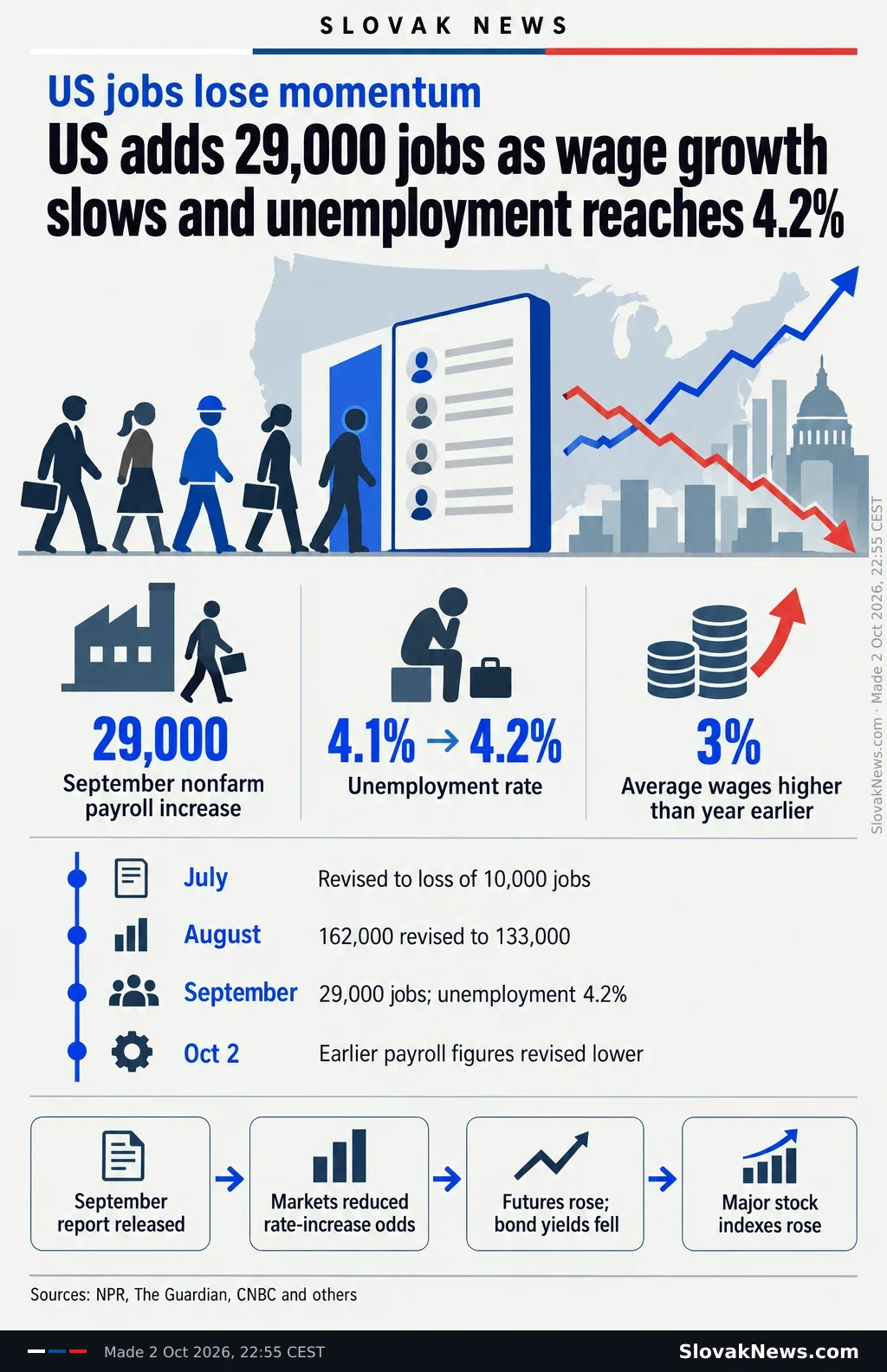
- US employers added 29,000 jobs in September, while unemployment rose from 4.1% to 4.2%.
- Healthcare added 17,000 jobs, construction 11,000 and manufacturing 9,000; financial activities lost 7,000.
- Challenger, Gray & Christmas reported more than 43,000 announced job cuts, 18% fewer than in August.
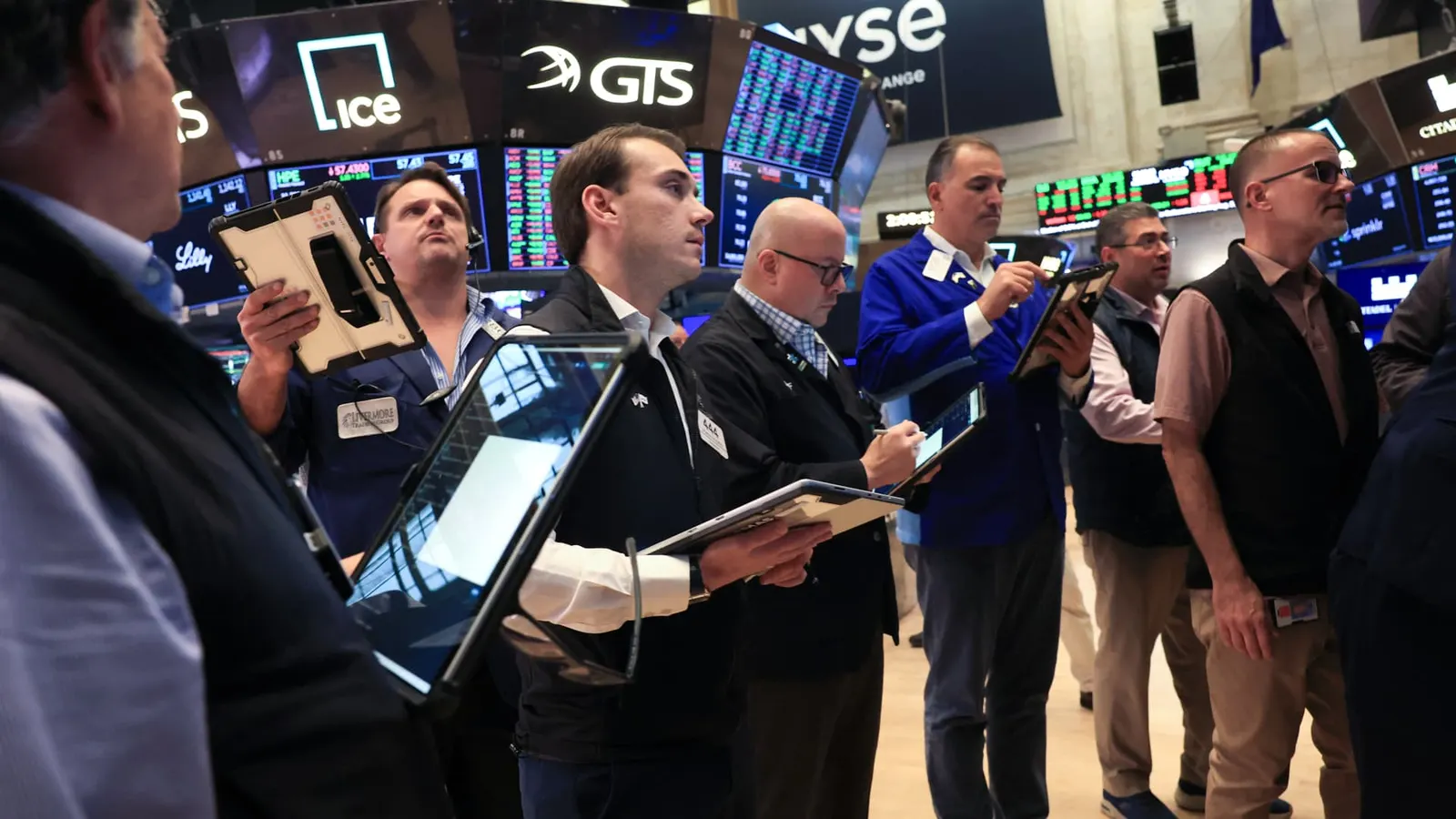
- In midday trading, the Nasdaq rose 1.5%, the S&P 500 1.1% and the Dow 0.6%.
The Labor Department reported that US employers added a seasonally adjusted 29,000 jobs in September, down sharply from August’s revised gain of 133,000, while unemployment rose from 4.1% to 4.2%. Healthcare, construction and manufacturing added jobs, but financial activities lost 7,000 positions.125
Infographic
Hiring falls short of forecasts
CNBC said economists polled by Dow Jones had forecast 84,000 additional jobs, while The Guardian cited an estimate of just under 70,000. Al Jazeera reported that Reuters-polled economists had expected 90,000. The reported increase of 29,000 was below all three forecasts.235
The latest revisions also weakened the picture from the preceding two months. The August payroll estimate was reduced to a gain of 133,000, while July was revised from an increase to a loss of 10,000. Together, those revisions removed 60,000 jobs from the previously reported totals.12
The revised August total of 133,000 replaced an initially reported gain of 162,000, which had been described as the strongest since March.23
Mixed evidence beneath the slowdown
The report did not show widespread job cuts. First-time applications for unemployment benefits remained near a 57-year low, and Wells Fargo senior economist Sarah House said layoffs were not occurring at a high rate, although low turnover was making it harder for some people to find work.15
Job openings and hiring were little changed in August. In September, healthcare added 17,000 jobs, construction 11,000, manufacturing 9,000 and restaurants and bars 11,000. Financial activities lost 7,000 jobs, while NPR reported that government employment also declined. Most other sectors were largely unchanged or added workers slowly.125
Glassdoor’s measure of employee confidence set a new all-time low for the third time in 2026. Chief economist Daniel Zhao said workers were increasingly anxious about layoffs, artificial intelligence, inflation and broader economic uncertainty.34
The unemployment rate rose partly because 485,000 additional people entered the labour force, increasing the share of adults working or seeking work by 0.2 percentage points. Average hourly pay was 3% higher than a year earlier, the smallest annual gain since May 2021, and recent pay increases had not kept pace with inflation.147
A separate tally from Challenger, Gray & Christmas showed that employers announced more than 43,000 job cuts in September, 18% fewer than in August. The decline was consistent with other evidence that layoffs remained limited even as hiring slowed.15
Interest-rate expectations shift
The weak payroll increase supported expectations that the Federal Reserve would be patient about further interest-rate rises while policymakers awaited additional inflation data. NPR reported that another increase later in October had become less likely, although investors still expected at least one more move before year-end.17
Two weeks before the report, the Federal Reserve had increased its benchmark interest rate by 0.25 percentage points. Al Jazeera reported that the implied probability of rates remaining unchanged had risen to 77.3%, from 35.8% a week earlier. In midday trading, the Nasdaq gained 1.5%, the S&P 500 1.1% and the Dow 0.6%.15
Why it matters
The final scheduled employment report before the November 3 elections showed weak hiring and wages failing to keep pace with recent inflation. Al Jazeera reported that the market-implied chance of the Federal Reserve holding rates steady had risen to 77.3%, from 35.8% a week earlier, as policymakers awaited further inflation data.458
Related stories



Version history
- version 3 · The update adds detailed sector figures, a separate measure showing fewer announced layoffs, increased expectations of a Federal Reserve pause and the major stock indexes’ midday gains.
- version 2 · The update adds weaker wage growth, increased labour-force participation, sector-level hiring, low-layoff context and the report’s significance before the November elections.
- version 1 ·